










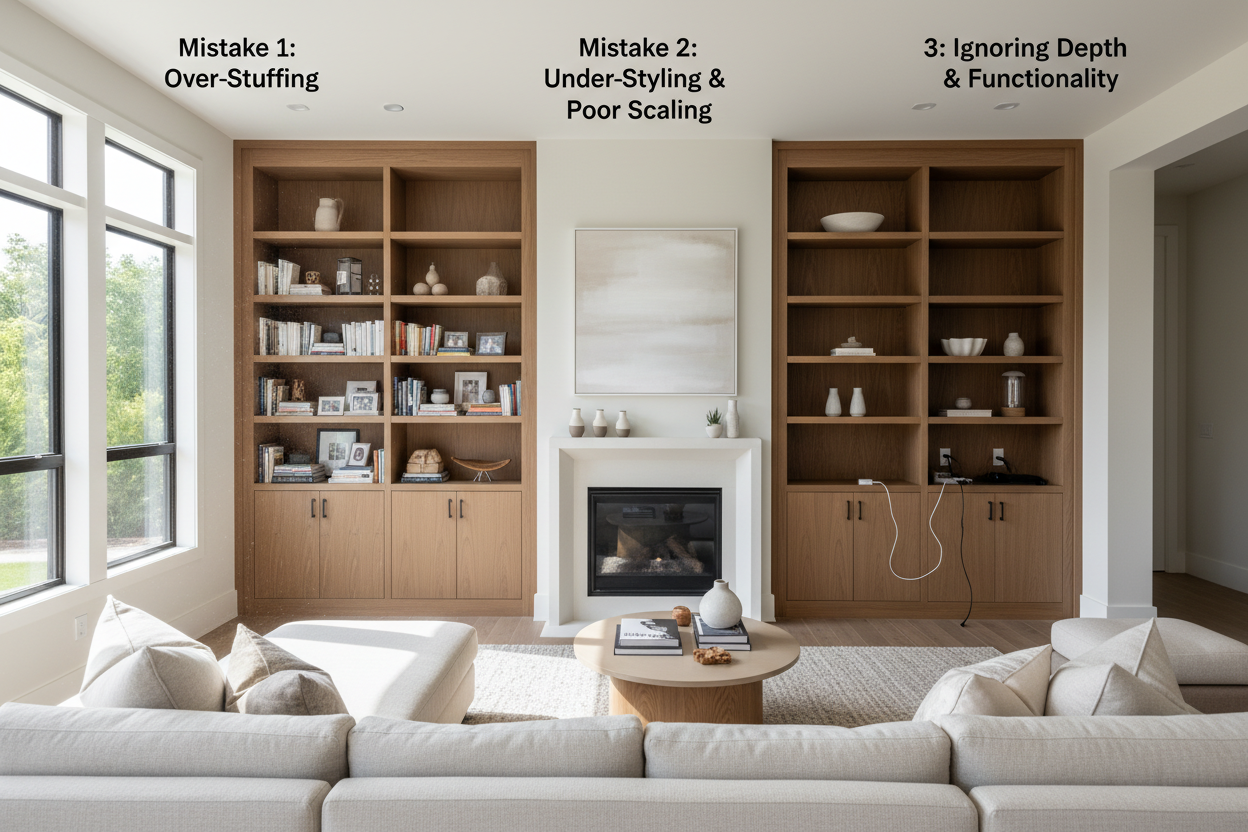
I once spent three weeks obsessing over an 80-inch armoire for my studio apartment. On screen, it was the answer to my clutter prayers—a way to hide my printer, my linens, and my shame. In reality, it arrived, I shoved it into a corner, and suddenly my living room felt like a walk-in closet with a mid-century modern problem. It took me a year of rearranging to realize that vertical storage isn't just about floor space; it's about managing the massive visual footprint these pieces leave behind.
- Scale matters: If your cabinet is over 72 inches, it needs 'breathing room' or it will crush the room.
- Transparency is key: Solid doors are great for hiding mess, but glass doors prevent the 'monolith' effect.
- Lighting is non-negotiable: Deep shelves create shadows that make your decor disappear.
- Anchoring is mandatory: Anything over 50 inches tall is a tipping hazard, period.
Mistake 1: Treating Towering Storage Like a Basic Bookshelf
The biggest error I see is people treating tall cabinets like they're just oversized bookshelves. A standard $30 particle board shelf is meant to be packed tight with paperbacks. But when you move into the realm of 7-foot-tall furniture, filling every square inch creates a visual 'dead zone.' If you have a solid wood unit with 3/4-inch thick shelves, filling it floor-to-ceiling with heavy books makes the piece feel like it’s leaning toward you. It’s too much weight for the eye to process in a standard 12x14 living room.
When you find your cabinets tall and imposing, the trick is to break up the mass. You want a balanced mix of 'heavy' and 'light' items. I always suggest using the bottom third for your dense storage—think heavy bins or closed cupboards—and keeping the top two-thirds for sculptural items that have some air around them. If you’re working with a smaller room that can’t handle a solid wall of oak, I highly recommend a white display case with glass doors. The white finish reflects natural light, and the glass allows your eye to see the back wall, which instantly makes the room feel four feet wider than it actually is.
Mistake 2: Forgetting the 'Breathing Room' Rule
There is a specific kind of design purgatory found in the gap between the top of a cabinet and the ceiling. If you have 9-foot ceilings and an 80-inch cabinet, you’re left with a 28-inch void. Most people panic and fill that space with dusty wicker baskets or, worse, fake ivy. This is a mistake. That gap either needs to be 'clean' to allow for airflow, or it needs to be closed entirely to look intentional. When you leave a foot of empty space, it highlights that the furniture is an add-on rather than a part of the home's architecture.
My personal rule? If the gap is less than 12 inches, close it. You can fake a custom built-in look by installing a simple piece of crown molding that bridges the top of the cabinet to the ceiling. I did this in my last rental using some MDF strips and command strips (don't tell my landlord). It turned a freestanding unit into a structural feature that looked like it was built with the house. If the gap is larger than 12 inches, leave it completely bare. The 'air' above the unit helps the ceiling feel higher. Resist the urge to use it as a shelf for things you only touch once a year; it just creates a shadow line that makes the room feel cramped.
Mistake 3: Accidentally Creating a Dark Corner of Doom
I call this the Dark Corner of Doom. Because cabinets tall and deep naturally block overhead light, the interior shelves become black holes. I once spent twenty minutes looking for a specific ceramic vase that was sitting right in front of me, just shrouded in the shadow of the shelf above it. If you have a unit that is 15 to 18 inches deep, the back half of your display is essentially invisible after 4:00 PM unless you have dedicated lighting.
You don't need to be an electrician to fix this. If you’re shopping for new pieces, look for something like a tall bookcase with dual cabinets that includes integrated LED strips. Having light source inside the unit doesn't just show off your stuff; it actually turns the cabinet into a secondary light source for the whole room, which is much moodier and more pleasant than a harsh overhead 'big light.' If you already own a dark unit, swap out solid wood shelves for glass ones. This allows light from a single puck light at the top to filter all the way down, illuminating your entire collection without needing a complex wiring job.
The Quick Fix: How to Balance the Rest of the Room
Once you bring in a massive vertical piece, the rest of the room usually feels like it’s about to tip over. You can't have a 7-foot cabinet on one wall and a tiny, leggy side table on the other. You need to anchor the opposite side of the room with something that has equal 'visual weight.' This doesn't mean you need another cabinet—it could be a large-scale piece of art hung at eye level or a substantial floor plant like a 6-foot Ficus.
If you're worried about a dark piece sucking the life out of your space, you can style them for a high-end look by using the 'color drenching' method. Paint the wall behind the cabinet the exact same shade as the cabinet itself. This trick is used by high-end designers to make massive storage units 'disappear' into the architecture. It provides all the utility of a giant closet without the visual clutter of a giant box sticking out from the wall. It’s the most effective way to handle dark, moody furniture in a small apartment without making it feel like a dungeon.
Do I really need to anchor my tall cabinet if I don't have kids?
Yes, 100%. I don't care if you live alone. A slight floor tilt or even the weight of opening two heavy doors at once can cause a 200-pound unit to tip. I once had a vintage hutch start a slow-motion fall toward me because I put too many heavy plates on a top shelf. Anchor it to a stud. It takes five minutes and saves your floor—and your head.
Can I put a tall cabinet in a very small room?
You can, but stick to 'leggy' designs. If the cabinet sits directly on the floor with no legs, it looks like a refrigerator. If it has 4 to 6 inches of clearance underneath, you can see the floor continuing under the piece, which tricks your brain into thinking the room is larger than it is.
What is the best height for a tall cabinet?
For standard 8-foot ceilings, look for something in the 72-inch to 80-inch range. Anything shorter than 72 inches often looks like a 'medium' cabinet that didn't quite make it, and anything taller than 84 inches starts to feel claustrophobic unless it's a true built-in.


Leave a comment
This site is protected by hCaptcha and the hCaptcha Privacy Policy and Terms of Service apply.