











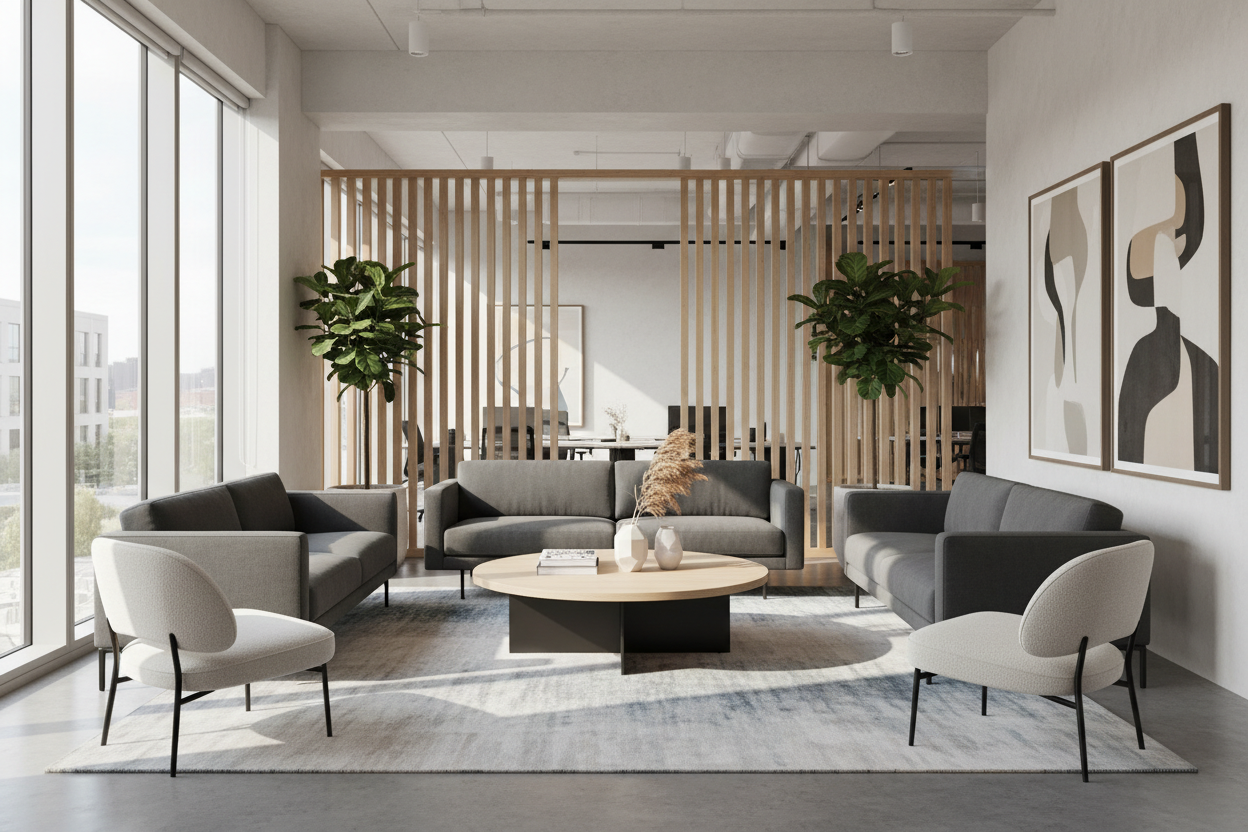
We have all walked into a workspace that feels more like a sterile clinic than a hub of productivity. The difference usually lies in the "third space"—that crucial zone between the desk and the door. A well-curated office seating area does more than just fill an empty corner; it dictates the energy of the room, facilitates casual collaboration, and signals professional competence to visitors. Whether you are outfitting a corporate executive suite or refining a high-end home office, the principles of spatial planning and tactile comfort remain the same.
Key Features to Look For
Before purchasing furniture, consider these non-negotiable elements to ensure your space functions as well as it looks:
- Traffic Flow: Allow at least 30 to 36 inches of clearance between furniture pieces to prevent the "obstacle course" effect.
- Commercial Durability: Look for fabrics with high Martindale rub counts (over 25,000) to withstand daily friction.
- Seat Height: Aim for 17–19 inches high; anything lower makes it difficult to stand up gracefully while wearing professional attire.
- Lighting Layers: Combine ambient overhead light with task or floor lamps to define the zone.
Defining the Zone: Layout and Purpose
The first step in creating a functional office with seating area is defining the intent. Are you hosting formal client consultations, or is this a breakout space for creative brainstorming?
The Formal Consultation Layout
For spaces where deals are signed, structure is key. I recommend a pair of substantial club chairs facing a sofa, anchored by a central coffee table. This symmetry projects authority. Ensure the sitting area in office layouts allows for eye contact without forcing knees to touch. A distance of 18 inches between the edge of the seat and the coffee table is the golden rule for accessibility.
The Casual Collaborative Corner
If the goal is internal team alignment, rigidity is the enemy. Here, an L-shaped sectional or a cluster of swivel chairs works best. Swivel bases are excellent for a seating area office setup because they allow users to pivot between looking at a screen, a whiteboard, or a colleague without dragging furniture across the floor.
Materiality: Balancing Aesthetics and Wear
In a residential living room, we might prioritize a slouchy, down-filled linen sofa. in an office, that is a recipe for disaster. A sitting area office environment requires structure.
Fabric Selection
Avoid pure linen or loose weaves that snag on zippers and keys. Instead, opt for high-performance velvets, tight-weave wool blends, or top-grain leather. Leather is particularly forgiving in an office sitting area as it develops a patina over time rather than looking worn out. However, be wary of low-grade bonded leather, which will peel within a year of regular use.
Foam Density
You need firm support. Look for high-density foam (2.0 lbs or higher) wrapped in a dacron layer. This ensures the seat recovers its shape immediately after someone stands up, keeping the office looking tailored rather than lived-in.
Visual Weight and Scale
A common error is ignoring the silhouette of the furniture relative to the desk. If your desk is a heavy, solid wood executive piece, spindly, mid-century modern wire chairs will look out of place in the office seating area. Match visual weight. If the desk is substantial, the seating should have grounding elements—think block feet or upholstered bases.
Lessons from My Own Projects
I learned the hard way that residential comfort does not always translate to professional utility. Early in my career, I designed a sitting area in office for a law firm partner. I specified a stunning, low-slung Italian modular sofa. It looked architectural and incredible in photos.
Two weeks later, the client called. He explained that while the sofa was beautiful, it had a seat height of only 15 inches and a very deep recline. Every time he had a meeting with older clients or colleagues in tailored suits, they struggled to stand up gracefully from the deep seat. It was physically awkward and diminished the professional authority of the meeting. I had to replace it with stiffer, higher-seat club chairs at my own cost. Now, I never specify a seat lower than 17 inches for a workspace, no matter how good the silhouette looks.
Conclusion
Designing the perfect seating zone is about respecting the biomechanics of work. It requires a balance of firm support, durable materials, and a layout that invites conversation without crowding the room. By investing in the right pieces now, you create a space that works as hard as you do.
Frequently Asked Questions
How much space do I need for a small office seating area?
For a minimal setup consisting of two chairs and a small side table, you need an area of approximately 6x6 feet. This allows for the furniture footprint plus necessary legroom and circulation space.
What is the best lighting for a sitting area in an office?
Avoid relying solely on harsh overhead fluorescent panels. Introduce a floor lamp or a table lamp on a side table with a warm color temperature (2700K-3000K). This creates a psychological separation from the high-focus desk area.
Should I use a rug in the office seating area?
Yes. A rug is essential for visual zoning; it anchors the furniture so it doesn't feel like it's floating. Ensure the rug is large enough that the front feet of all seating pieces rest on it. Low-pile wool or flatweave rugs are best for rolling chairs and high traffic.

Leave a comment
This site is protected by hCaptcha and the hCaptcha Privacy Policy and Terms of Service apply.