










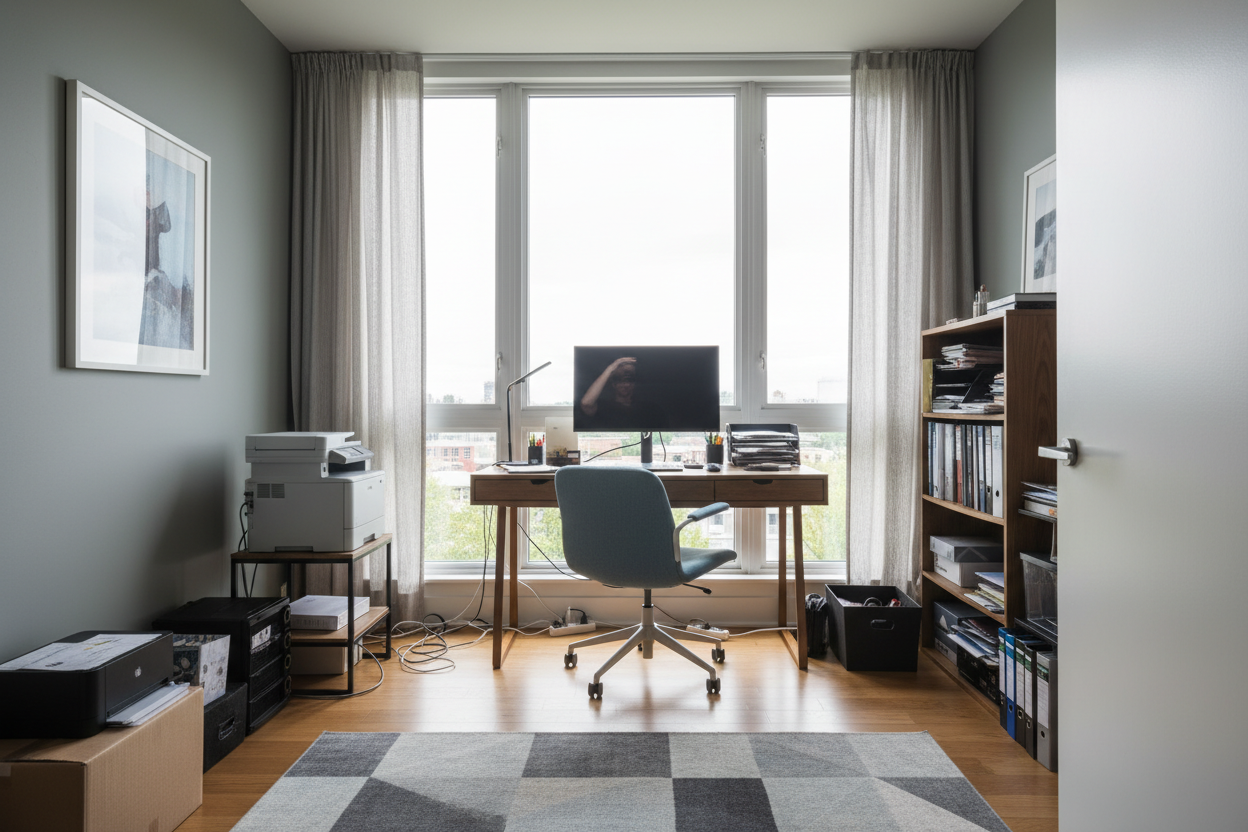
One hundred and eight square feet. That is the precise canvas we are working with. It is a standard size for a secondary bedroom or a dedicated study in many homes, yet it sits in a challenging middle ground: it is not small enough to force minimalism, but not large enough for a sprawling executive suite. The biggest challenge homeowners face with a 9 x 12 office layout is overcrowding the perimeter while neglecting the vertical volume of the room.
Quick Decision Guide: Optimizing 108 Sq. Ft.
If you are planning your purchase list or sketching a floor plan right now, prioritize these spatial factors to ensure functionality matches aesthetics:
- The Command Position: Place your desk facing the door, but not directly in line with it. In a 9x12 room, this usually means floating the desk off the long wall.
- Furniture Scale: Avoid heavy, boxy furniture. Opt for desks with exposed legs (parsons style) to increase the perception of floor space.
- Traffic Lanes: Maintain a minimum of 30 to 36 inches of clearance behind your chair for safe movement.
- Vertical Storage: Since floor space is premium, utilize floor-to-ceiling shelving on the short (9ft) walls to draw the eye upward.
Mastering the Floor Plan: Flow and Function
In a rectangular room of this specific dimension, your layout options are generally dictated by the window and door placement. The most sophisticated approach is to treat the room as two distinct zones: the work zone and the reference zone.
The Floating Desk Layout
Resist the urge to push your desk against the wall. While it seems like a space-saver, staring at a wall creates visual fatigue. Instead, float a writing desk perpendicular to the 12-foot wall. This allows you to utilize the wall behind you for a credenza or low-profile shelving. This layout anchors the room and creates a professional focal point, much like a private consultation room.
The L-Shaped Corner Strategy
If you require multiple monitors or substantial surface area, an L-shaped configuration tucked into one of the corners can work, provided the desk depth does not exceed 24 inches. Deep corner desks in a 9x12 space create a "dead zone" in the center of the room that is too small to use but too big to ignore.
Selecting the Right Furniture Silhouette
The visual weight of your furniture is just as important as the physical dimensions. In a room of this size, a solid oak pedestal desk will feel like a monolith. Instead, look for materials that offer negative space.
Glass tops, slender metal frames, or mid-century modern designs with tapered legs allow light to travel under and through the furniture. This cognitive trick makes the room feel expansive. If you need storage, opt for a separate filing cabinet on casters that can be tucked away, rather than a desk with heavy, built-in drawers.
Lighting and Ambiance
A single overhead fixture is the enemy of a well-designed office. It casts shadows exactly where you work. Layer your lighting to define the space. Use a dedicated task lamp for the desk and consider wall sconces or a floor lamp in the corner to wash the walls with light. Illuminating the corners of a 9x12 room pushes the boundaries out visually, reducing that "boxed-in" feeling.
My Personal Take on 9 x 12 Layouts
I learned a hard lesson about this specific room size during a project for a graphic designer in Seattle. On the blueprint, a 9x12 space looks deceptively simple. I specified a stunning, vintage mid-century credenza to go behind the client's desk. The measurements said it fit.
However, I hadn't accounted for the "active zone"—the reality of how a human moves. Once the client sat in their ergonomic chair and reclined slightly, the back of the chair slammed into the credenza. The finish on that beautiful vintage piece ended up scratched within a week, and the client felt claustrophobic.
The lesson? In a 9x12 room, measurements are static, but you are dynamic. I now always tape out the "slide back" range of the chair on the floor—usually about 42 inches from the desk edge—before buying a single piece of furniture. If the credenza eats into that zone, it gets cut from the design.
Conclusion
Designing a 9 x 12 office is an exercise in restraint and precision. By choosing furniture with a light visual footprint and prioritizing flow over bulk, you can create a workspace that feels like a sanctuary rather than a storage unit. Measure twice, respect the traffic flow, and let the room breathe.
Frequently Asked Questions
What size rug should I use in a 9x12 office?
Avoid an 8x10 rug; it is too close to the room's dimensions and will look like wall-to-wall carpeting gone wrong. A 6x9 rug is ideal—it anchors the desk and chair while leaving a border of flooring visible, which highlights the room's geometry.
Can I fit two desks in a 9x12 layout?
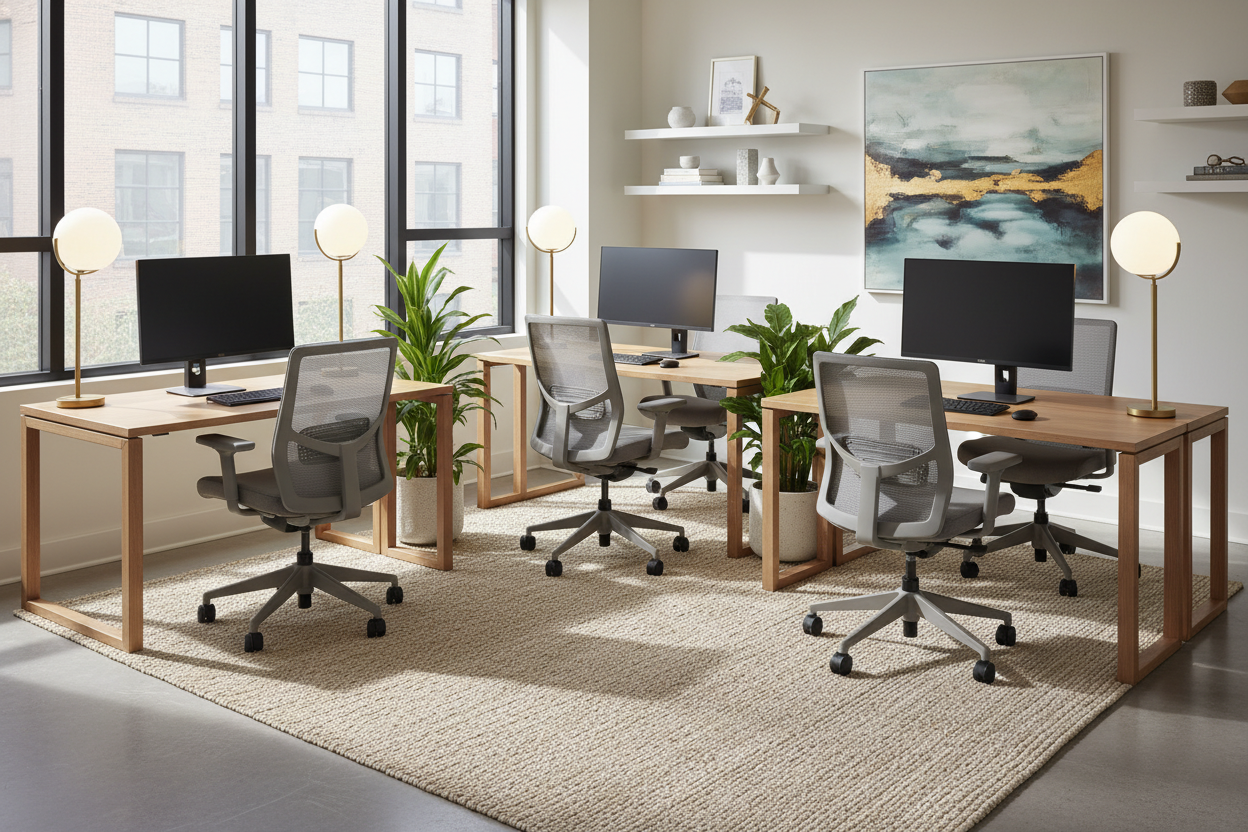
It is possible, but tight. The best approach is a long, shared desk along the 12-foot wall (at least 8 feet of surface) or two slim desks on opposite 9-foot walls. You will likely need to sacrifice additional storage units to maintain walkability.
How do I handle a window in this layout?
Ideally, position your desk perpendicular to the window. This prevents glare on your screen (which happens if the window is behind you) and avoids the contrast strain of looking directly into the sun (if the window is in front of you).


Leave a comment
This site is protected by hCaptcha and the hCaptcha Privacy Policy and Terms of Service apply.