










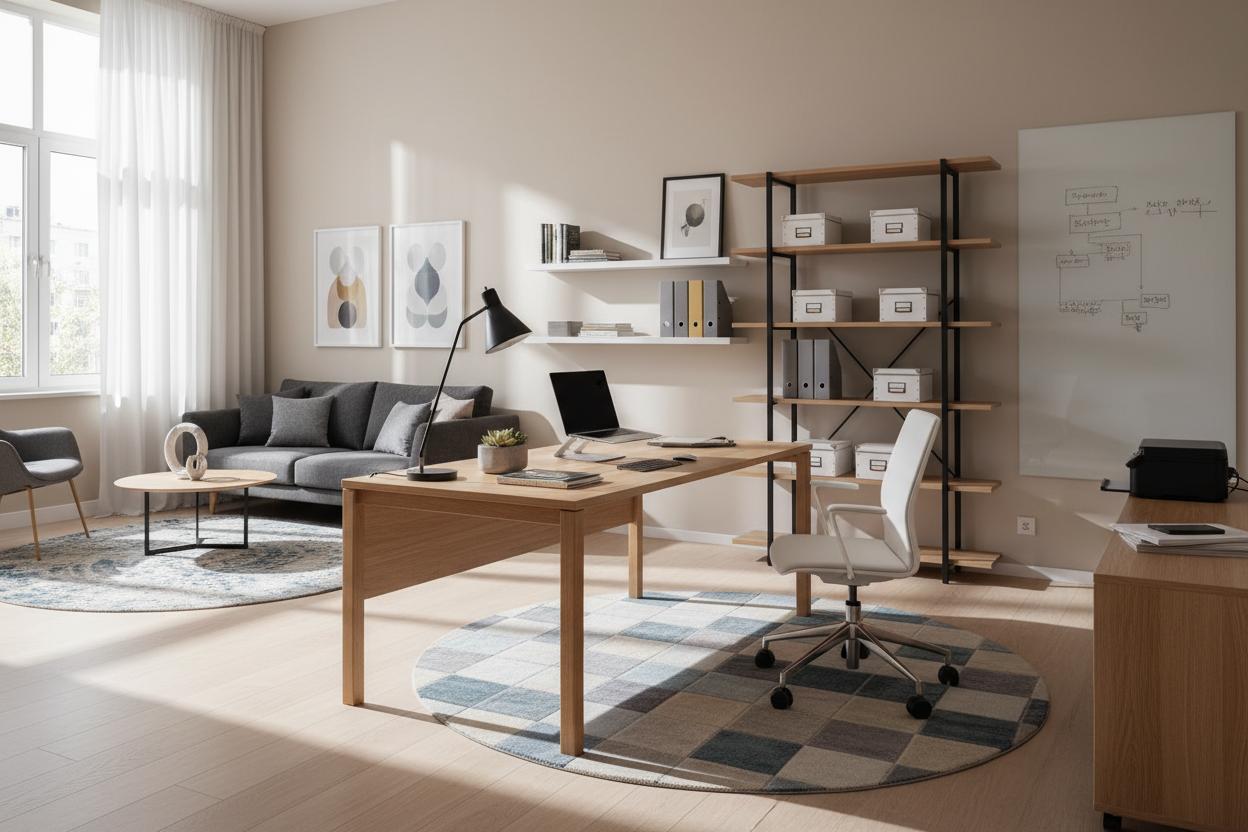
There is a distinct difference between a workspace that simply looks tidy and one that actually functions. As a designer, I walk into countless homes where the furniture is beautiful, but the workflow is broken. The papers pile up on the credenza not because the client is messy, but because the layout fights against their natural movement. Achieving the organized office is less about buying matching storage bins and more about understanding spatial flow and human behavior.
Quick Decision Guide: Essentials for a Functional Workspace
- Zoning Strategy: distinct areas for computer work, analog tasks (writing/reading), and reference storage.
- Storage Depth: Avoid deep drawers for small items; opt for shallow, compartmentalized storage to prevent the "junk drawer" effect.
- Visual Weight: Balance heavy storage cabinets with open space or glass elements to prevent the room from feeling claustrophobic.
- Ergonomic Flow: Ensure frequently used items are within the "primary reach zone" (arm's length) to reduce chair movement.
- Material Durability: Select work surfaces (HPL or hardwood) that resist heat from electronics and scratches from daily use.
Mastering Spatial Planning and Layout
When clients ask how to arrange an office space, I always start with the "Command Position." Your desk should face the door but not be directly in line with it. This offers a psychological sense of security and authority. However, the biggest error is floating a desk in the center of a room without floor outlets. This leads to unsightly cable runs that ruin the aesthetic.
If you are figuring out how to organize your office room, consider the "triangle of efficiency." Much like a kitchen, you want a clear path between your desk, your reference files (credenza or shelves), and your secondary seating or printer station. This layout minimizes friction during your workday.
Investing in the Right Storage Architecture
Understanding how to organize your office at work or at home requires a hard look at your storage furniture. Cheap laminate bookcases often bow under the weight of heavy distinct files. For a luxury look and longevity, invest in joinery or freestanding units made from solid wood or high-grade plywood with a hardwood veneer.
Hidden vs. Display Storage
One of the best office organization tips and tricks is to acknowledge your own habits. If you are not naturally tidy, do not choose open shelving. Visual noise creates mental fatigue. Instead, opt for closed cabinetry with interesting textures—perhaps a fluted wood front or a shagreen finish. This allows you to organize your office space by hiding the mess behind a sophisticated facade, maintaining a serene environment.
The Surface Strategy: Managing the "Active Zone"
When discussing how to organize your work office, we must address the desktop itself. The surface should be reserved for current projects only. I often recommend a secondary surface, such as a back credenza or an L-shaped return, to hold items that are "pending."
If you are looking for ways to organize your office that maintain a high-end feel, utilize trays made of leather, marble, or brass to corral small items. This groups loose objects into a single visual unit, reducing clutter perception.
My Personal Take on the organized office
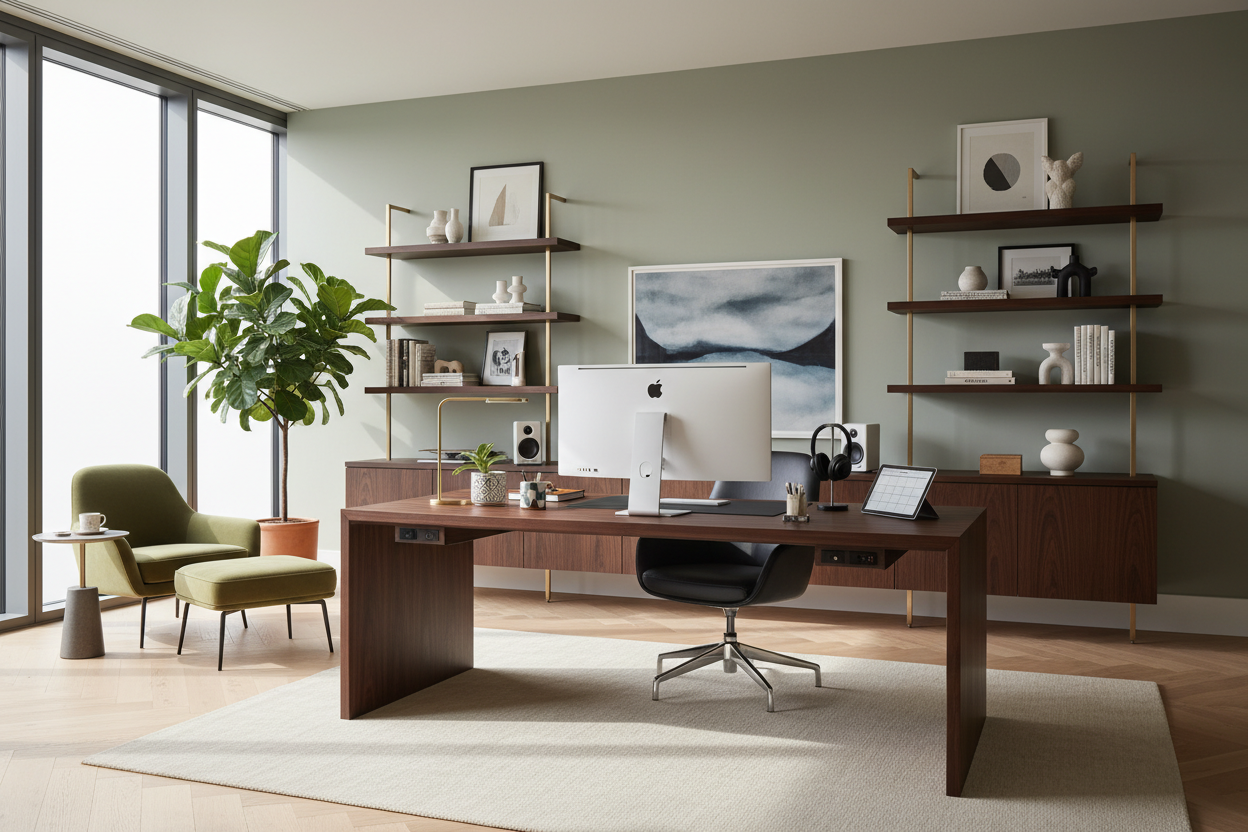
I learned a hard lesson about how to organize a business office during a project for a tech executive in Manhattan. We installed a stunning, custom-made deep walnut desk with integrated deep drawers, thinking maximum volume was the goal. Three months later, I visited, and those deep drawers were a disaster—cables tangled with staplers and snacks.
It taught me that volume does not equal organization. Now, I never specify a desk without shallow, felt-lined pencil drawers or specific dividers. I also learned that matte finishes on dark wood show every single fingerprint and dust mote, making the office look dirty even when it's clean. For clients who want low maintenance, I now steer them toward rift-sawn oak or textured laminates that hide the reality of daily use much better than a high-gloss lacquer ever could.
Conclusion
Refining your workspace is an investment in your mental clarity. By choosing durable materials, respecting ergonomic layouts, and balancing open and closed storage, you create a room that supports your ambition rather than hindering it. Work room organization is not a chore; it is a design discipline.
Frequently Asked Questions
How do I organize a small office without it feeling cramped?
When determining how to organize your office room in a limited footprint, go vertical. Use wall-mounted shelving units that draw the eye upward. Choose furniture with "legs" rather than solid bases to expose more floor area, which psychologically increases the sense of space.
What is the best way to manage paper clutter?
To effectively organize your office space regarding paper, establish a "triage station." Use a dedicated tray for incoming mail and a filing cabinet for long-term storage. Do not let papers touch the desk surface unless they are being worked on immediately.
Is a glass desk a good idea for an organized look?
While glass desks appear light and airy, they expose all the visual clutter underneath, including cables and your legs. If you want to know how to organize office room aesthetics for a clean look, a glass desk requires impeccable cable management and strict minimalism.

Leave a comment
This site is protected by hCaptcha and the hCaptcha Privacy Policy and Terms of Service apply.