










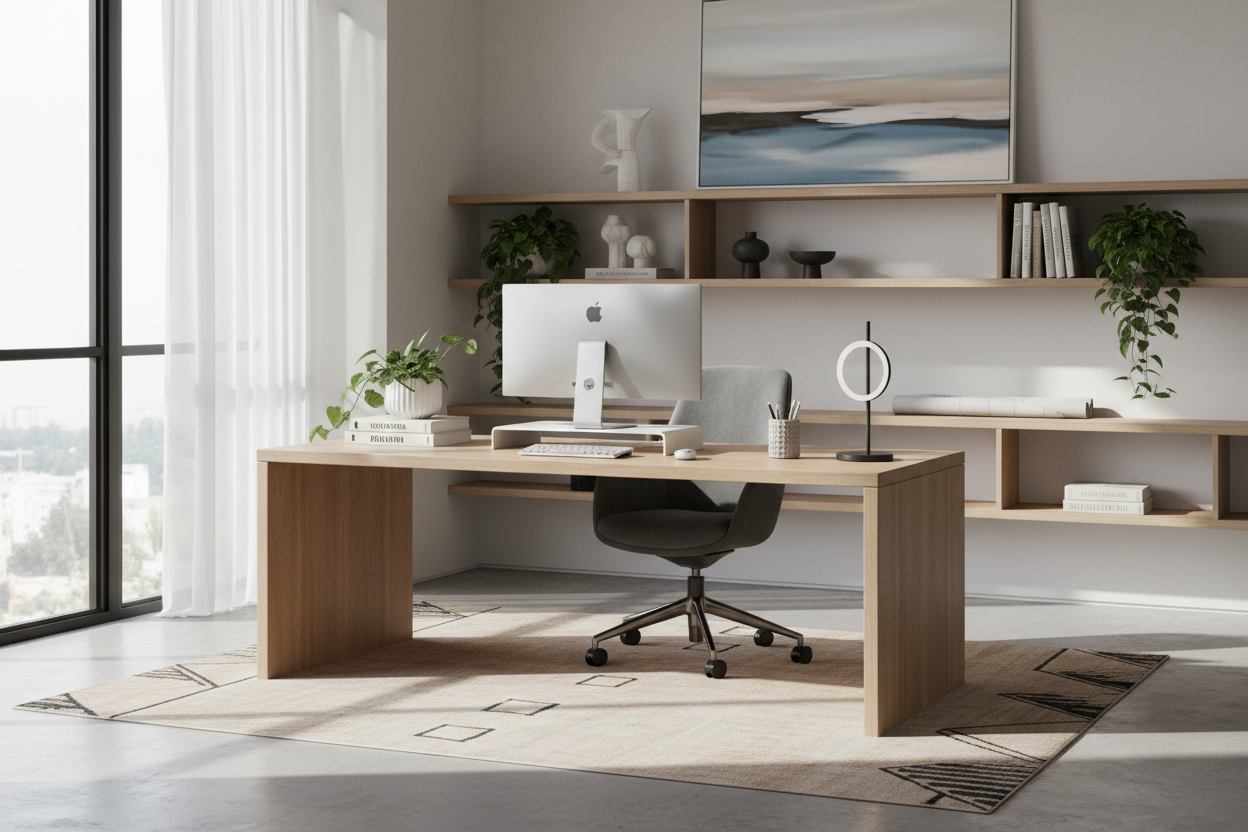
We have all experienced the disconnect between the inspiration images we save and the reality of our own workspaces. You buy the trendy lamp and the sleek notebook, yet the setup still feels cluttered rather than curated. As an interior designer, I see this often: clients confuse decoration with design. The secret isn't just buying pretty things; it is about intentional layering and managing visual weight. If you are wondering how to make your desk look aesthetic while maintaining serious functionality, the answer lies in balancing texture, negative space, and ergonomics.
Key Elements of a Styled Workspace
- Visual Hierarchy: Establish a focal point (usually the monitor or a piece of art) and arrange items around it to guide the eye.
- Material Contrast: Mix cold materials (metal, glass tech) with warm textures (wood, leather, wool) to prevent a sterile look.
- Ambient Lighting: Move beyond the harsh overhead light; incorporate warm task lighting (2700K-3000K) for a cozy atmosphere.
- Hidden Utility: Aesthetics collapse when wires are visible. Prioritize cable management solutions that blend with the furniture.
- The Rule of Three: Group decor items in odd numbers to create a layout that feels natural and dynamic rather than rigid.
Establishing the Visual Foundation
Before you place a single pen holder, you must address the canvas itself. The desk surface dictates the tone of the room. If you are working with a laminate top that feels cheap, consider a high-quality desk mat. A leather or felt desk pad anchors the space, defines your primary work zone, and instantly elevates the tactile experience. It also serves a practical purpose by dampening the sound of your keyboard, adding a layer of acoustic softness that is often overlooked in home office design.
Choosing a Cohesive Color Palette
To learn how to make your desk aesthetic, you must exercise restraint with color. A monochromatic scheme (varying shades of beige, grey, or wood tones) is the easiest route to a luxury look. If you prefer color, follow the 60-30-10 rule: 60% neutral background (desk and walls), 30% secondary color (chair and large accessories), and 10% accent color (small decor or stationery). This ensures the space feels designed, not accidental.
The Art of Functional Styling
Clutter is the enemy of aesthetics, but a bare desk is devoid of personality. The goal is "organized abundance." Use trays to corral smaller items. A marble or walnut tray holding your phone, glasses, and a notepad looks intentional; those same items scattered across the surface look messy. This is about creating boundaries for your objects.
Lighting as Decor
Lighting is arguably the most critical factor in setting the mood. A sculptural table lamp does double duty: it provides necessary task lighting and acts as a piece of art when switched off. Avoid generic plastic office lamps. Instead, opt for materials like brass, ceramic, or fluted glass. The glow should be soft and diffuse, reducing eye strain and softening the harsh lines of computer monitors.
Ergonomics Meets Aesthetics
A common mistake is sacrificing comfort for style. However, high-end design marries the two. If you have a standard monitor, use a riser. A riser made of bent plywood or solid walnut adds vertical interest to the desk silhouette and allows you to tuck your keyboard away when not in use, instantly clearing visual clutter. Similarly, your chair should be visually compatible with the desk. If your desk is heavy and blocky, a chair with a lighter, open frame creates better visual balance.
My Personal Take on How to Make Your Desk Look Aesthetic
I learned a hard lesson about finishes during a project for a client in a high-rise downtown. We selected a stunning, high-gloss black lacquer desk. In the showroom, under perfect lighting, it looked like a million dollars. However, once installed in a real working environment, it was a disaster. The high-gloss finish magnified every single fingerprint, dust mote, and coffee cup ring. It required constant polishing to maintain that "aesthetic" look.
From that project, I learned to prioritize matte or satin finishes for horizontal surfaces. Now, when I style my own desk, I use a matte oak finish. I also avoid glass tops for the same reason—they are cold on the wrists and impossible to keep pristine. True aesthetics must survive the wear and tear of a Tuesday afternoon deadline, not just look good in a photo.
Conclusion
Curating a workspace is an ongoing process of refinement. By focusing on quality materials, managing your cables, and selecting lighting that warms the space, you create an environment that invites creativity rather than stress. Start with the foundation, clear the noise, and let your personal style breathe through the details.
Frequently Asked Questions
How can I make a small desk look aesthetic without overcrowding it?
Utilize vertical space. Install a floating shelf above the desk for decor and books, keeping the actual workspace clear. Use a monitor arm to lift the screen off the desk surface, which creates an illusion of more space and openness.
What is the best way to hide cables on an open-back desk?
Use adhesive cable clips along the back edge of the desk legs to run wires down to the floor. Ideally, mount a power strip to the underside of the desktop using strong double-sided mounting tape so only one main cord runs to the wall outlet.
Is it worth investing in expensive desk accessories?
Invest in items you touch every day. A high-quality mouse, a solid keyboard, and a premium desk mat offer a high return on investment because they improve your tactile experience. Purely decorative items can be budget-friendly finds, as they don't undergo daily wear.


Leave a comment
This site is protected by hCaptcha and the hCaptcha Privacy Policy and Terms of Service apply.