










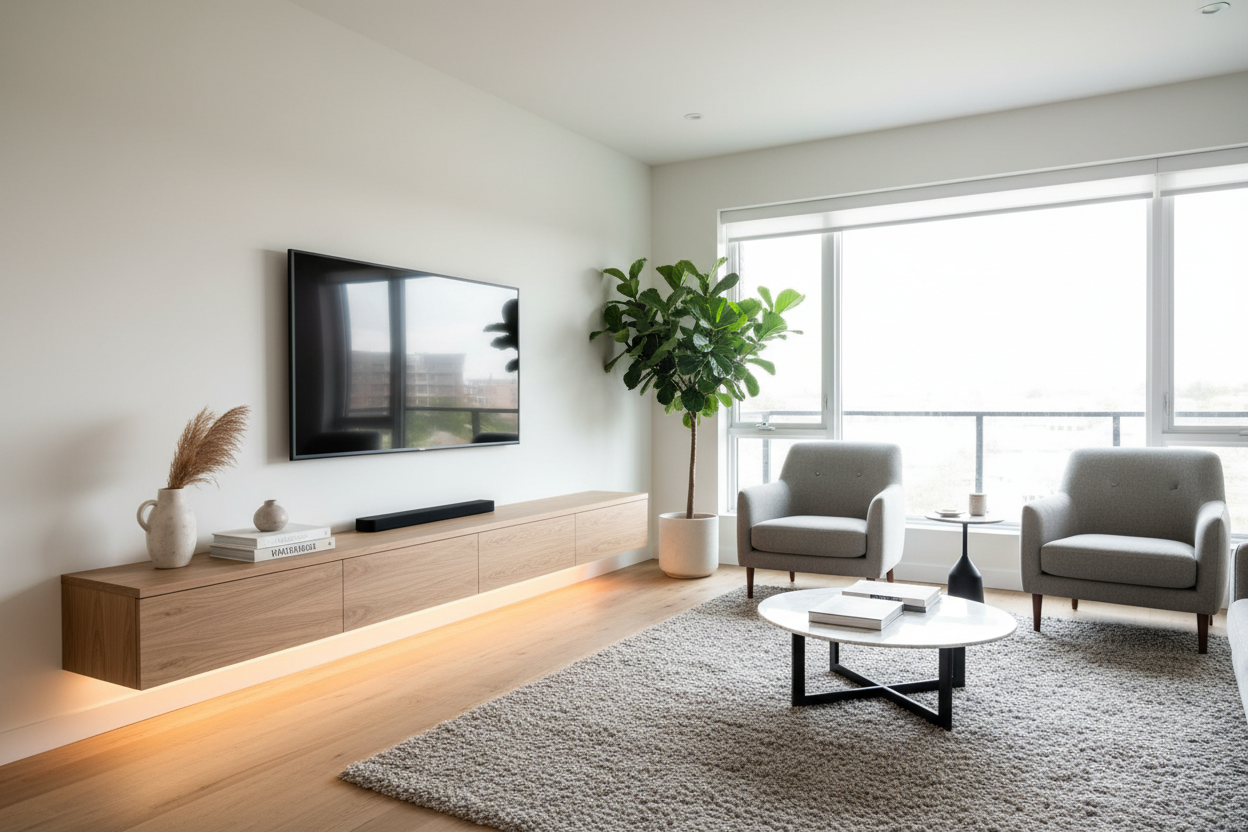
I remember the first time I finally got my 65-inch OLED onto the wall. I stepped back, threw the remote on the couch, and realized my living room suddenly felt like a Buffalo Wild Wings waiting room. It was just a cold, black rectangle floating in a sea of beige drywall. It didn't look like a home; it looked like a sports bar before the shift starts.
The truth is, mounting your screen is only half the job. Without a console for wall mounted tv, your television looks unanchored and accidental. It lacks gravity. You need a piece of furniture underneath to act as a visual pedestal, even if that furniture never actually touches the floor.
Quick Takeaways
- A console grounds the TV so it doesn't look like it’s drifting away.
- Floating units make small rooms feel larger by keeping the floor visible.
- The console should always be wider than the TV—aim for at least 6-10 inches of overhang on each side.
- Cable management is 90% of the reason these exist.
The 'Dentist Waiting Room' Effect
We’ve all seen it. A massive TV bolted way too high on a blank wall with a tangle of black cords screaming for mercy underneath. It’s clinical, it’s cold, and it kills the vibe of a cozy room. When you leave that space below the TV empty, the proportions of the room feel top-heavy. It creates a visual void that makes the ceiling feel lower and the wall feel cluttered.
Adding a wall mount tv console isn't about finding a place for your VCR (which I hope you've recycled by now). It's about architecture. It creates a horizontal line that balances the verticality of the screen. Without it, your eyes don't know where to land, and the TV just feels like an intruder in the room rather than a part of the design.
Grounding the Room (Without Losing Floor Space)
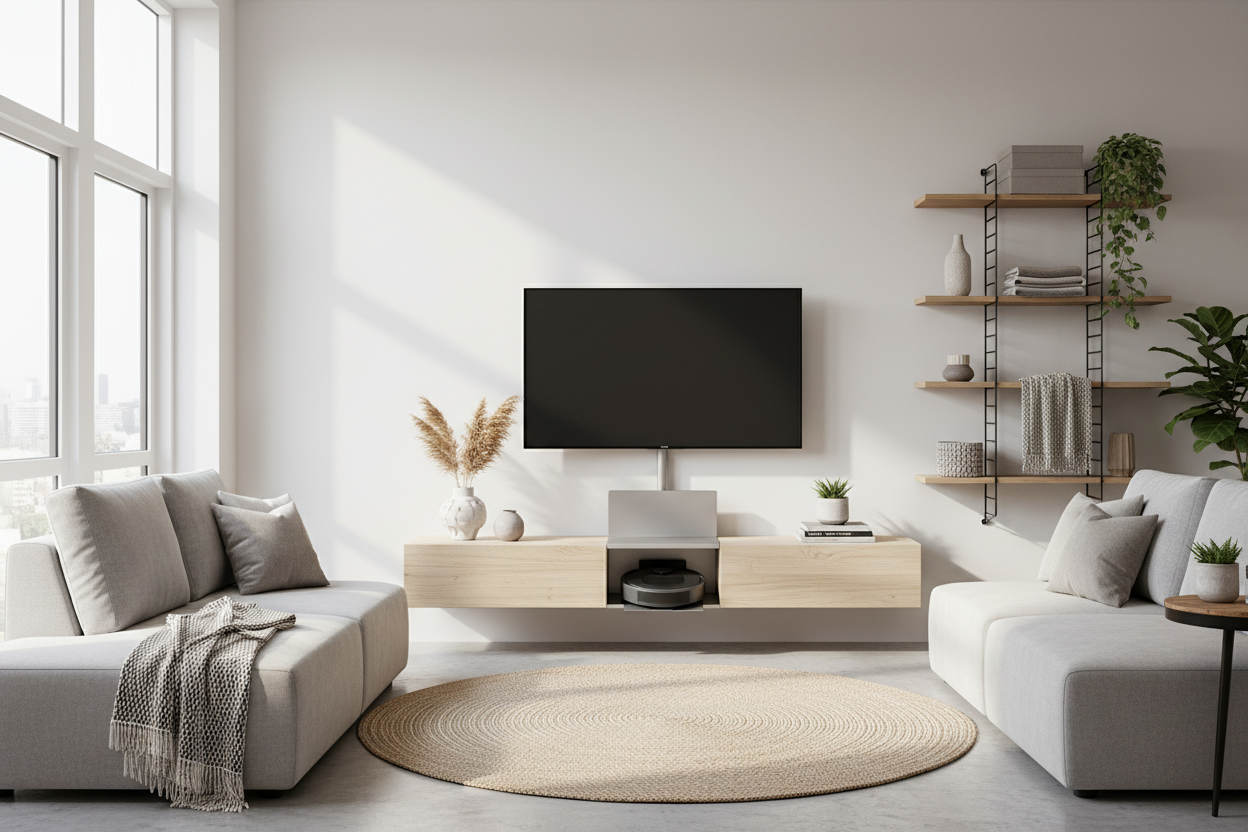
In design, 'grounding' is the idea that every heavy object needs a base to feel stable. A mount tv console provides that base. The magic of a modern wall mount tv stand is that it gives you that stability without the bulk of a traditional cabinet. It provides a surface for a few well-placed books or a small plant, which helps the tech blend into your actual life.
If you're working with a tight floor plan, you might be tempted to skip the furniture entirely. Don't. You can browse through various TV stands to find a profile that is shallow—think 10 to 12 inches deep—so it doesn't eat into your walking path but still provides that much-needed visual weight.
Legs vs. Floating: The Great Debate
I’ve lived in apartments where the walls were made of what felt like wet cardboard, and I’ve lived in places with solid 2x4 studs. If you have the studs, a wall hanging tv console is the elite choice. By exposing the floorboards all the way to the baseboard, you trick your brain into thinking the room is bigger than it is. It’s a classic small-space hack.
However, if you're a renter or just terrified of a 50-pound cabinet falling off the wall, a modern TV console cabinet with slim, tapered legs is a fantastic compromise. It still feels airy, but your security deposit stays intact. I personally prefer the floating look for a cleaner, ultra-modern aesthetic, but legs are much more forgiving if your DIY skills are shaky.
Exactly How High Should It Go?
This is where most people mess up. They hang the tv console on wall way too low, creating a weird 'no man's land' of empty space, or they jam it right against the bottom of the TV. You want a gap of about 6 to 8 inches between the top of the console and the bottom of your TV. This is the 'sweet spot' that keeps them looking like a cohesive unit without feeling cramped.
Also, please, for the love of interior design, stop hanging your TVs at fireplace height. Your neck will thank you if you keep the center of the screen at eye level when you're sitting on the sofa. Your console should sit just below that, acting as the frame for the lower third of your viewing area.
Hiding the Dangling Wires (The Real Reason We Did This)
Let’s be honest: we aren't just doing this for the 'aesthetic.' We’re doing it because wires are ugly. A tv console hanging below your screen is the perfect staging ground for a cable management system. When I replaced my clunky console with a TV cabinet, the biggest relief was finally hiding the power bricks and HDMI cables that looked like a bird’s nest.
If you pick a dedicated floating TV stand wall mounted media console, it usually comes with pre-drilled holes. Pro tip: use a 'behind-the-wall' power kit to run the cables through the drywall from the TV down to the console. It takes 20 minutes and makes the whole setup look like a high-end custom install.
Personal Experience: My 'Too Small' Mistake
The biggest mistake I ever made was buying a console that was the exact same width as my TV. It looked like the TV was wearing a hat that was two sizes too small. In my current setup, I have an 80-inch wide console under a 65-inch TV. Those extra inches on the sides give me room to put a lamp on one end and a stack of coffee table books on the other. It makes the TV look like a deliberate choice, not just a screen I slapped on the wall because I didn't have a better idea.
Frequently Asked Questions
Can a floating console hold a lot of weight?
If you hit the studs with heavy-duty lag bolts, yes. I’ve seen units hold 50-75 pounds easily. If you’re just using drywall anchors? Absolutely not. Don't risk your expensive electronics on plastic toggles.
What is the best material for a wall mount console?
Look for kiln-dried hardwood or high-quality MDF with a real wood veneer. Avoid the super cheap particle board that feels like compressed paper; the mounting brackets will eventually tear out of the soft material.
How wide should my console be?
The rule of thumb is 25% wider than your TV. If your TV is 50 inches wide, your console should be at least 62 inches. This prevents the 'top-heavy' look that ruins the room's proportions.


Leave a comment
This site is protected by hCaptcha and the hCaptcha Privacy Policy and Terms of Service apply.