










I once spent three hours trying to shim a flat-pack wardrobe into a corner of my 1920s bungalow before realizing the wall was leaning three degrees to the left. It looked like the Leaning Tower of Pisa, only with more MDF and visible regret. That is usually the moment people start Googling a bespoke cabinet maker, thinking custom wood is the magic wand for every floorplan headache. But before you drain your savings, you need to know where the craft ends and the markup begins.
- Custom is for weird angles and sloped ceilings, not straight walls.
- Stock furniture is often 70% cheaper and arrives in days, not months.
- Mixing custom built-ins with freestanding pieces is the best way to save your budget.
- Expect a 12-week minimum wait for anything truly bespoke.
The 'Awkward Architecture' Rule
If you live in an old house, you know the 'niche of despair.' It is that 27-inch gap next to the chimney breast that no standard unit fits. Or the attic room where the ceiling drops at a 45-degree angle. This is where custom work earns its keep. A good joiner will scribe the face frames to your wonky walls so the piece looks like it grew out of the house. You cannot shim your way into that level of finish with a box from a warehouse.
I have seen people try to 'hack' stock cabinets into these spaces with massive filler strips. It always looks like an afterthought. If your floor slopes more than half an inch or your walls aren't square (spoiler: they aren't), paying for a pro to measure and build to the millimeter is the only way to avoid a gap that collects dust and disappointment.
When a Ready-Made Piece is Actually the Better Choice
If you have a massive, flat wall in a modern condo, please do not waste $5,000 on custom cabinetry. It is overkill. A high-quality black cabinet with glass doors can anchor a room with just as much authority as something custom-built. I have seen clients insist on bespoke for a standard rectangular alcove, only to end up with something that looks exactly like a high-end stock piece but cost three times as much.
Retailers have gotten surprisingly good at using kiln-dried hardwoods and decent hardware. If the dimensions of a stock piece fit within 90% of your available space, take the win. Spend that extra cash on a better rug or a piece of art. Custom furniture should solve a problem that retail cannot; it shouldn't just be a status symbol for a wall that was already behaving itself.
How to Mix High and Low Storage in the Same Room
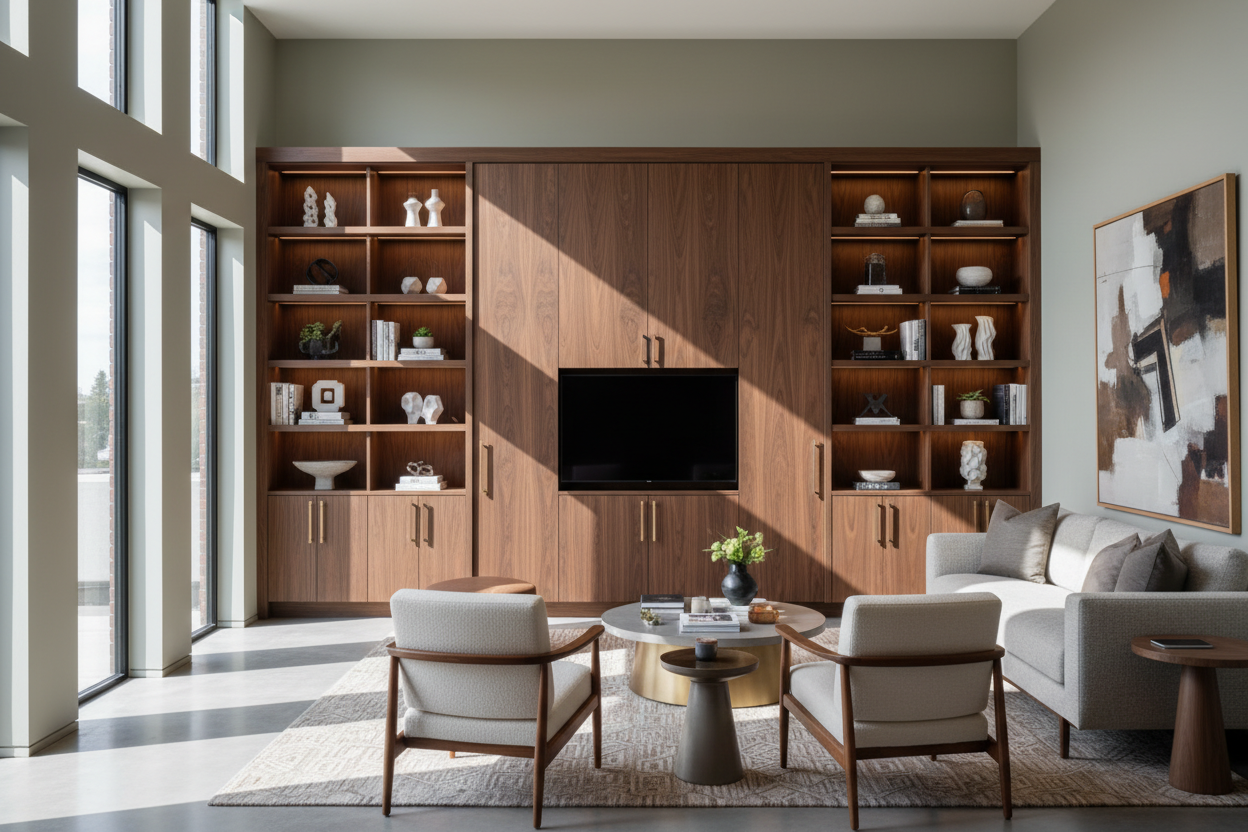
The secret to a room that looks designed rather than just 'purchased' is the mix. I love using custom work for the heavy architectural lifting—like floor-to-ceiling library shelving—while filling the rest of the space with flexible, freestanding pieces. You might pair a custom wall unit with a display cabinet and bookshelf combo to add some visual variety. It breaks up the 'wall of wood' effect that happens when you over-customize every surface.
When you are picking a cabinet and sideboard for your home, think about the visual weight. If the custom piece is the star, let the stock pieces be the supporting cast. I often suggest clients go bespoke for the 'fixed' elements like alcove units, then buy a retail sideboard that they can actually take with them when they move. It balances the investment and keeps the room from feeling too static.
The 'Hidden' Lead Time You Aren't Expecting
Here is the reality: your cabinet maker isn't just being difficult when they quote you four months. Real custom work takes forever because wood is a living material. I once waited sixteen weeks for a white oak sideboard because the lumber had to acclimate to the workshop’s humidity for nearly a month before they even touched a saw. If they rush it, your doors will warp by next winter.
Between the initial sketches, sourcing the right grain match, and the actual build, you are looking at a full season of waiting. If you need storage before your mother-in-law visits next month, go retail. Bespoke is a slow-burn process. It is about the 1.0-inch thick solid shelves that won't sag under a heavy book collection, not about instant gratification.
My Personal Lesson in Custom Regret
I once commissioned a custom vanity for a tiny bathroom renovation. I was so obsessed with 'utilizing every inch' that I didn't account for the plumbing stack behind the wall. The cabinet maker had to hack a giant U-shape out of my expensive walnut drawers just to make them close. It was a $2,400 lesson in measuring twice and remembering that what is inside the wall matters more than what is on the sketch. Sometimes, a slightly smaller stock piece with a filler panel is safer than a 'perfect' fit that ignores reality.
Bespoke Cabinet FAQ
Is custom furniture more durable?
Usually, yes. You are getting solid wood or high-grade birch ply instead of particle board. The joinery—like dovetails or mortise and tenons—will outlast any cam-lock screw system.
Can I take it with me when I move?
If it is a built-in bespoke cabinet, no. It is legally part of the real estate. If it is freestanding custom work, yes, but remember it was designed for a specific spot that your new house might not have.
How do I find a good maker?
Look for someone who asks about your baseboards and electrical outlets. If they don't care how the piece meets the floor or where the wires go, they aren't a pro.

Leave a comment
This site is protected by hCaptcha and the hCaptcha Privacy Policy and Terms of Service apply.