










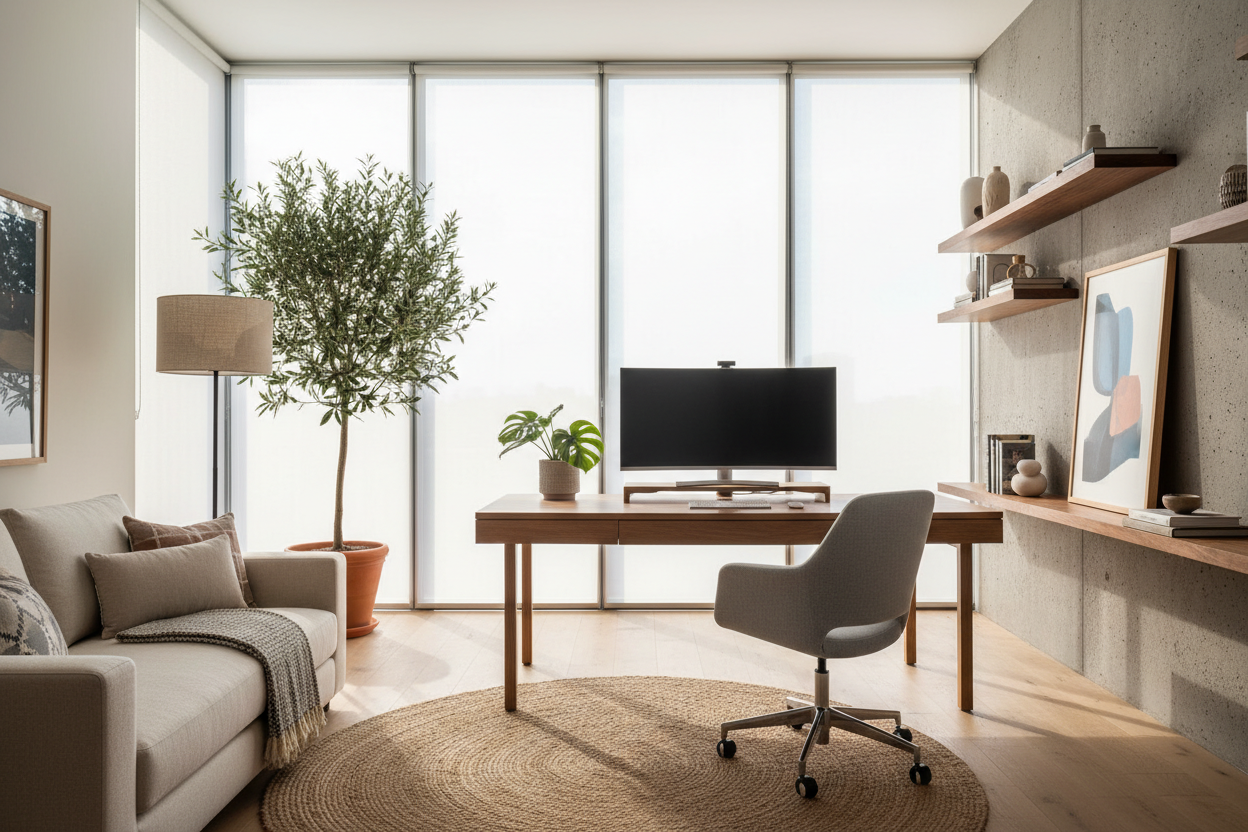
The boundary between professional rigor and domestic comfort has effectively dissolved. For many of my clients, the challenge isn't just finding a quiet corner; it is curating an environment that fosters productivity without sacrificing the aesthetic integrity of their residence. If you work for from home, you understand that a makeshift setup at the dining table is a temporary fix, not a long-term design solution. A well-appointed home office is no longer a luxury—it is a fundamental tool for success.
Quick Decision Guide: The Essentials
Before investing in high-end furnishings, evaluate these core elements to ensure your space serves both form and function:
- Ergonomics First: Prioritize seating with lumbar support and adjustable tension; aesthetic appeal should never compromise spinal health.
- Material Integrity: Opt for solid woods (walnut, oak) or high-grade veneers for desks to ensure longevity against daily wear.
- Lighting Layers: Combine ambient overhead lighting with focused task lighting to reduce eye strain.
- Acoustics: Incorporate soft textiles like rugs or upholstered panels to dampen echo during calls.
- Spatial Flow: Ensure a minimum of 36 inches behind your desk for comfortable chair movement.
Curating the Foundation: Desk and Seating
When establishing a career in work from home scenarios, the desk is your command center. I often steer clients away from glass tops, which can feel cold and highlight fingerprints, toward natural timber with a matte sealant. This adds warmth and hides micro-scratches. For the chair, look for a silhouette that complements your room's architecture. A high-back executive chair in cognac leather commands authority, while a mid-century modern mesh design offers breathability for a long wfh career.
Visual Balance and Layout
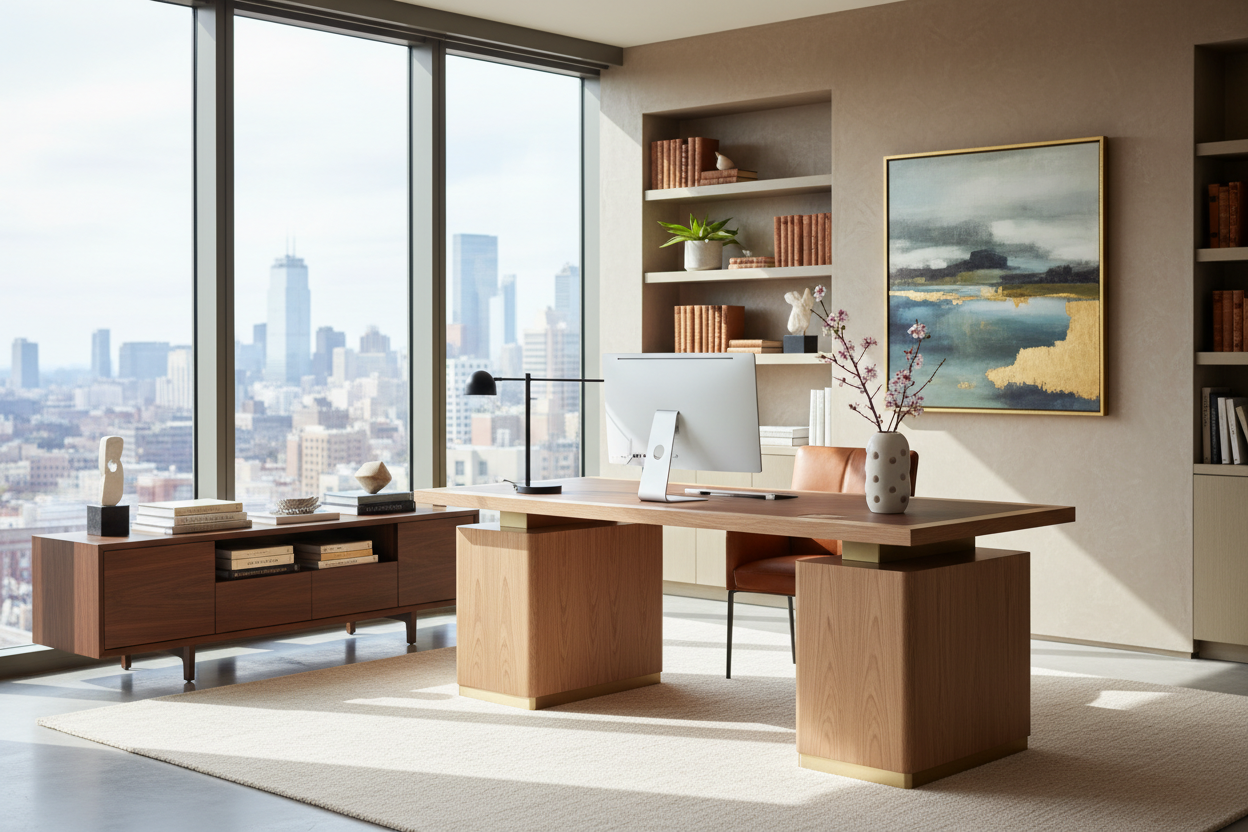
Placement is paramount. Never face a wall if you can avoid it; the "command position"—facing the door—offers a psychological sense of security. If your room allows, float the desk in the center of the space. This layout signals that this is a place of business, distinguishing your work from home career from your leisure time.
Lighting: The Unsung Hero of Productivity
Poor lighting is the fastest way to fatigue. In my design practice, I layer lighting to mimic natural circadian rhythms. Start with a warm ambient light (2700K-3000K), then add a task lamp with a cooler temperature (4000K) for focused reading. If you are pursuing career opportunities work from home that require frequent video conferencing, position a diffused light source in front of you to eliminate unflattering shadows.
Storage and The "Zoom Background"
As work home careers evolve, your background has become your new business card. Open shelving styled with a mix of books, sculptural objects, and greenery creates a sophisticated backdrop. However, functional storage must be concealed. Use credenzas or filing cabinets with tambour doors to hide the clutter of paperwork and tech accessories, ensuring the space feels serene once the laptop is closed.
My Personal Take on work for from home
I recently redesigned my own study after realizing my setup was causing shoulder strain. I swapped a vintage parson's table for a sit-stand desk, but here is the unpolished truth I learned: cable management with adjustable desks is a nightmare. I spent three hours zip-tying cords to the underside of the frame so they wouldn't drag when the desk lifted. Also, be wary of matte black laminate finishes if you use hand lotion—the smudge marks are relentless and require daily wiping. Investing in a textured wood grain or a leather desk blotter saved my sanity. It is these tactile details that determine whether you love or loathe your workspace after six months.
Conclusion
Designing a space to work for from home is an exercise in balance. It requires merging the utility of a corporate office with the soul of a private sanctuary. By selecting materials that age gracefully and prioritizing ergonomic layouts, you create an environment that not only supports your workflow but elevates your home's overall narrative.
Frequently Asked Questions
How do I separate work life from home life in a small apartment?
Use visual zoning. A rug effectively defines the "office" area. Additionally, lighting plays a psychological role; turning off your bright task lamp at 5:00 PM signals to your brain that the workday is over.
Is a standing desk worth the investment for a work from home career?
Absolutely. The ability to alternate posture reduces fatigue. Look for dual-motor models for smoother transitions and ensure the maximum height accommodates your elbows at a 90-degree angle.
What is the best paint color for a home office?
Greens and blues are known for inducing focus and calm (biophilic design principles). However, if your room lacks natural light, warmer neutrals like terra cotta or soft beige can prevent the space from feeling sterile.


Leave a comment
This site is protected by hCaptcha and the hCaptcha Privacy Policy and Terms of Service apply.