










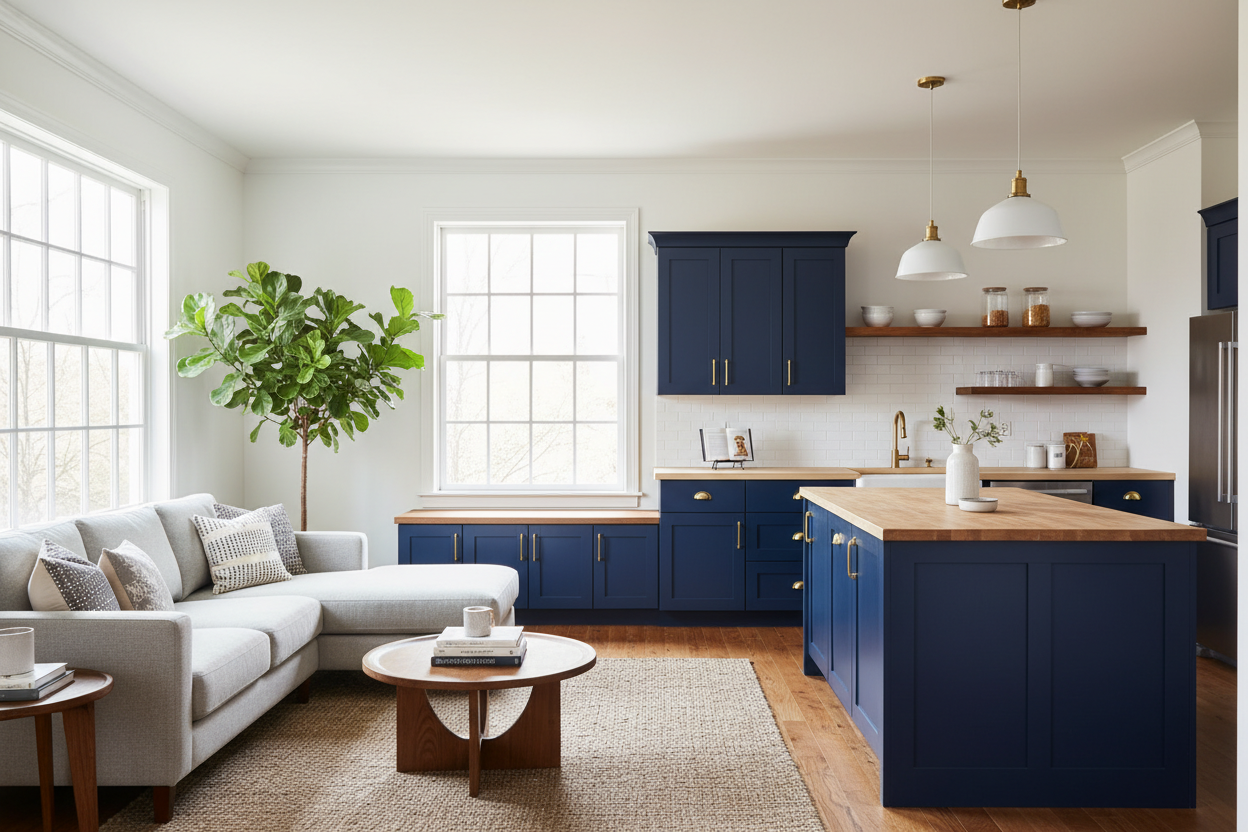
I once spent three hours in Aisle 14 trying to explain to a very patient employee that my kitchen was exactly 142 inches long. He just stared at me and said, 'Good luck with the filler strips.' That was the day I realized cabinet sizes home depot stocks aren't built for your house—they're built for the math of three.
- Standard cabinets come in 3-inch width increments (12, 15, 18, 21, etc.).
- Base cabinets are almost always 24 inches deep and 34.5 inches tall.
- Upper cabinets are typically 12 inches deep, which can be tight for modern plates.
- Filler panels are your best friend and your worst enemy for closing 'the gap.'
The 'Standard' Illusion (And My Filler Panel Nightmare)
If you're diving into a DIY remodel, you quickly realize that the 'standard' home depot kitchen cabinet dimensions are a lie of convenience. Everything moves in 3-inch increments. If your wall is 143 inches, you aren't getting 143 inches of cabinetry. You're getting 141 inches and a two-inch headache.
I learned this the hard way during my first flip. I ignored the math, thinking I could 'wiggle' the stove over. I ended up with a 4-inch gap next to my range that became a graveyard for fallen spatulas and dust bunnies. It looked amateur, and it felt like a wasted opportunity for a slim spice rack. In the world of big-box retail, you don't fight the 3-inch rule; you surrender to it.
The Base Cabinet Sizes Home Depot Actually Stocks
The base cabinet sizes home depot keeps on the floor are the ones they know they can move: 24-inch depths and widths ranging from 12 to 36 inches. You can usually walk out today with a 30-inch sink base or a 24-inch standard unit. But the second you need something specialized, like a 9-inch pull-out, you're entering special-order territory.
I've found that certain Home Depot cabinet companies handle the in-stock game better than others, keeping the finishes consistent across those weirdly sized boxes. If you're buying off the shelf, stick to the Hampton Bay or basic unfinished lines, but be prepared for the fact that the 18-inch drawer base is always the first to sell out. If you see one, grab it.
Wait, What About the Uppers?
Wall units are a different beast. While the widths follow that same 3-inch progression, the depth is almost always 12 inches. This is fine until you realize your fancy 13-inch square dinner plates won't let the door shut. Always check your home depot kitchen cabinet sizes against your actual dishes before you screw anything into a stud.
I’ve seen people forced to buy an entirely new set of plates because they didn’t realize the interior clearance is often closer to 11 inches once you account for the back panel and the door thickness. If you have oversized platters, you might need to look at 'bridge' cabinets or deeper pantry units that can be repurposed as uppers, though that gets tricky with head clearance.
The Refrigerator Wall Trap
The most common mistake I see is the 'Fridge Squeeze.' People take their home depot cabinet measurements and forget to add 1.5 to 3 inches for decorative end panels or fridge gables. If you have a 36-inch wide fridge and you leave exactly a 36-inch opening, that fridge is never going in. You need breathing room and space for the doors to swing open past 90 degrees.
If the standard modular fridge surrounds feel too bulky or just won't fit your weird alcove, I’ve sometimes opted for a specific premade cabinet in Home Depot to bridge the gap. Sometimes a tall pantry cabinet works better than a dedicated fridge surround if you're tight on horizontal inches. Just watch those side clearances.
Hacking the Leftover Space (Without It Looking Cheap)
You will have a gap at the end of your run. It is a mathematical certainty. Instead of just slapping a flat, sad piece of filler wood there, try to make it look intentional. You can buy 3-inch filler strips that match your cabinet finish, but if the gap is larger, consider a custom wine rack or a vertical slot for cookie sheets.
In one galley layout I tackled, the standard kitchen corner units were either too massive or left a weird 10-inch dead zone. I decided to end the cabinet run early and used a wide corner home office cabinet as a freestanding 'command center' at the edge of the kitchen. It gave the room a built-in look without the custom price tag. It’s about making the modular pieces work for you, not the other way around.
What is the standard height for Home Depot base cabinets?
They are 34.5 inches tall. Once you add a standard 1.5-inch countertop, you hit the industry-standard 36-inch work height. Don't forget to account for your flooring thickness if you're installing cabinets before the floors go in.
Can I find 15-inch deep upper cabinets at Home Depot?
Not usually in the 'in-stock' aisle. Most 15-inch deep uppers are special orders or part of their semi-custom lines. If you need the extra depth for large plates, plan for a 4-6 week wait time.
Do these cabinets come with the toe kick?
The base cabinets have a recessed toe kick area built into the box, but you'll need to buy a matching toe kick 'skin' to cover the seams between different units for a finished look.


Leave a comment
This site is protected by hCaptcha and the hCaptcha Privacy Policy and Terms of Service apply.