










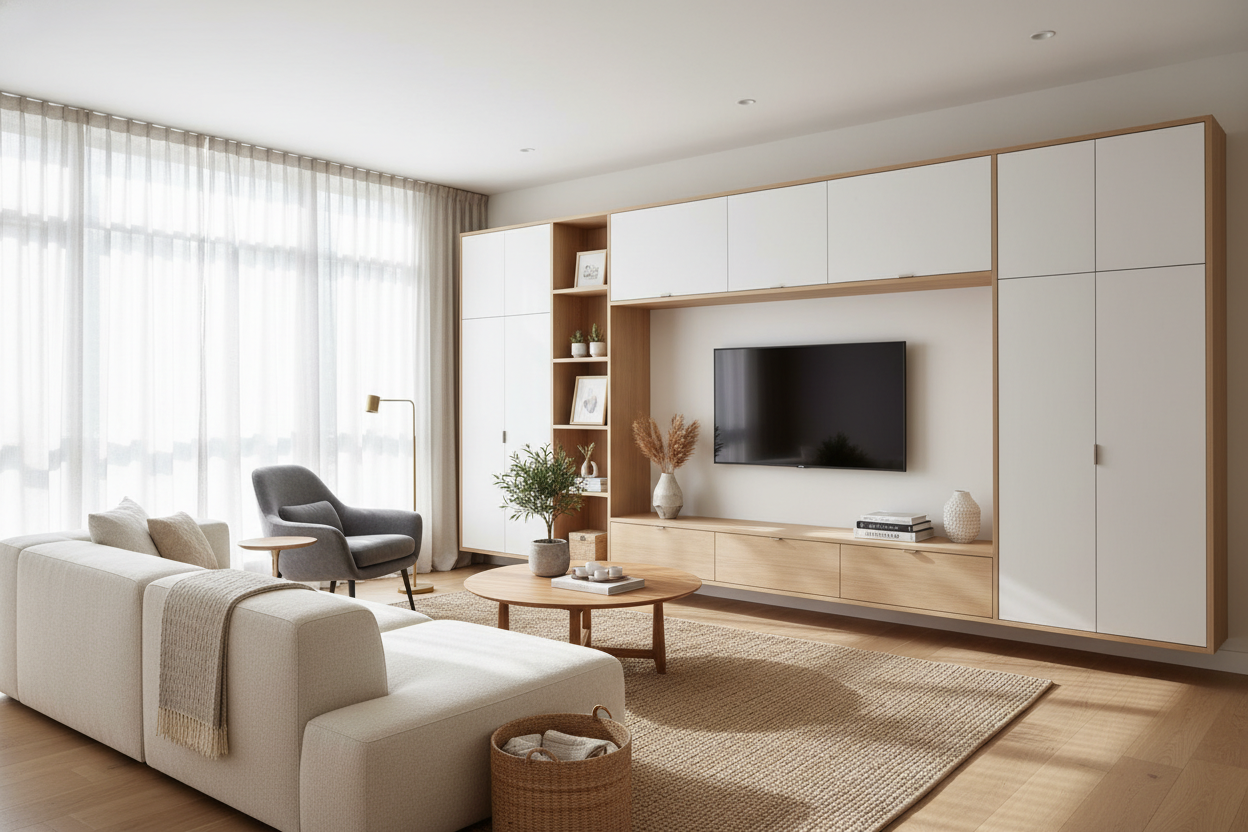
I spent three months staring at a 12-foot blank wall in my apartment, paralyzed by indecision. I desperately wanted that floor-to-ceiling library look—the kind where the TV is tucked perfectly into the architecture—but my landlord would have a stroke if I bolted permanent cabinetry into the drywall. Plus, I’m not about to gift a future tenant $8,000 worth of custom millwork.
That is when I stopped looking at contractors and started looking at a tv modular wall unit. It was a total pivot from my original plan, but it ended up being the smartest design choice I’ve made in years. I got the scale I wanted without the permanent commitment.
- Cost: Usually 70% cheaper than custom carpentry.
- Portability: It breaks down into manageable boxes when your lease is up.
- Customization: You can add or subtract cabinets based on your wall's actual width.
- Cable Management: Most units are designed with hidden channels, unlike old-school built-ins.
The Custom Built-In Dream (And The Sticker Shock)
We’ve all seen the Pinterest boards: white oak shelving, perfectly integrated LED lighting, and a TV that looks like it was born inside the wall. I called three local contractors to get quotes for my living room. The cheapest bid came in at $6,200, and that was for 'paint-grade' MDF, not even real hardwood.
Beyond the price, there is the 'renter's tax.' If I installed custom shelving, I'd have to pay to have it removed and the wall patched when I moved out. It’s a double expense. I needed something that looked intentional and high-end but could be packed into a U-Haul. The modular tv wall unit was the only middle ground that didn't feel like a compromise.
Enter the Modular TV Wall Unit
The beauty of a modular system is that it mimics architecture through scale. Instead of one lonely console sitting in the middle of a vast wall, you’re using a series of interlocking or flush-sitting pieces to fill the space. It’s basically Legos for grown-ups who care about interior design.
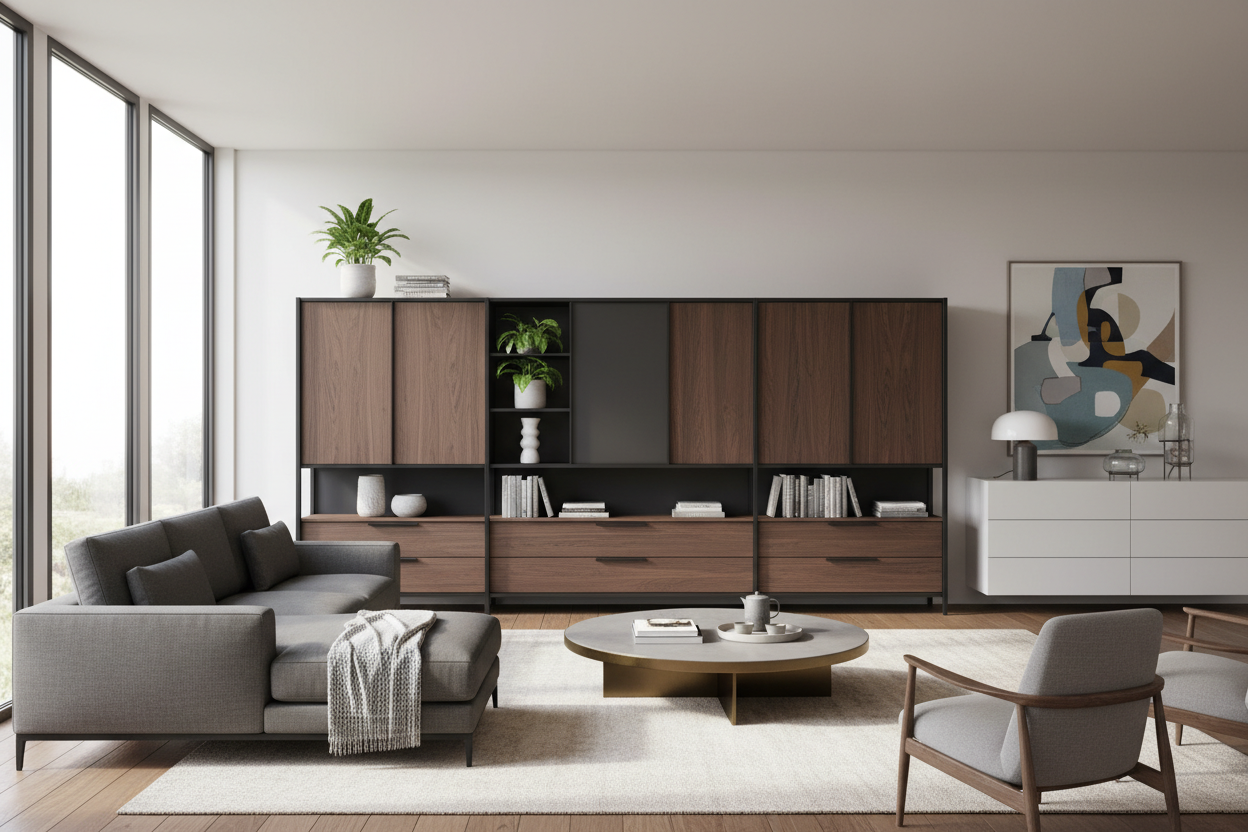
I started with a low-profile base and added vertical piers on either side. If you have a weirdly shaped room, you can even look into a wall mounted freely arranged TV stand. This allows you to float certain elements at different heights, which is a classic trick designers use to make a room feel taller and more expensive than it actually is.
How to Make Modular Pieces Look Like Custom Architecture
The biggest mistake people make with modular furniture is leaving 'the gap.' If your units are sitting two inches apart, they look like random boxes. To get that built-in look, you have to push them perfectly flush. I actually use small C-clamps on the underside of the frames to keep them locked together so they don't migrate over time.
Color choice is also huge. If you want the unit to disappear into the room like real cabinetry, I always suggest a white media center wall unit. When the furniture matches the wall color, the shadows disappear, and the whole thing looks like it was built by the original architect. It’s the easiest way to hide the fact that you’re using standalone pieces.
The Ultimate Flex: Taking Your 'Built-Ins' With You
Last year, I finally moved. In my old place, I had the units stretched out across a long, flat wall. My new place has a fireplace that cuts the main wall in half. If I had spent that $6,000 on built-ins, I’d be leaving that investment behind. Instead, I just reconfigured my pieces.
I separated the side towers and moved them to my home office, while the central console stayed in the living room. That is the versatility you get with modern TV stands and consoles that are part of a modular family. You aren't locked into one floor plan forever. Your furniture actually evolves with your housing situation.
Are You Ready to Ditch the Single Console?
If you have a 65-inch TV sitting on a 50-inch console, please stop. It creates a 'lollipop effect' where the top is too heavy for the base. It looks cluttered and accidental. Transitioning to a full-scale system fixed my awkward TV shrine by giving the screen a proper frame. If you find yourself constantly buying extra little bookshelves to fill the gaps around your TV, it’s time to go modular.
FAQ
Is modular furniture hard to assemble?
It takes more time than a single coffee table, but it isn't harder. It’s just repetitive. Once you’ve built one cabinet, you’ve built them all. Just grab a cordless drill and a friend.
How do I hide all the messy cords?
Look for units with 'wiring grommets' or a recessed back panel. I use adhesive cable clips to run everything along the back of the unit so nothing touches the floor.
Will it look cheap?
Not if you pay attention to the finish. Avoid the ultra-shiny plastic laminates. Look for textured wood grains or matte finishes that don't reflect the glare from your TV screen.


Leave a comment
This site is protected by hCaptcha and the hCaptcha Privacy Policy and Terms of Service apply.