










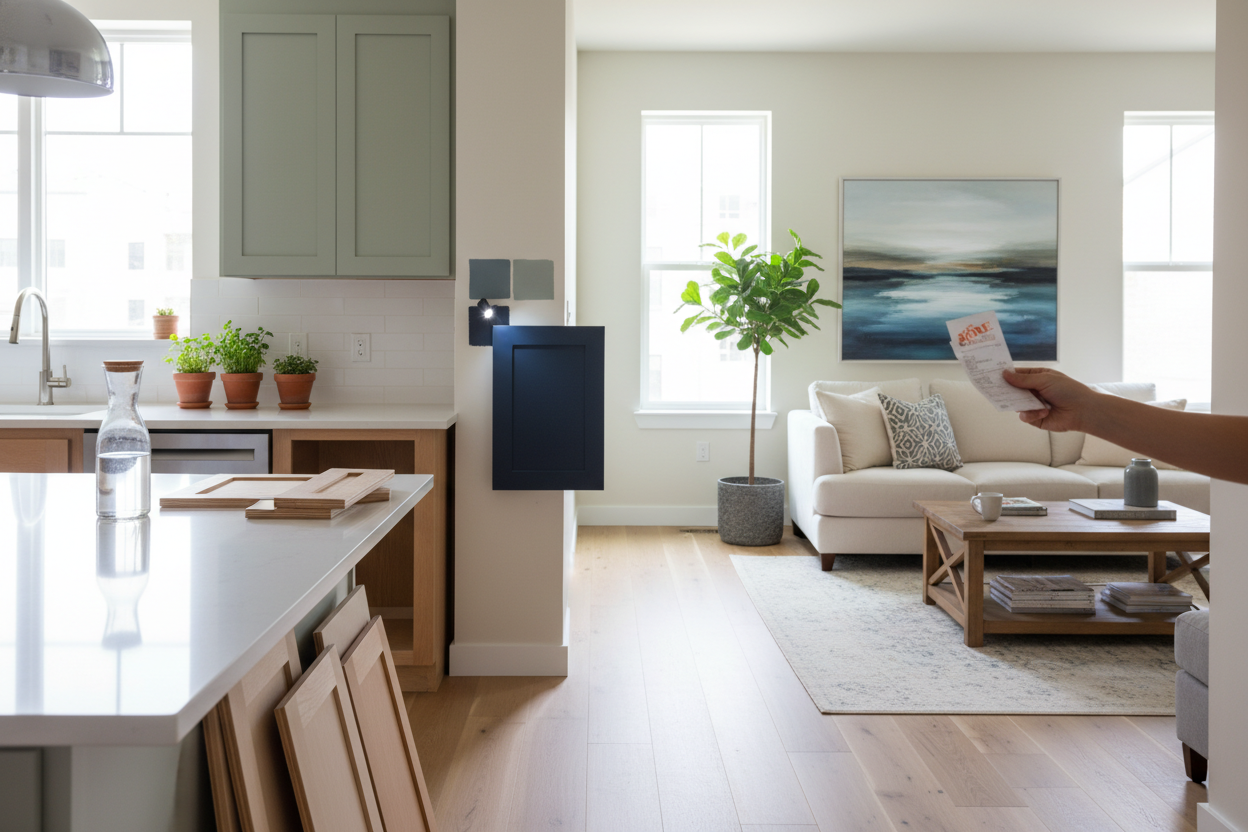
I once spent four hours in Aisle 14 staring at a 'warm sand' door sample until my eyes crossed. In the store, it looked like a high-end Mediterranean villa; once I got it into my actual 1950s kitchen, it looked like a damp cardboard box. We’ve all been there—staring at 47 browser tabs of home depot cabinet color options at 1 AM, only to realize that the 'perfect' shade is a total chameleon.
The truth is, the big orange box is designed to sell you a dream under industrial-grade stadium lighting. Your kitchen, with its single window and 2700K LED bulbs, is a completely different beast. Before you drop five figures on a kitchen remodel, you need to understand why the showroom is lying to you.
Quick Takeaways
- Store lighting is usually 5000K (blue-white), while homes are typically 2700K-3000K (yellow-white).
- Always buy a physical sample door, not just a tiny 2-inch plastic chip.
- Shadows in your kitchen will make dark colors look 20% darker than they appear in the store.
- Undertones in white cabinets are the hardest to get right—always check them against your backsplash.
The Showroom Lighting Trap (Or Why It Looked So Good in Aisle 14)
The lighting in a Home Depot is brutal. It’s high-output, high-ceiling fluorescent or LED panels designed to make the aisles look clean and bright. This light has a very high Kelvin rating, which means it’s 'cool.' It effectively neutralizes warm undertones. That creamy off-white cabinet you love? In the store, the blue-ish light cancels out the yellow, making it look like a crisp, pure white. The second you bring it home to your warm incandescent bulbs, that yellow comes screaming back to the surface.
I’ve seen 'Deep Sea' blues turn into flat charcoals and 'Sage Greens' turn into muddy browns just by moving them ten feet away from a window. The store also lacks the shadows found in a real house. In a showroom, light hits the cabinets from every angle. In your kitchen, the light mostly comes from the ceiling or one side. This creates 'light fall-off' in the corners, making those home depot kitchen cabinet colors look much moodier and more saturated than you expected. If you’re sensitive to color, never trust your first impression in the store.
How to Actually Use Home Depot Cabinet Samples
Stop looking at the little fan decks. Those tiny paint chips are useless for cabinetry because they don’t show you how the finish—satin, matte, or gloss—interacts with the wood grain or the door's recessed edges. You need to order home depot cabinet samples in the form of actual 12x12 or 15x15 sample doors. Yes, they usually cost $20 to $50, but that is a cheap insurance policy against a $15,000 mistake.
Once you get the sample home, don't just hold it in your hands. Lean it against your current lower cabinets and leave it there for 24 hours. Look at it at 8 AM, 2 PM, and 9 PM with the lights on. You’ll be shocked at how much the color shifts. I’ve found that many people realize they actually want a premade cabinet in Home Depot once they see the finish quality in their own light, but you have to be willing to move that sample around. Put it next to your fridge, then next to your stove, then in that dark corner by the pantry. Shadows are the ultimate color killer.
My Brutally Honest Take on Home Depot Kitchen Cabinet Colors
Home Depot’s current lineup is heavy on the 'modern farmhouse' aesthetic. You’ll see a lot of navy, forest green, and every shade of grey imaginable. The 'Midnight' or 'Navy' shades from brands like KraftMaid or Hampton Bay are stunning, but they are a nightmare for fingerprints. If you have kids or dogs, that deep blue will look like a forensic crime scene within three days. I personally think the muted greens have more staying power; they act as a neutral without being boring.
However, you have to remember that trust two Home Depot cabinet companies for the long haul because their factory-applied finishes are significantly more durable than anything you can do with a brush and a can of paint. When you’re looking at kitchen cabinet colors home depot offers, pay attention to the 'sheen.' A high-gloss finish reflects your floor color. If you have orange-toned oak floors and high-gloss white cabinets, your cabinets are going to look slightly orange. I almost always recommend a matte or satin finish to avoid this 'color bounce' effect.
When to Stick to Safe Whites (And When to Run)
White cabinets are the safest bet for resale, but they are the hardest to get right. Home Depot’s stock white cabinets often lean 'cool'—almost a surgical blue-white. If you pair these with a warm marble countertop or a cream-colored subway tile, the cabinets will look cheap and the tile will look dirty. If your kitchen doesn't get much natural light, avoid 'stark white' at all costs. It will look grey and dingy in the shadows. Go for a 'linen' or 'dove' white instead; the extra warmth keeps the kitchen feeling lived-in rather than sterile.
Pairing Showroom Colors With Your Open Layout Furniture
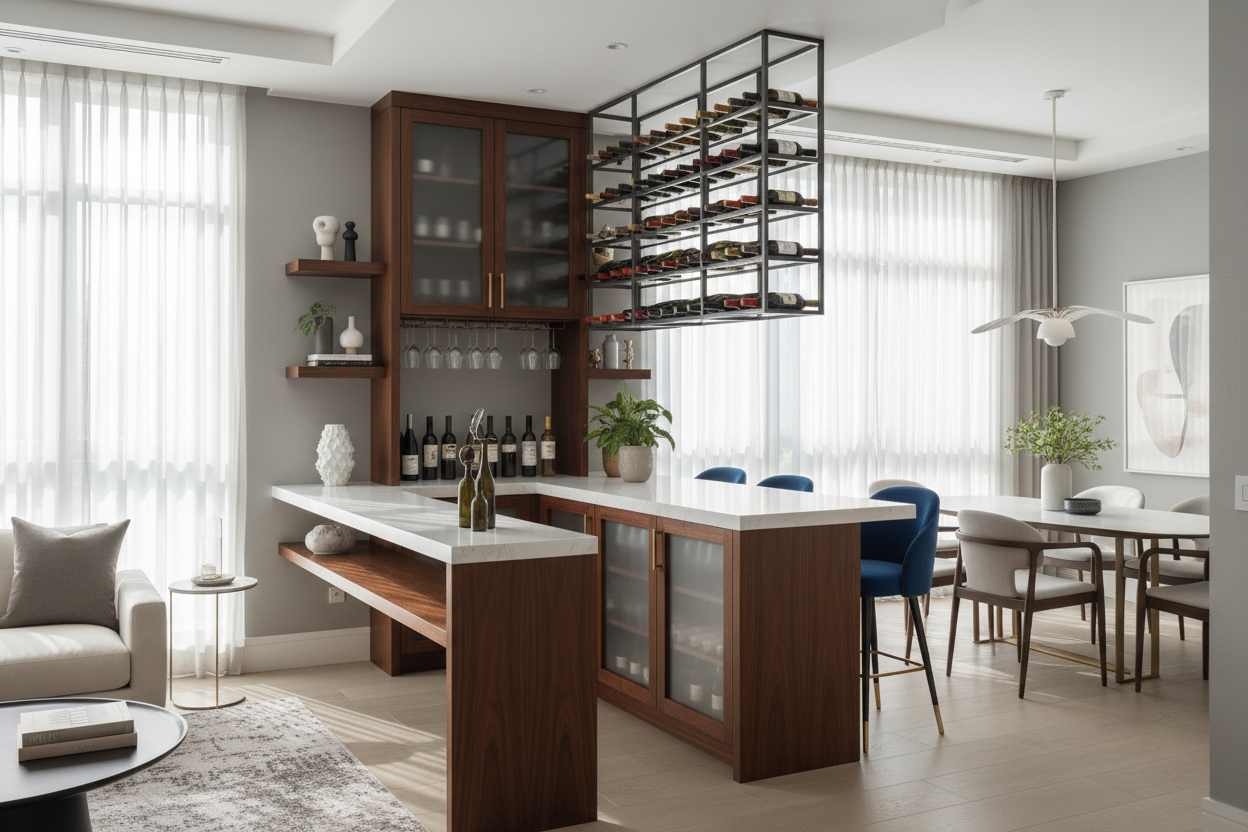
If you have an open-concept floor plan, your kitchen cabinets aren't living in a vacuum. They need to talk to your sofa and your dining set. I see people pick a trendy 'Greige' for their cabinets that completely clashes with their warm walnut dining table. If you're going with a light, airy cabinet color, you need a 'grounding' piece nearby. For example, a black cabinet with glass doors in the adjacent dining area creates a sophisticated contrast that makes those lighter Home Depot shades look intentional rather than washed out.
Think about the 'visual weight.' If you choose a dark charcoal for your kitchen island, make sure your living room rug or coffee table has some dark tones to balance it out. Otherwise, your kitchen will look like a giant black hole in the middle of the house. I always bring a cushion from my sofa or a drawer from my side table to the kitchen when I’m testing cabinet samples. If they look weird together on the floor, they’ll look weird together once they're installed.
My Biggest Mistake
I once ordered a full set of 'Cognac' stained cabinets because they looked like a rich, expensive cherry in the showroom. When they arrived and were installed in my kitchen—which had north-facing light—they looked like a 1970s basement. The orange undertones were so aggressive I actually cried. I didn't account for the fact that north-facing light is blue-toned, which pushed the orange stain into 'neon' territory. I ended up having to paint over brand-new cabinets. Learn from my pain: test the sample in the specific room it’s going to live in.
FAQ
Do Home Depot cabinet samples match the final product exactly?
Usually, yes, but wood is a natural product. If you’re buying stained wood cabinets, expect slight variations in grain and darkness. Painted finishes are much more consistent, but batches can still vary slightly if they are ordered months apart.
Can I return cabinet samples?
Most of the time, yes. Home Depot generally allows you to return the individual sample doors to the store for a full refund. It’s basically a free rental program if you keep the packaging clean.
Is it better to get painted or stained cabinets from Home Depot?
In my experience, their painted finishes (especially the ones with a 'baked-on' coating) are more durable for modern styles. Stains can be hit-or-miss depending on the wood species used, often looking 'muddy' on cheaper woods like birch.

Leave a comment
This site is protected by hCaptcha and the hCaptcha Privacy Policy and Terms of Service apply.