










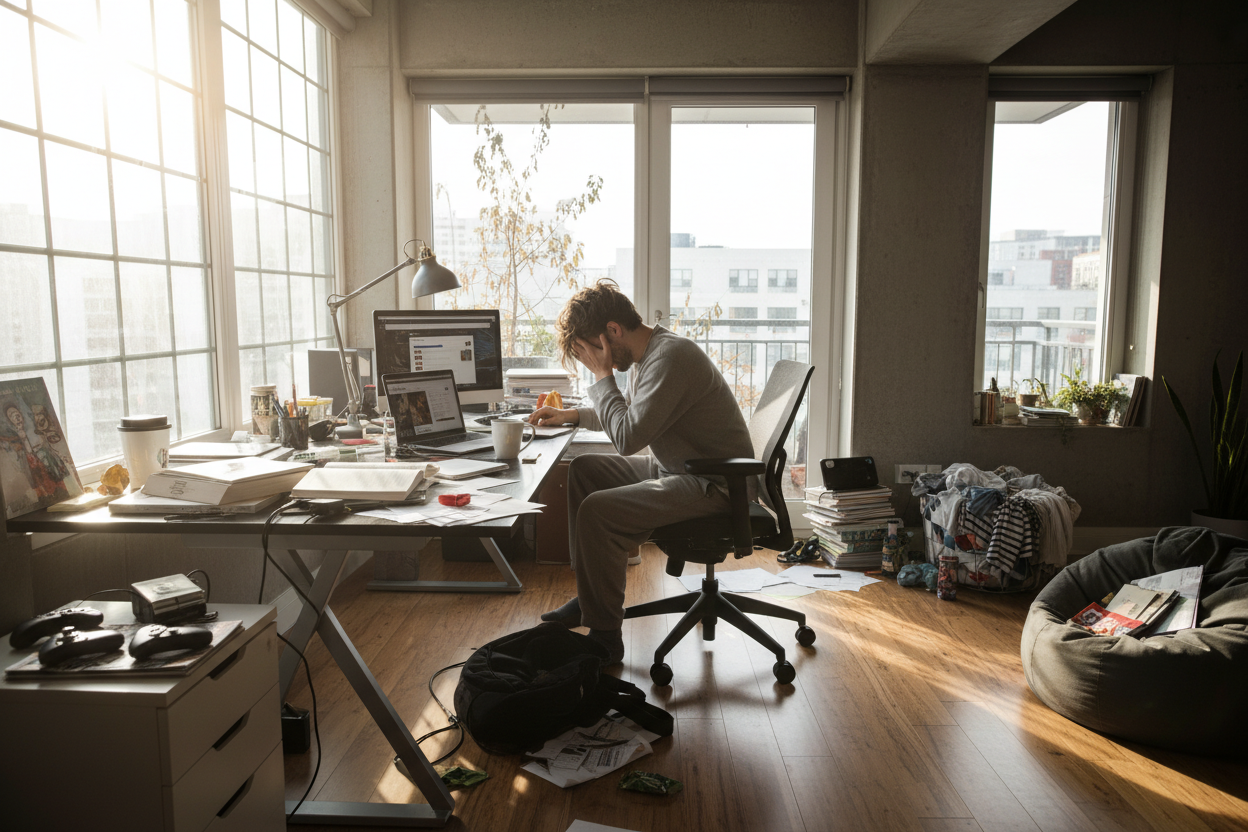
We often blame our willpower when we find ourselves how to focus when working from home, but as an interior designer, I often find the culprit is actually the environment. If you are working from a dining chair that cuts off circulation or facing a chaotic bookshelf, your brain is constantly processing low-level discomfort and visual data. This cognitive load steals the energy you need for deep work. Creating a focused environment isn't just about aesthetics; it is about spatial psychology and ergonomics.
Key Design Features for Focus
- Ergonomic Anchoring: A chair with adjustable lumbar support and seat depth to prevent physical fatigue.
- Lighting Temperature: Cool white bulbs (3500K-4000K) for alertness, avoiding warm yellow tones that induce relaxation.
- Visual Zoning: Physical barriers (rugs, dividers, or desk orientation) that signal to the brain where work begins and ends.
- Acoustic Dampening: Soft furnishings like heavy drapes or upholstered panels to reduce echo and household noise.
The Psychology of Zoning and Layout
If you are struggling to focus working from home, look at your floor plan. The most common mistake I see is the "floating" worker—someone working on a laptop on a kitchen island or a sofa. To the brain, these are spaces of consumption and rest, not production.
You must establish a "Command Position." In design theory, this means positioning your desk so you have a view of the door but aren't directly in line with it. Facing a wall can feel confining and subconscious anxiety-inducing, while having your back to the door triggers a primitive unease. If you can't focus on work at home, try reorienting your desk to face the room. This simple shift often creates a sense of authority and stability.
Ergonomics: The Invisible Distraction
Physical discomfort is the silent killer of productivity. You might not notice a slight backache, but your subconscious does, leading to fidgeting and breaks. If you find yourself saying "i can't focus working from home," check your hardware.
The Chair Mechanism
Stop treating the office chair as an aesthetic object. While velvet tub chairs look lovely in a portfolio, they lack the kinetic support needed for eight hours of work. Look for synchro-tilt mechanisms that allow the seat and backrest to move together. This dynamic sitting encourages blood flow, keeping you alert. If you are struggling to concentrate working from home, swapping a static wood chair for high-performance mesh can be transformative.
Lighting and Visual Noise
How to stay focused while working from home often comes down to what your eyes are processing. "Visual noise" refers to the clutter and disparate objects in your peripheral vision.
Controlling the View
When staying focused working from home becomes difficult, analyze your sightlines. Open shelving is trendy, but if it is filled with chaotic paperwork or miscellaneous decor, it creates a micro-distraction every time you look up. I recommend closed storage—credenzas or filing cabinets with tambour doors—to hide the chaos. A clean visual field reduces cognitive load.
Layered Lighting
Relying on a single overhead fixture causes eye strain, a major reason people feel tired and can't focus working from home. Layer your lighting: ambient light for general illumination, and a dedicated architectural task lamp with a high CRI (Color Rendering Index). This directs focus specifically to the document or keyboard, creating a spotlight effect that psychologically narrows your attention.
My Personal Take on How to Focus When Working From Home
I learned the hard way that "aesthetic" does not always equal "productive." In my previous home office, I installed a stunning, high-gloss lacquered parson's desk right in front of a south-facing window. It looked incredible in photos.
However, within a week, I was struggling to focus working from home. The issue wasn't the work; it was the glare. The high-gloss finish acted like a mirror for the sun, bouncing harsh light directly into my eyes around 2:00 PM every day. It triggered migraines and forced me to leave the room. I also realized that the desk lacked a "modesty panel" or cable management tray. I could feel the tangle of wires touching my feet, which was a tactile annoyance that constantly broke my concentration. I eventually swapped it for a matte-finish walnut desk with integrated cable routing. The difference in my ability to sustain deep work was immediate. Sometimes, the texture of a surface or the management of a single wire matters more than the style of the room.
Conclusion
Learning how to focus work from home is less about discipline and more about design. By curating your lighting, investing in ergonomic furniture, and reducing visual noise, you build a sanctuary that protects your attention. Don't just decorate; design for your brain.
Frequently Asked Questions
Does the color of my home office affect my focus?
Absolutely. Color psychology plays a massive role in how to stay focused when working from home. Blues and greens are low-wavelength colors that promote tranquility and focus. Avoid painting your direct line of sight in bright reds or oranges, as these can be over-stimulating and lead to agitation over long periods.
How do I focus in a small apartment without a dedicated room?
If you are staying focused while working from home in a small space, use verticality. A secretary desk that closes up at the end of the day signals to your brain that work is "over." Additionally, using a specific rug under your chair can create a psychological "zone" that separates work mode from living mode.
Is a standing desk necessary for focus?
It can help. Many clients find staying focused working from home easier when they can shift posture. A sit-stand desk allows you to change your physiological state, which can reset a wandering mind. However, an anti-fatigue mat is essential if you plan to stand, or your focus will shift to your aching feet.


Leave a comment
This site is protected by hCaptcha and the hCaptcha Privacy Policy and Terms of Service apply.