










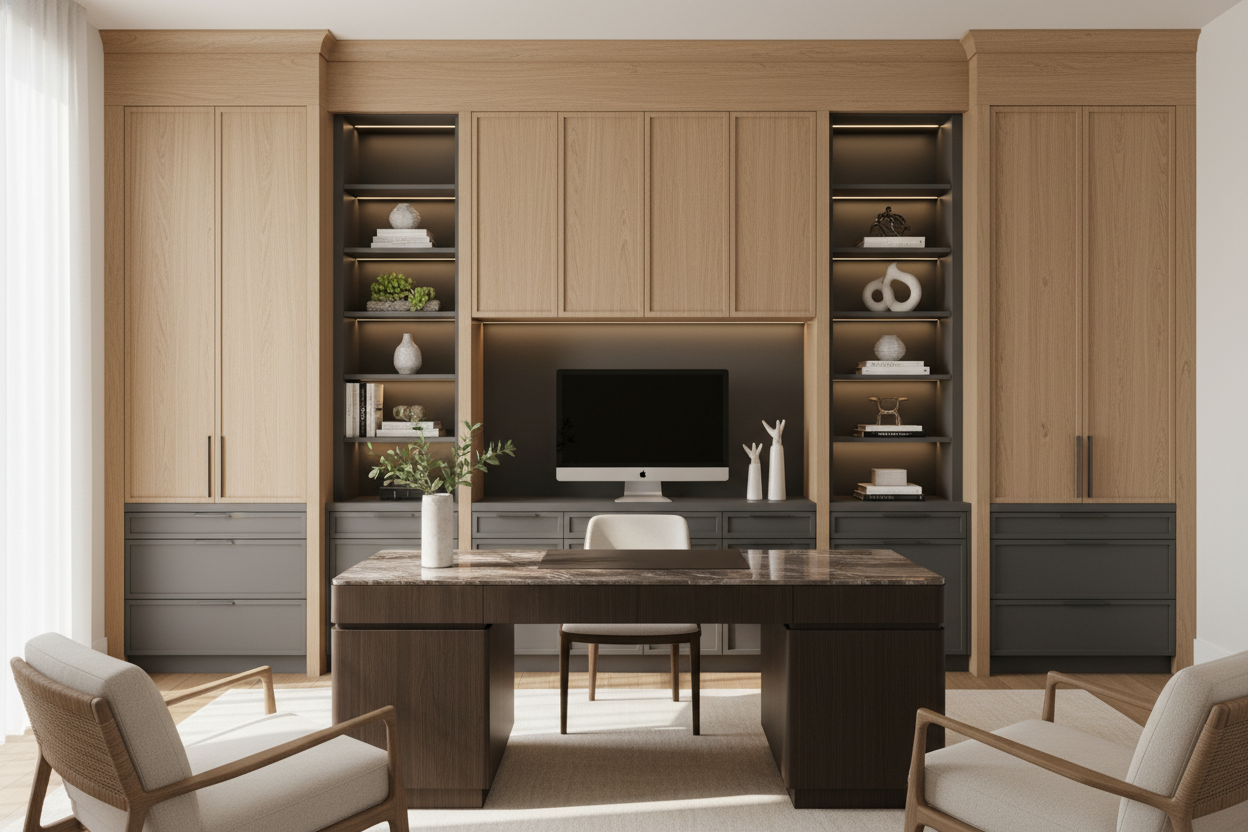
There is a distinct difference between a workspace that feels temporary and one that commands productivity. Often, the culprit behind a chaotic environment isn't a lack of discipline, but a lack of intentional storage. As a designer, I see clients struggle with freestanding bookshelves that wobble and filing cabinets that clash with their aesthetic. The solution usually lies in architectural integration: built-in cabinets for office spaces.
Moving beyond simple storage, custom millwork anchors a room, providing a sense of permanence and sophistication that modular furniture simply cannot replicate. Whether you are carving out a niche in a bedroom or dedicating a full room to your practice, this guide explores how to design joinery that balances ergonomic function with high-end form.
Quick Decision Guide: Key Features for Office Millwork
- Material Core: Opt for furniture-grade plywood over particle board for structural longevity, especially for shelves holding heavy books.
- Ergonomics: Ensure your custom built-in desk surface is at the correct typing height (typically 29-30 inches) with ample knee clearance.
- Tech Integration: Pre-plan grommets and internal outlets within the office built-in to hide wiring completely.
- Lighting: Incorporate dimmable LED strip lighting under upper cabinets for task lighting that reduces eye strain.
- Finish: Choose a durable lacquer or conversion varnish for high-traffic surfaces rather than standard wall paint.
Mastering the Layout: Space Planning & Flow
The success of home office built-ins relies heavily on layout. We aren't just filling a wall; we are curating a workflow. For smaller rooms, verticality is your best friend. Floor-to-ceiling office wall built ins draw the eye upward, making the ceiling feel higher while maximizing storage footprint.
If you are working with a home office built-in setup, consider the "visual weight" of the cabinetry. A full wall of closed doors can feel oppressive in a small room. I often recommend a mix of open shelving for display and closed base cabinets for concealing paperwork and printers. This creates a balanced built in office wall that breathes.
Material Selection: Durability Meets Aesthetics
When specifying built in office cabinets, the finish dictates the vibe. For a modern built in office cabinet look, flat-panel (slab) doors with a matte finish work best. If you prefer a traditional study, shaker style or raised panel doors with rich wood stains add warmth and gravity.
The Debate: Paint vs. Stain
White office built ins remain a timeless choice because they reflect light, keeping the workspace airy. However, they require high-quality paint application to avoid chipping. Stained wood built in study cabinets offer better resistance to scuffs and hide dust, but they require adequate ambient lighting to prevent the room from feeling dungeon-like.
Designing the Work Zone: The Custom Desk
The centerpiece of built in home office furniture is often the desk itself. A custom built-in desk offers a distinct advantage: continuous workflow. We can extend the desktop surface into the cabinetry, creating an L-shape or T-shape configuration that freestanding desks can't achieve seamlessly.
For a built in home office built in office cabinets setup, pay attention to the desktop material. While the cabinets can be painted MDF, I always advise clients to use a hardwood or quartz top for the desk area. Writing directly on soft wood or painted surfaces will eventually leave indentations. A darker wood top on white office built ins creates a stunning, high-contrast focal point.
Lessons from My Own Projects: The "Cable Nightmare"
I want to share a specific lesson from a project I managed last year involving extensive office built-ins. On paper, the design was flawless—beautiful rift-sawn oak, integrated lighting, and a massive custom built-in desk and cabinets combo.
However, once the joinery was installed, we realized a critical oversight: we hadn't accounted for the depth of the client's new laser printer plugs. We designed the built in office cabinet depth at exactly 18 inches, matching the printer's specs. But with the power cord and USB cable plugging into the back, the printer protruded two inches, preventing the cabinet doors from closing.
We had to cut into the drywall behind the cabinet to recess the outlet box to make it fit. Now, I always specify a minimum of 22-inch depth for any cabinets for office built in intended to house hardware, and I insist on ventilation slots in the toe-kick or side panels to prevent equipment overheating. It’s these unglamorous details that define the difference between "good looking" and "livable."
Conclusion
Investing in built in office furniture is about more than just organization; it is about respecting the work you do. By customizing your environment with a custom built-in office desk and tailored shelving, you create a space that supports your mental clarity. Whether you choose sleek modern built in office cabinets or a traditional library look, the result is a home that works as hard as you do.
Frequently Asked Questions
How deep should built-in office cabinets be?
Base cabinets are typically 24 inches deep (standard kitchen depth) or 18-21 inches for slimmer profiles. Upper built in office wall cabinets should be shallower, usually 12-14 inches, to prevent you from hitting your head while seated at the office desk built ins.
Can I install built-ins in a rental property?
Generally, no. Built ins for office spaces are permanent fixtures attached to the wall studs. However, some companies offer modular systems that look like built in for office setups but can be disassembled and moved, which is a great compromise for renters.
What is the best way to light office built-ins?
Avoid relying solely on overhead can lights, which create shadows. Integrate LED tape lights into channels routed into the underside of your shelves. This highlights your decor and provides essential task lighting for the home office with built-ins.


Leave a comment
This site is protected by hCaptcha and the hCaptcha Privacy Policy and Terms of Service apply.