










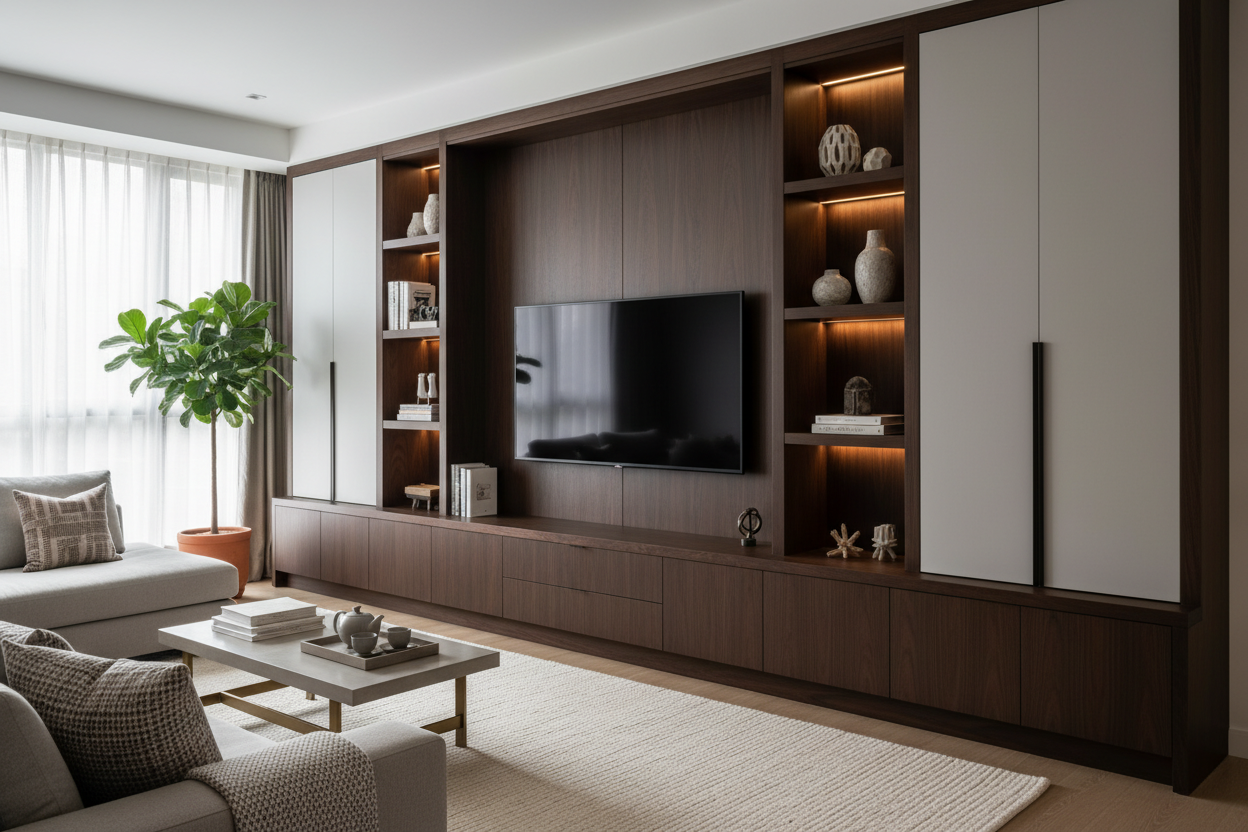
I spent three weeks measuring my 12x14 living room for a floor-to-ceiling custom unit before I realized I was basically building a wooden tomb for my 55-inch OLED. It is a classic trap. We think a massive tv cabinet design makes a room look 'finished' or expensive, but usually, it just makes the space feel like a cluttered electronics showroom from 2005.
The truth is, your TV shouldn't be the center of a shrine. When I finally ditched my heavy, wall-swallowing console for something leaner, my living room finally started to breathe. You don't need a five-figure custom build to make your space look high-end; you just need to stop overcomplicating things.
Quick Takeaways
- Visual weight matters: If you can see the floor under your stand, the room feels larger.
- Hidden storage is non-negotiable for routers and messy cables.
- Avoid 'fake' textures: Cheap matte finishes look better than bad faux-wood stickers.
- Scale is everything: A stand should be at least 6-10 inches wider than your TV.
We Need to Talk About the 'Statement' Media Wall Trend
Social media is obsessed with these massive, built-in media walls that feature slats, LED strips, and enough shelving to house a small library. In a massive open-concept mansion, sure, they work. In a real-world apartment or a standard suburban living room? They are a claustrophobic nightmare. These oversized units often swallow the room whole, leaving you with zero flexibility if you ever want to move your furniture around.
I see people falling into common TV stand design mistakes all the time, mostly by buying pieces that are way too deep for their space. If your console sticks out 20 inches into a narrow walkway, it doesn't matter how 'designer' it looks—it is a functional failure. Interior designers are moving away from these heavy footprints because they make even a 15-foot wall feel cramped and busy.
Why I Finally Embraced a Simple TV Unit Design
My old setup was a dark, espresso-colored beast that weighed about 140 pounds. It was a struggle to assemble, and even harder to move when I realized it was a dust magnet. When I swapped it for a simple tv unit design with clean lines and tapered legs, the shift was instant. Suddenly, the wall looked taller, and the room felt like it had gained five square feet of 'air.'
I personally opted for a modern TV cabinet table with storage that sits low to the ground. It has just enough room to hide my PS5 and the tangled mess of HDMI cords, but the profile is so slim you barely notice it's there. That is the goal. You want people to notice your art or your view, not the box holding up your Netflix machine. My only regret was not doing it sooner—I spent years dusting shelves I didn't even want.
The Secret to Low Cost Simple TV Unit Designs (That Look Expensive)
You do not have to spend two months' rent on a piece of solid walnut to get a high-end look. The secret to finding low cost simple tv unit designs that actually look sophisticated is focusing on the 'silhouette' rather than the material. Avoid anything with plastic-looking wood grain or 'distressed' finishes that look like they were painted in a factory. They always look cheap under LED lighting.
Instead, look for solid colors—matte black, soft white, or even a muted forest green. These finishes hide the fact that the piece might be made of MDF or particle board. If you browse through affordable minimalist TV stands, look for hidden hardware. Push-to-open doors look infinitely more expensive than cheap, silver-painted plastic handles. If the legs look flimsy, you can always buy a set of heavy-duty metal hairpins online for twenty bucks and swap them out. It's the easiest 'expensive' upgrade you can do.
How to Style a Minimalist Setup So It Doesn't Look Empty
The biggest fear people have with a tv unit design simple approach is that the room will feel cold or unfinished. It won't, provided you style it with intention. The 'empty' space is actually a design choice, but you need a few organic touches to keep it from feeling like a hospital waiting room.
I usually follow the rule of three: one tall item, one flat item, and one organic item. A trailing Pothos plant on one end of the cabinet adds life and breaks up the straight lines. On the other side, a small stack of two art books with a ceramic bowl on top handles the 'flat' and 'textured' requirements. If you have extra room, a small, warm-toned table lamp provides a much better vibe for movie night than the harsh overhead 'big lights.'
FAQ
How wide should my TV stand be?
Your stand should be at least 6 to 10 inches wider than the TV on both sides. If the TV overhangs the edges of the cabinet, it looks top-heavy and unstable. It's a visual 'weight' thing.
Is a floating TV unit better than one with legs?
Floating units look incredibly sleek, but they are a pain to install correctly if you aren't handy with a stud finder. Units with thin, tapered legs give you the same 'airy' look without the risk of the whole thing ripping out of your drywall.
How do I hide cables on a minimalist stand?
Use adhesive cable clips on the back of the legs to run wires down to the outlet. If the stand is open-backed, a simple cable management box hidden behind a decorative basket works wonders.


Leave a comment
This site is protected by hCaptcha and the hCaptcha Privacy Policy and Terms of Service apply.