










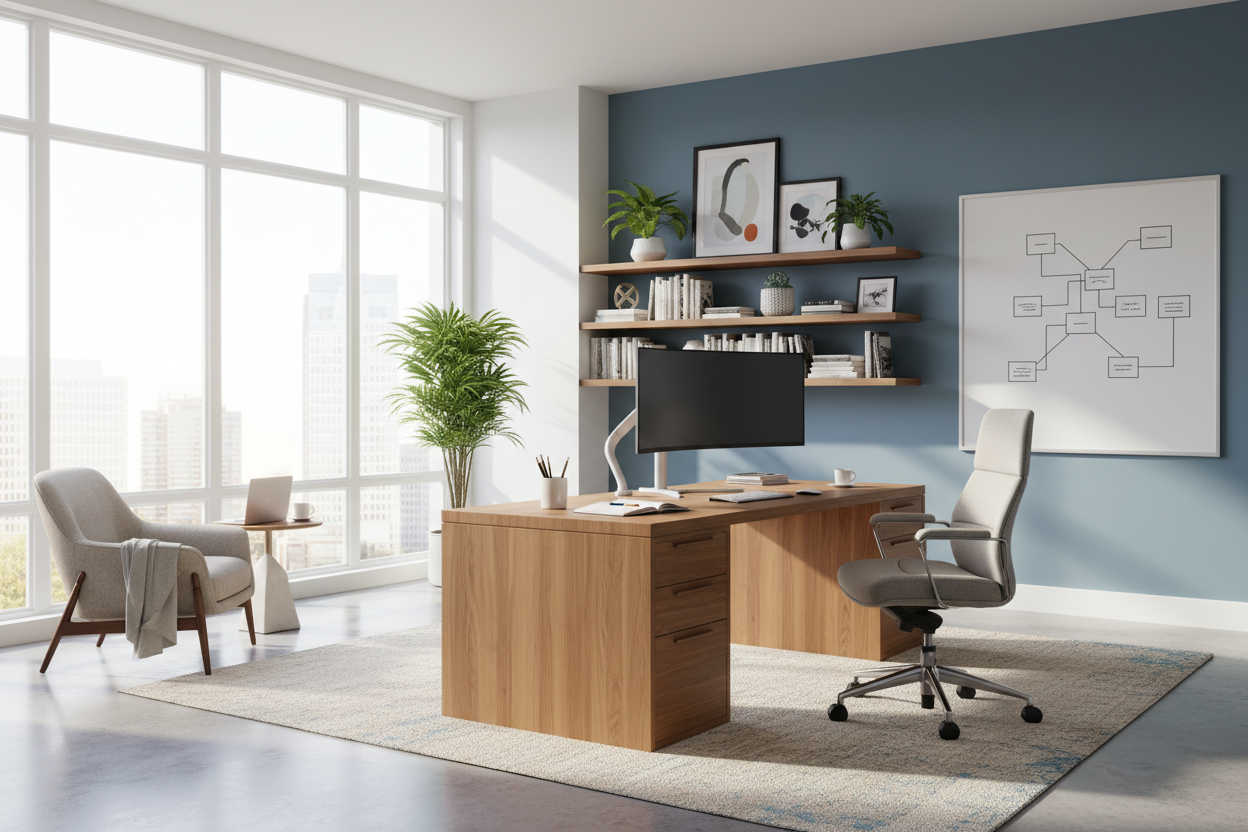
A few years ago, countless businesses sent their teams home with a laptop and a well-wishes email. Today, as executives ask, 'what is your organization's long-term remote work strategy,' it is clear that software alone is not enough. The most successful work from home strategies for companies recognize that a kitchen stool is not a substitute for an ergonomic workstation.
As an interior designer who has spent the last 15 years outfitting North American homes—and recently consulting for remote-first tech firms—I have seen the physical toll of poorly planned home offices. In this guide, I will walk you through how integrating basic interior design principles and proper furniture standards into your corporate policies actually protects employee well-being, focus, and retention.
Quick Decision Guide
- A robust remote strategy treats the physical home office as an extension of the corporate campus, requiring similar ergonomic standards.
- Comfort dictates productivity: prioritize adjustable seat depth and proper desk height over trendy, aesthetic silhouettes.
- Visual weight and space planning help employees separate 'work' from 'home' in small, open-concept apartments.
- Corporate furniture stipends fail when employees lack guidance on quality materials, proportions, and lumbar support.
The Physical Environment as a Remote Strategy
Moving Beyond the Kitchen Island
When crafting a remote strategy, leadership often focuses on communication tools and flexible hours. But physical boundaries dictate mental boundaries. Many North American homes, especially modern open-concept suburban builds, lack dedicated, enclosed office spaces. If your team is working from a sofa or a kitchen island, their posture and productivity will eventually degrade.
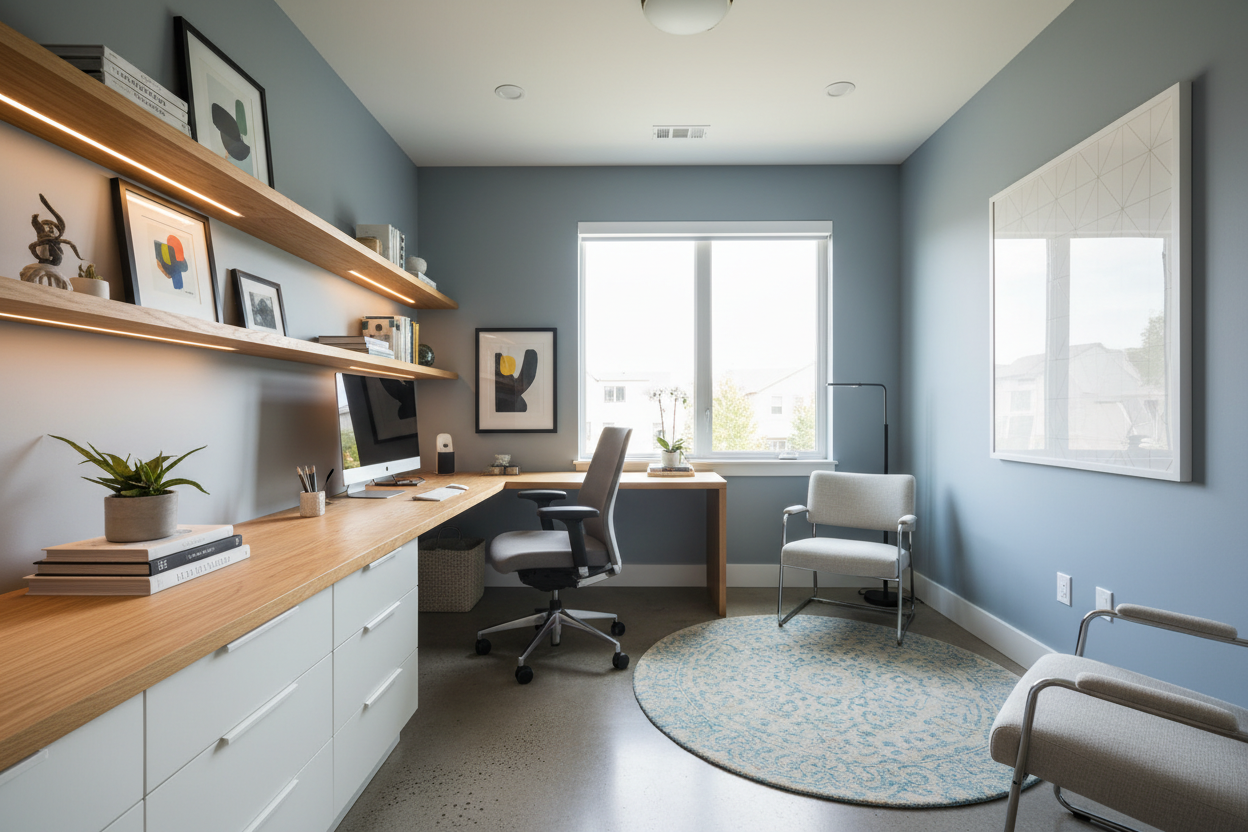
Companies need to provide educational resources on space planning. Employees do not necessarily need a spare bedroom to create a functional workspace; they need to understand how to manage visual weight. A heavy, solid-wood executive desk will overwhelm a small apartment living room. Instead, recommending open-frame metal desks maintains negative space, keeping the room feeling airy while still providing a dedicated work zone.
Comfort & Ergonomics: The ROI of Good Furniture
Why the Dining Chair Fails
Dining chairs have a seat depth and pitch designed for a 45-minute meal, not an 8-hour shift. True ergonomic comfort relies on the physical details: high-density foam cushions that resist bottoming out, adjustable armrests that sit flush with the desk, and a seat height that allows feet to rest flat on the floor.
When companies evaluate what furniture to subsidize, they should look for commercial-grade mechanisms. Engineered wood desks with high-pressure laminate tops will survive coffee spills and daily wear far better than a cheap paper veneer. Investing in these specific material and build qualities prevents the need to replace employee furniture every two years.
Designer's Honest Take
In 2021, I consulted for a mid-sized firm revamping their remote policies. They generously gave everyone a $1,200 furniture stipend with zero parameters. The result? Half the team bought gorgeous, velvet mid-century modern accent chairs that looked amazing on Instagram but destroyed their lower backs within a month.
I learned the hard way that throwing money at a home office without providing a curated list of ergonomically sound, proportionally appropriate options is a waste of capital. Now, I always insist that companies pair their stipends with strict guidelines on seat density, lumbar support, and desk clearance. It is not enough to fund the home office; you have to design it for longevity.
Frequently Asked Questions
How should companies structure furniture stipends?
Instead of a blank check, provide a curated catalog or a list of required specifications (e.g., minimum weight capacity, adjustable seat depth, BIFMA certification). This ensures the stipend actually buys ergonomic support rather than just aesthetic decor.
What is your organization's long-term remote work strategy missing?
Most strategies miss the physical environment entirely. They assume employees naturally know how to set up a productive, low-strain workspace. Adding a brief interior design and ergonomics guide to your onboarding process bridges this gap.
What desk dimensions work best for small spaces?
For tight apartments, aim for a minimum desk depth of 24 inches to comfortably accommodate a monitor and keyboard without straining the eyes. A width of 40 to 48 inches is usually the sweet spot for balancing utility with a small footprint.

Leave a comment
This site is protected by hCaptcha and the hCaptcha Privacy Policy and Terms of Service apply.