










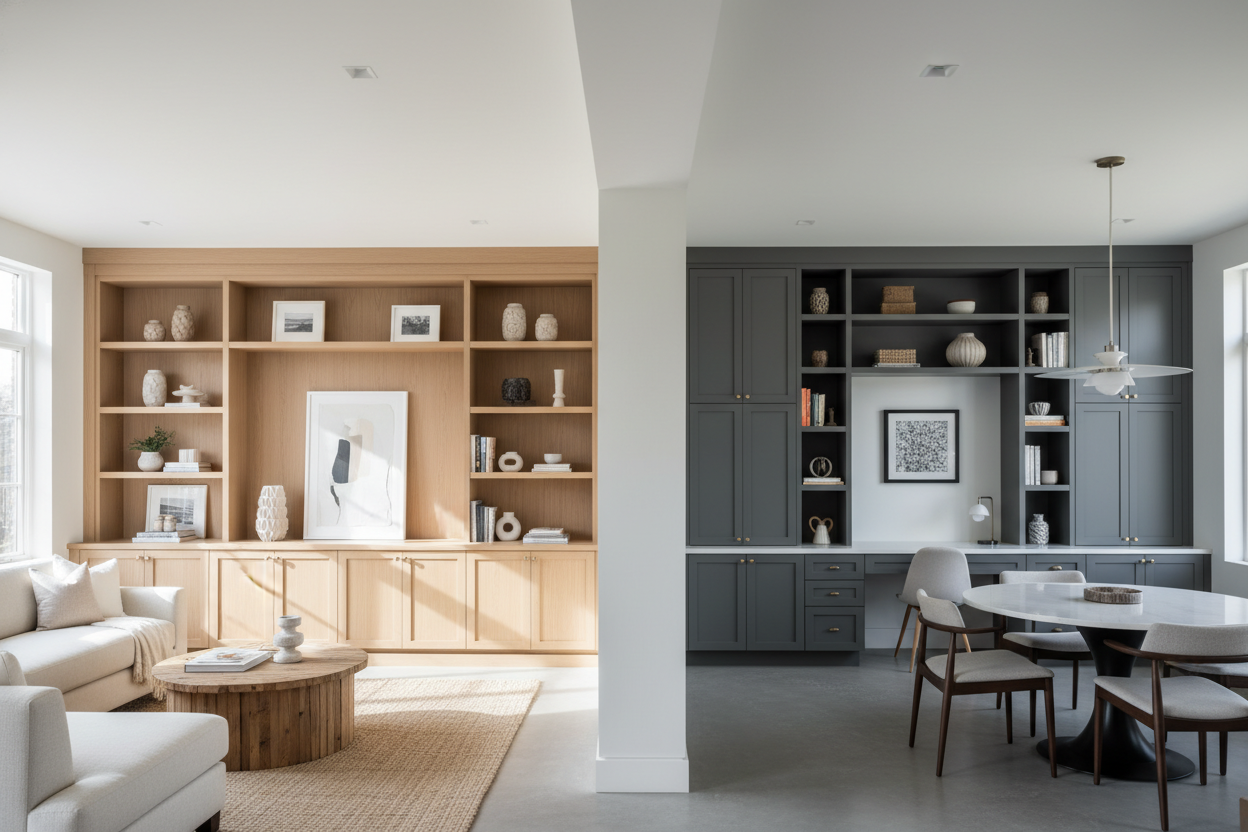
I remember staring at a line item in a client's renovation budget that just said 'Millwork: $84,000.' My client almost choked on her coffee. We were talking about a standard three-bedroom suburban home, not a wing of the Louvre. The contractor had convinced her that every closet, every nook, and even the laundry room required custom cabinetry to look 'finished.'
It was a total lie. After years of ripping out expensive built-ins that didn't age well and assembling more flat-pack than I care to admit, I've developed a hard rule. There are exactly two places where going bespoke is worth the five-figure headache, and everywhere else is just a waste of perfectly good money that could be spent on a better sofa or a vacation.
Quick Takeaways
- Save the big spend for the kitchen and the primary bathroom where precision actually matters.
- Modular systems are better for offices because technology changes faster than woodwork.
- Entryways and mudrooms take too much abuse for expensive, permanent millwork.
- You can make cheap cabinets look high-end with consistent hardware and a sprayer-grade paint job.
The 'Bespoke Everything' Trap
Homeowners get sucked into the 'bespoke everything' mindset because it feels like the ultimate mark of adulthood. We see these perfectly flush, floor-to-ceiling libraries on Pinterest and think, 'That’s what a real house looks like.' In reality, most of those are just clever trim work over stock boxes.
The trap is that custom millwork is permanent. Once you commit to a $12,000 built-in entertainment center, you are married to that specific TV size and that specific room layout forever. It drains your budget before you even get to the stuff you actually touch, like your 2.0 lb/ft³ high-resiliency foam cushions or your solid wood dining table.
Room 1: Why Your Kitchen Actually Needs It
The kitchen is the one place where I will never tell you to compromise. Why? Because houses are crooked. Your floors slope 1/4 inch to the left, and your walls are never perfectly 90 degrees. If you use off-the-shelf boxes in a kitchen with weird corners, you end up with massive filler strips that scream 'I bought this at a big-box store.'
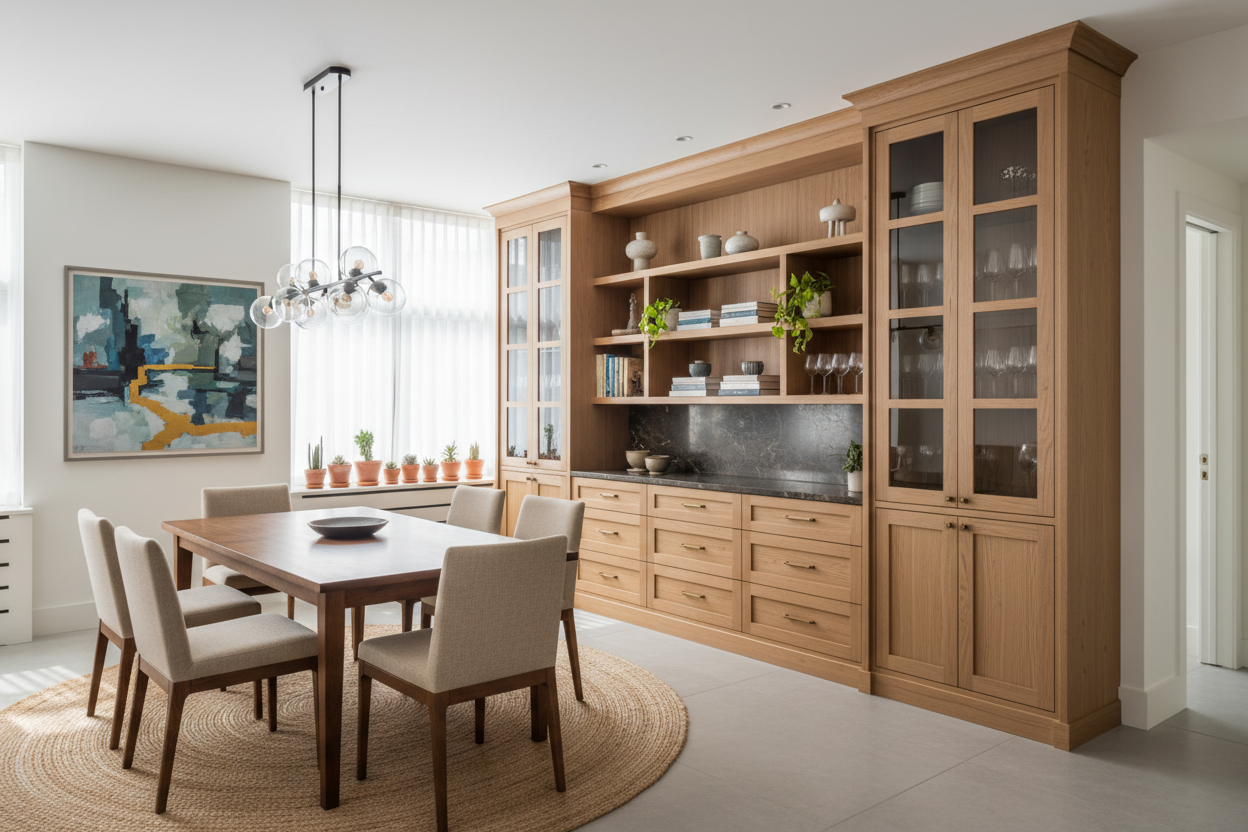
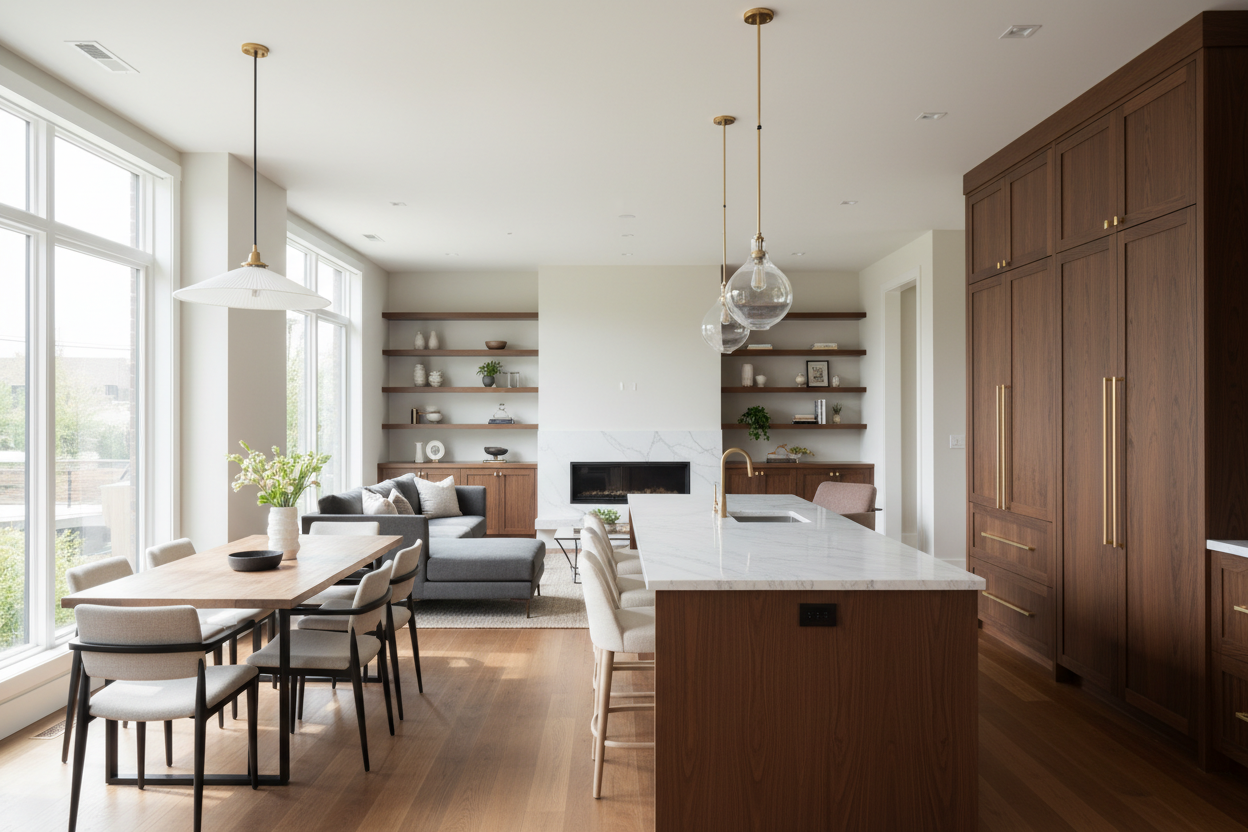
When you order a cabinetry custom build for the kitchen, you’re paying for the 18mm thick plywood carcasses and the ability to hide a sub-zero fridge behind a panel that actually aligns with the dishwasher. It’s about the 1/8-inch reveals. In a high-traffic zone where you’re opening drawers 50 times a day, those heavy-duty Blum hinges and perfectly leveled boxes are the difference between a kitchen that feels solid and one that rattles every time you close a drawer.
Room 2: The Primary Bathroom Exception
The primary en-suite is the second and final frontier for custom work. Bathrooms are notoriously tight. You’re fighting for every inch between the toilet clearance and the shower glass. A standard 36-inch or 48-inch vanity rarely fits perfectly between two walls in an older home renovation.
Customizing here allows you to account for plumbing that might be slightly off-center without hacking apart the back of a pre-made cabinet. Plus, moisture is a cabinet killer. Most 'ready-to-assemble' vanities use MDF or particle board with a thin veneer. In a steamy bathroom, that stuff swells like a sponge within three years. Real custom work uses marine-grade plywood or solid wood that can actually handle your morning shower ritual.
Where You Should Absolutely Fake It
Your home office does not need custom built-ins. I learned this the hard way after spending $4,500 on a built-in desk for a client who, two years later, realized they hated facing the wall and wanted a floating desk setup. They were stuck with a permanent fixture that was expensive to demo and even more expensive to replace.
Instead of permanent millwork, I always recommend creating a custom modular desk setup. You get the same 'built-in' look by using high-quality drawers and a solid wood butcher block top, but you maintain the flexibility to move things when you realize you need a second monitor or a standing desk converter. If your work habits change, your furniture should be able to change with you.
The Entryway Dilemma: Stop Over-Designing Mudrooms
I see people dropping $8,000 on mudroom 'lockers' with individual cubbies for each kid. It looks great for exactly one week. Then the wet boots come in, the salt from the driveway eats the paint, and the kids grow out of the tiny coat hooks. Entryways are high-impact zones that get absolutely trashed.
Save your money and look into modular entryway furniture instead. A high-quality hall tree or a series of heavy-duty shoe benches gives you the same organization without the permanence. If a bench gets ruined by a leaking bottle of de-icer, you replace a $300 unit rather than calling a carpenter for a $2,000 repair job.
How to Mix High and Low Without Anyone Knowing
The secret to a cohesive house isn't spending the same amount in every room; it's the 'finish.' I often use basic, unfinished shaker boxes in laundry rooms or guest baths and then have my professional painters spray them with the exact same lacquer used on the custom kitchen cabinets. When the color and sheen match perfectly, your brain assumes the quality matches, too.
Swap out the cheap plastic hardware for solid brass or heavy knurled steel. If the knobs in your laundry room have the same weight and texture as the ones in your high-end kitchen, the whole house feels 'custom.' It’s the oldest designer trick in the book, and it works every single time.
FAQ
Is custom cabinetry always solid wood?
Actually, no. Most high-end custom shops use furniture-grade plywood for the boxes because it's more stable than solid wood, which can warp with humidity. The 'custom' part refers to the fit and the door fronts, not necessarily a 100% solid oak box.
How much more does custom cost compared to semi-custom?
Expect to pay 40% to 100% more. Semi-custom gives you set sizes with some finish options, while true custom means they can build a cabinet to 23.75 inches just to fit your specific wall. You're paying for the labor and the precision.
Can I just put new doors on old cabinets?
Yes, it's called refacing. If your current cabinet 'bones' (the boxes) are solid plywood and in good shape, just replacing the doors and hinges can save you $20,000 while giving you the exact same look as a full custom install.

Leave a comment
This site is protected by hCaptcha and the hCaptcha Privacy Policy and Terms of Service apply.