










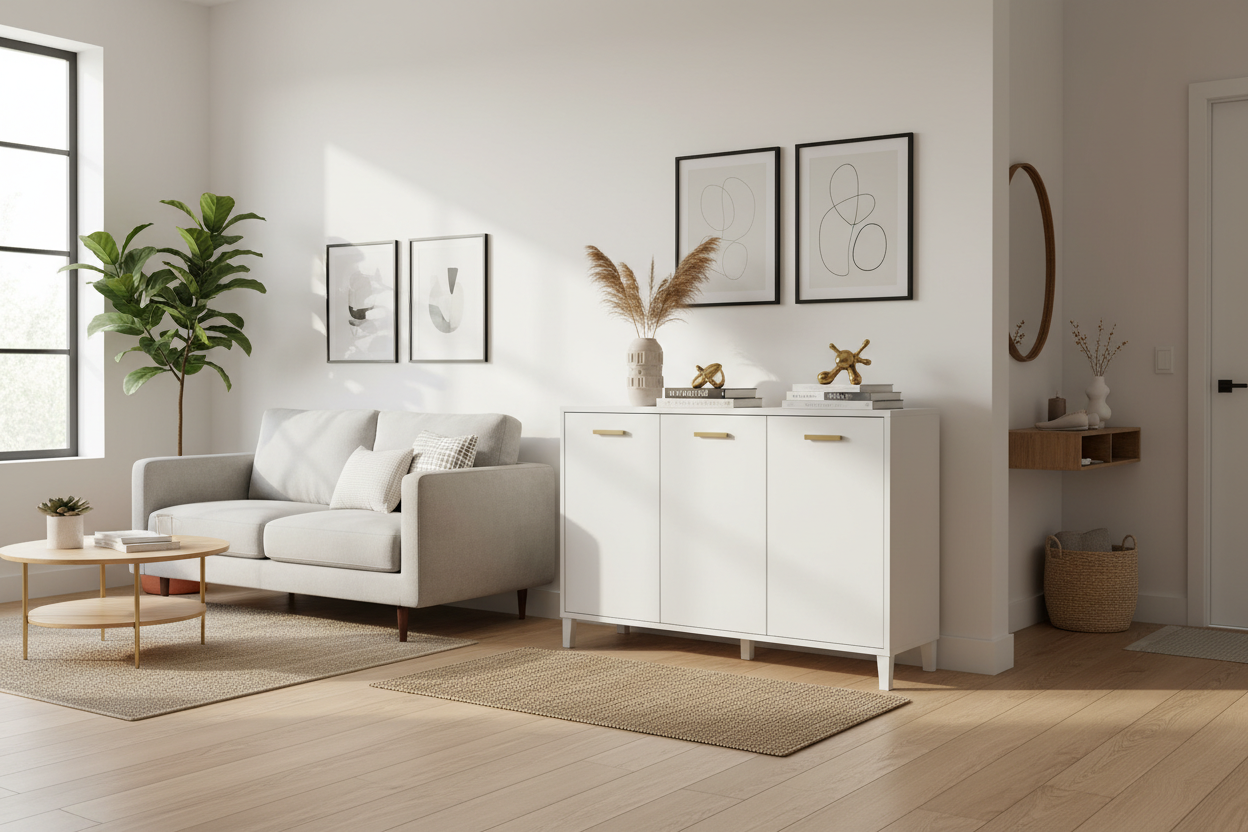
I spent three years staring at a 30-inch mid-century credenza in my living room, wondering why the art above it looked like it was floating away. I tried lowering the frame. I tried adding taller vases. Nothing worked. It felt like my furniture was built for a dollhouse while my walls were built for a cathedral. Then I swapped it for a 40 inch high storage cabinet and the room finally felt grounded.
Quick Takeaways
- Standard 30-inch consoles often leave too much 'dead space' on average 8-to-10-foot walls.
- A 40-inch height aligns perfectly with your natural reach, making it a better 'drop zone' for keys or mail.
- Hidden storage beats open shelving every time if you actually live in your house and have clutter.
- Taller cabinets allow for larger-scale lamps that don't look dinky.
I Used to Hate My Empty Walls (Until I Discovered the 40-Inch Rule)
We’ve all been there: you buy a beautiful, low-slung media console because it looks sleek in a catalog. You get it home, and suddenly you have four feet of empty drywall staring you in the face. Unless you’re planning to hang a 65-inch TV, that low furniture solves awkward living room layouts by filling the vertical void that makes a room feel cold.
The '40-Inch Rule' is simple: furniture that hits just above waist height creates a visual anchor. It bridges the gap between the floor and your eye level. When I finally dragged a 40 inch high storage cabinet into my dining nook, the proportions clicked. I didn't need to buy more 'stuff' to fill the wall; the cabinet did the heavy lifting for me.
Why This Specific Height is the 'Goldilocks' of Furniture
Most standard tables sit at 30 inches. Most bookshelves jump to 72 inches. There is a massive, underserved middle ground. A 40 tall storage cabinet is the 'Goldilocks' height because it’s ergonomic. You aren't hunching over to grab a coaster or find your spare lightbulbs.
I’ve tested cabinets that were 36 inches and ones that were 42. The 40-inch mark is that sweet spot where you can comfortably lean on it with a cocktail in hand during a party. It feels like a permanent architectural feature rather than just a box you shoved against a wall. Plus, it hides the mess. While a console has maybe one shallow drawer, a cabinet this height usually offers three or four solid shelves of hidden volume.
The Dining Room Buffet Alternative
If you have a small dining area, a massive 70-inch sideboard is a floor-space killer. Instead, a 40 inch wide tall cabinet gives you the same storage capacity with a much smaller footprint. I use mine to store heavy stoneware and those 'once-a-year' serving platters that usually hog my kitchen cabinets.
For a moody, high-end look, I always suggest looking for a black cabinet with glass doors. It acts like a mini-china cabinet but feels modern. You get the height to display your nice wine glasses without the 'grandma’s hutch' vibes.
The Ultimate Entryway Drop Zone
Entryways are notorious for being dark and cramped. A 40 inch wide white cabinet is my go-to recommendation for brightening up a foyer. It reflects light, and the height is perfect for tossing your keys the second you walk through the door. You don't have to bend down, which sounds like a small thing until you're carrying three bags of groceries.
If your hallway is particularly tight, you might want a white entryway storage cabinet that prioritizes a slim depth. Just make sure it’s anchored to the wall—taller pieces with drawers can be tip-hazards if you don't use the provided safety brackets.
How to Style the Top Without Making It Look Like a Junk Catch-All
Because these cabinets are higher, you have to throw the 'small decor' rulebook away. A tiny 12-inch table lamp will look like a nightlight on a 40-inch surface. You need height. I like to use a lamp that stands at least 24 inches tall to create a sense of scale.
Try the 'Rule of Three': one tall lamp, one medium-sized stack of books, and one low bowl for keys. Instead of hanging a small photo, lean an oversized piece of art against the wall. It looks intentional and 'designer,' and it saves you from poking more holes in your drywall.
What to Look For Before You Buy
I’ve assembled enough flat-pack furniture to know that not all cabinets are created equal. First, check the drawer glides. If they are plastic-on-plastic, run away. You want metal ball-bearing glides, or you'll be fighting to open the drawer within six months.
Check the depth, too. A cabinet that is less than 13 inches deep won't fit a standard dinner plate. If you’re using it for storage, aim for 15 to 18 inches. Also, look for adjustable shelves. My biggest regret with my first 'tall' cabinet was buying one with fixed shelves—I couldn't fit my taller vases, and it ended up being wasted space.
FAQ
Is 40 inches too high for a TV stand?
Generally, yes. Unless you're mounting the TV in a bedroom and watching from a high bed, 40 inches will give you neck strain in a standard living room setup. Stick to consoles for TVs; use cabinets for everything else.
Can I use a 40-inch cabinet as a bar?
It’s actually the perfect height for a bar. Most professional bar counters are 42 inches, so 40 inches is just right for mixing drinks without feeling like you're working at a child's desk.
How do I stop a tall cabinet from wobbling?
Always check for adjustable feet (levelers). Most older homes have uneven floors. If the cabinet doesn't have them, use felt pads or plastic shims. And please, anchor it to the stud in the wall.

Leave a comment
This site is protected by hCaptcha and the hCaptcha Privacy Policy and Terms of Service apply.