










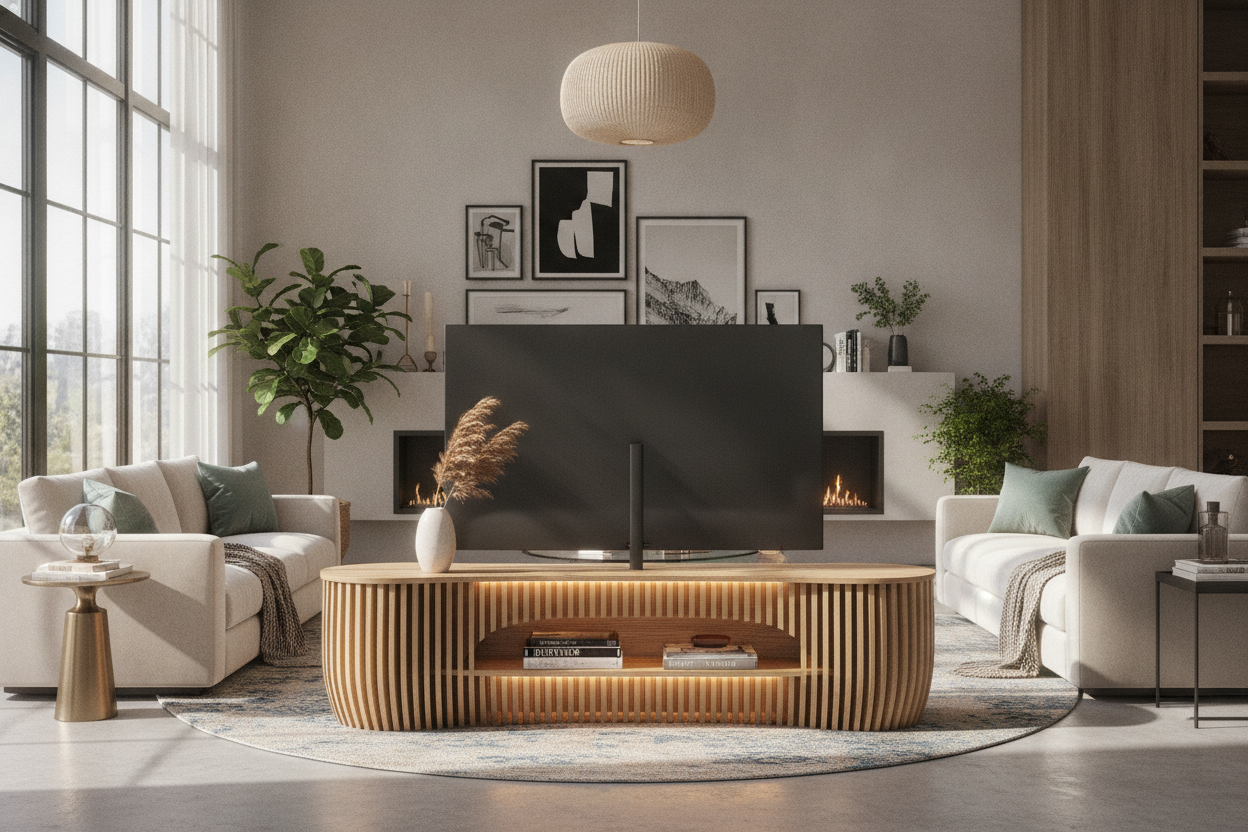
I spent three years staring at a $40 particle-board unit that sagged in the middle under the weight of my 55-inch OLED. It was depressing. My living room felt like a temporary dorm room, even though I was paying a grown-up mortgage. Finding a cool tv stand changed the entire energy of the house—it turned the 'black hole' of a television into a curated focal point rather than a tech eyesore.
Quick Takeaways
- Stop buying furniture meant to 'disappear'; if it takes up six feet of floor space, make it count.
- Texture is the secret sauce—look for fluted wood, reeded glass, or 3D slats to add depth.
- Floating units are the ultimate hack for making a small apartment feel five times larger.
- Hidden cable management is the difference between a high-end look and a messy wire nest.
The Problem With the 'Invisible' Media Console
For a long time, the design rule was to make the media unit as boring as possible so it wouldn't distract from the screen. We ended up with a sea of flat, white or black boxes that have zero soul. If you are going to dedicate six or seven feet of wall space to a piece of furniture, it needs to earn its keep. I often get asked if an entertainment center worth the space it occupies, and my answer is always: only if it looks like art when the TV is off.
A generic box doesn't hide your clutter; it just frames it in a way that feels cheap. When you choose a unique tv console, you’re telling the room that the technology is part of your life, but it isn't the only thing happening. I’ve seen 12-foot walls completely anchored by one stunning piece of wood, turning a cavernous room into something that feels intentional and warm.
What Actually Makes a TV Stand Cool?
A tv stand cool factor usually comes down to tactile details. I’m talking about things you want to run your hand over. Flat-pack furniture usually fails because it’s too smooth, too perfect, and too fake. A tv stand unique enough to start a conversation usually features fluted wood panels, asymmetrical shelving, or even bold, unexpected colors like deep navy or sage green.
I personally look for materials that have some weight to them. Solid mango wood or kiln-dried oak will always beat out thin veneers that peel at the corners after six months. If you browse a collection of tv stands, pay attention to the legs. Tapered dowel legs or a recessed plinth base can change the entire silhouette from 'heavy block' to 'architectural statement.'
Going Floating for a Sleek, Airy Vibe
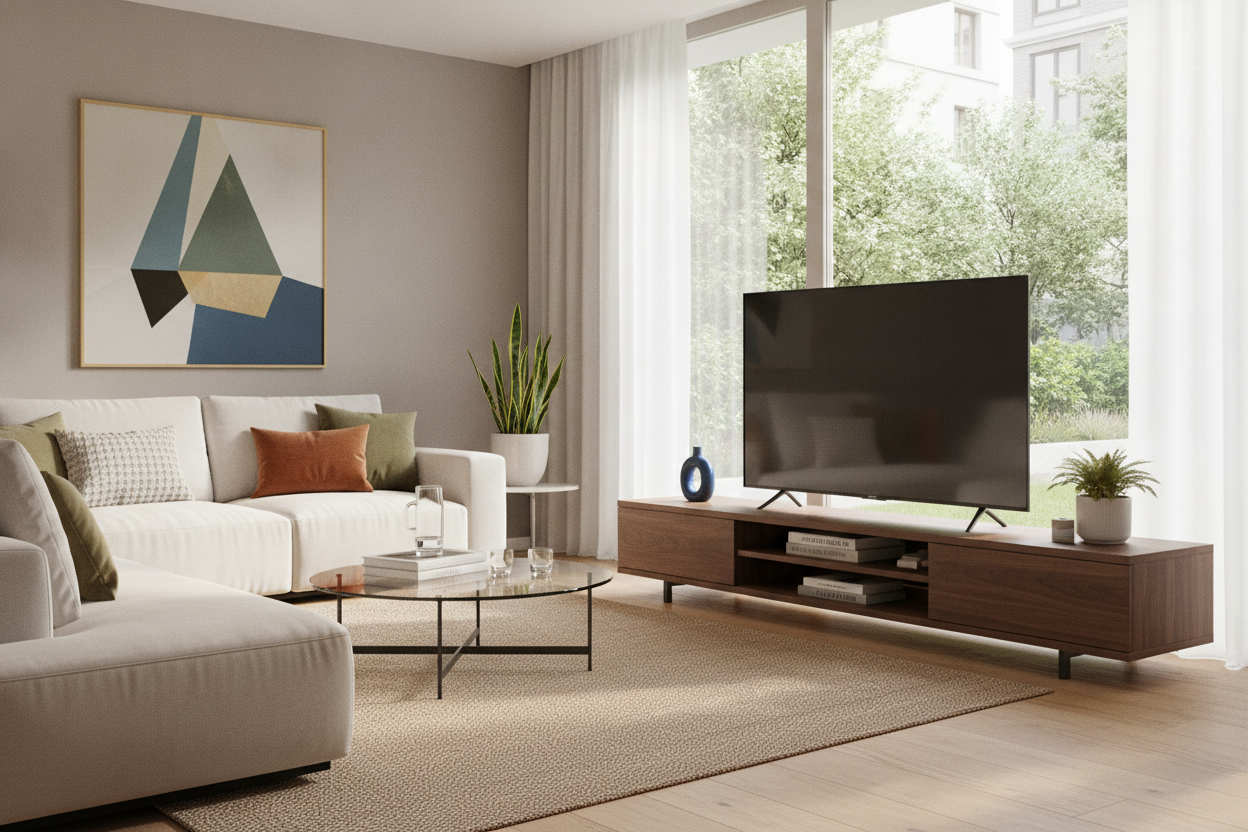
If you’re tight on square footage, stop looking at floor models. Getting your media unit off the ground is a total magic trick for the eyes. When you can see the floor running all the way to the baseboard, the room feels significantly less cluttered. A floating wall mounted media console provides that ultra-clean, gallery-style look that makes even a massive 75-inch screen look like it’s hovering effortlessly.
Mid-Century Magic (Without the Thrift Store Smell)
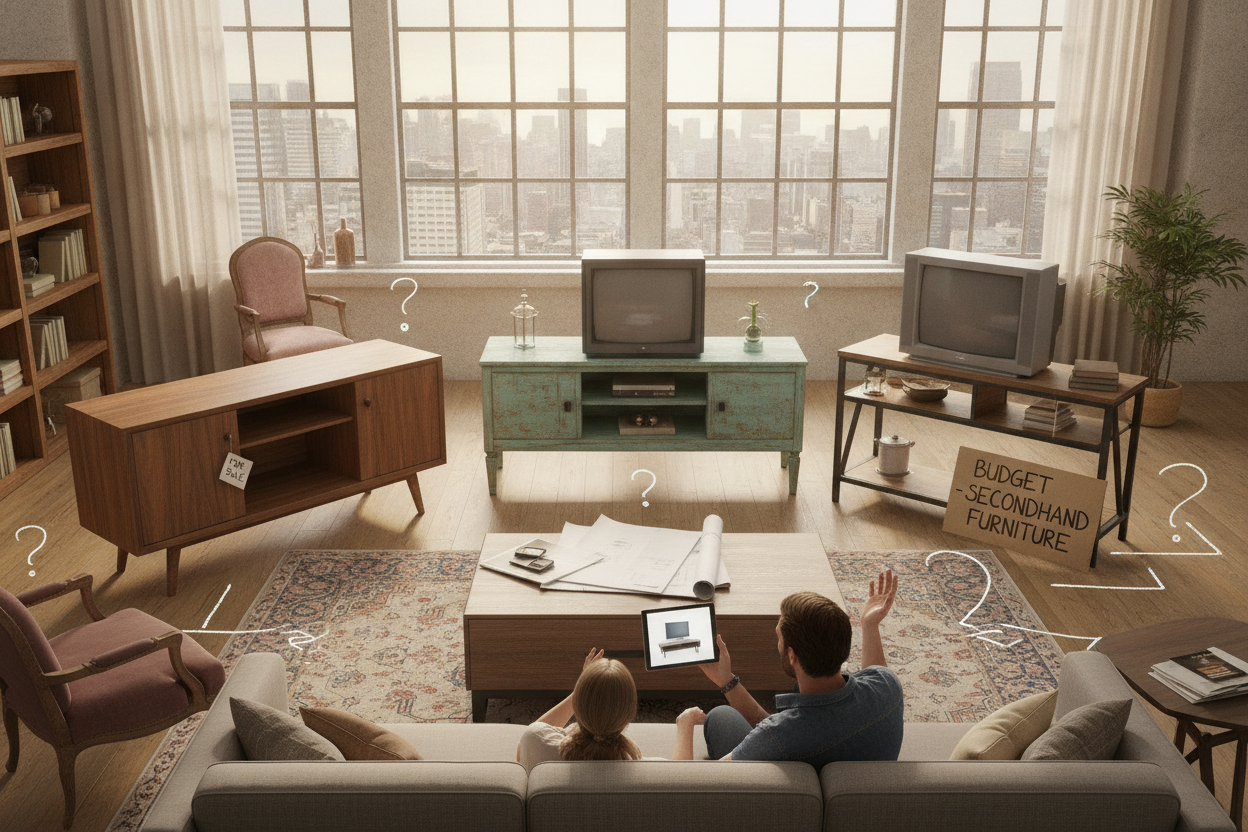
I love a vintage find as much as anyone, but old credenzas weren't built for 2024 tech. They don't have the 2-inch grommet holes for your PS5 cables or the ventilation needed to keep your electronics from melting. A pretty tv stand with retro roots gives you those iconic tapered legs and warm wood tones but adds the functional 'guts' we actually need today. Investing in a mid century modern entertainment center allows you to keep that 1960s aesthetic without the headache of drilling your own wire holes into an antique.
How to Style a Unique Entertainment Center
Once you’ve got your unique tv console, don't just plop the TV in the center and call it a day. The goal is to balance the 'black rectangle' of the screen. I like to use the 60-40 rule: 60% of the surface is for the TV and tech, and 40% is for soul. Add a stack of oversized art books on one end and a trailing Pothos plant on the other. The organic shape of the leaves softens the hard edges of the screen.
Avoid tiny knick-knacks. On a large piece of furniture, small items just look like dust-collecting clutter. Go for one or two large-scale ceramic vases or a sculptural lamp. This creates a visual bridge between the furniture and the wall, making the whole setup feel like a deliberate installation rather than just a place to put the remote.
Leaning Into the Tech Look (When It Actually Works)
Sometimes, you don't want to hide the tech; you want to celebrate it. In a modern loft or a moody, dark-walled basement, a unique entertainment center can lean into a futuristic vibe. I’ve seen a high gloss LED tv stand look incredibly sharp when paired with minimalist decor. The built-in lighting acts as a bias light, which actually reduces eye strain during those Sunday night movie marathons.
The key with high-gloss or metal finishes is maintenance. If you go this route, keep a microfiber cloth nearby. Nothing kills a 'cool' vibe faster than visible fingerprints and a thick layer of dust catching the glow of an LED strip.
My Personal Lesson Learned
I once bought a stunning, hand-carved bone inlay console from a high-end boutique. It was the definition of a unique entertainment center. The problem? It was only 14 inches deep. My receiver stuck out the back by three inches, and the doors wouldn't close because of the HDMI cables. I had to choose between my 'cool' stand and my surround sound. Now, I never buy anything without checking that it has at least 16 to 18 inches of internal depth. Style is great, but physics always wins.
Frequently Asked Questions
How high should my TV stand be?
Your eyes should be level with the middle of the screen when you're sitting on your sofa. For most people, that means a stand height of 18 to 22 inches. If you go higher, you'll be crane-necking like you're in the front row of a movie theater.
Should the stand be wider than the TV?
Yes, absolutely. Your stand should have at least 3 to 6 inches of breathing room on either side of the TV. If the TV is wider than the stand, it looks top-heavy and structurally precarious, even if it's perfectly safe.
Do I really need cable management?
Unless you enjoy looking at a 'spaghetti mess' of black wires, yes. Look for units with pre-drilled holes or internal channels. If your favorite stand doesn't have them, you can buy adhesive cable clips to run the wires down the back of the legs.

Leave a comment
This site is protected by hCaptcha and the hCaptcha Privacy Policy and Terms of Service apply.