











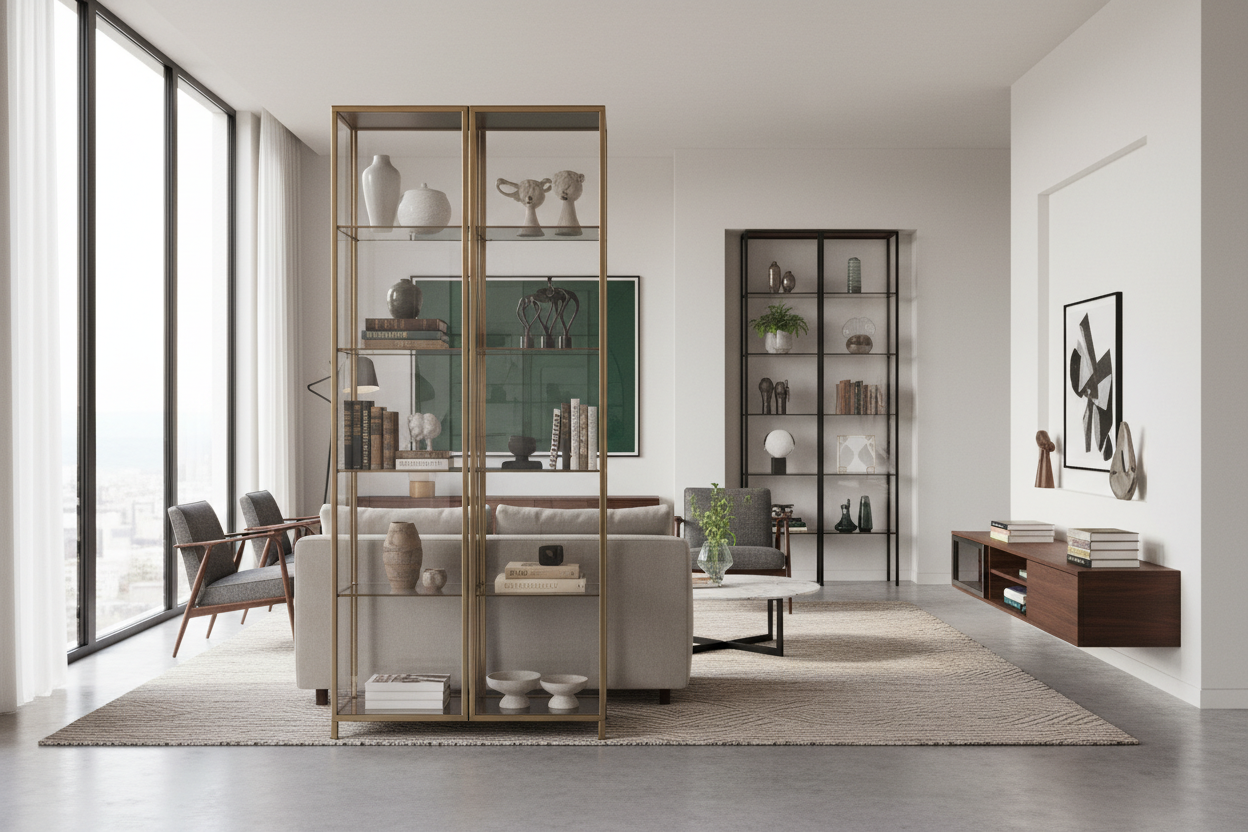
I spent three years obsessing over the 'perfectly messy' open shelving look. You know the one—artfully stacked ceramic bowls and a single sprig of dried eucalyptus that somehow never looks dead. In reality, I just created a high-end dust museum that required a microfiber cloth and a step ladder every Saturday morning. It was exhausting.
I finally realized that a well-placed case display is the only way to show off your personality without signing up for a lifetime of manual labor. After testing everything from wobbly thrift-store finds to high-end architectural pieces, I've seen the shift firsthand. The glass-front cabinet isn't just back; it’s the smartest piece of furniture you can put in a modern living room.
- Dust protection is the new luxury for collectors.
- Modern frames use thin metal and matte finishes instead of chunky oak.
- Built-in LED lighting creates better ambiance than a floor lamp.
- It forces you to curate rather than just pile stuff up.
The 'Grandma's Curio' Stigma Is Officially Dead
We all have that mental image of a 'curio' cabinet: a honey-oak monster with mirrored backs and those weirdly scalloped edges, filled to the brim with porcelain cats or commemorative plates. In the early 2010s, we collectively decided these were the enemy of cool. We ripped them out and replaced them with floating shelves that held exactly three items. We wanted 'breathable' spaces, but we ended up with rooms that felt unfinished or, frankly, just messy.
The design landscape has flipped because we’re finally distinguishing between the concept and the execution. A glass cabinet isn't inherently dated; the 1990's styling was the problem. Today’s versions ditch the ornate trim for crisp right angles and industrial materials. It’s no longer about hiding your 'good china' for a guest who never visits. It’s about creating a framed focal point for the things you actually love looking at every day.
Open Shelving Exhaustion Is Real
Let’s be honest: open shelving is a lie told by people who have full-time housekeepers. If you live in a city, the soot and dust that settles on your books and glassware within 48 hours is enough to make you want to move into a bubble. I reached my breaking point when I had to wash a 'decorative' pitcher before I could actually use it. Using a glass case for display isn't just an aesthetic choice; it’s a sanity-saver.
We are seeing a major shift toward living room display furniture that offers a middle ground. You aren't shoving your life into opaque wooden boxes where things go to be forgotten. You’re still showing off your collection, but you’re doing it behind a protective barrier. It’s the difference between a gallery and a garage sale. You get the visual lightness of glass without the weekly chore of dusting your entire library.
How Modern Silhouettes Changed the Game
The biggest reason these cabinets feel fresh again is the silhouette. Vintage curios were heavy and occupied a massive amount of visual 'weight.' Modern versions are often elevated on slim legs, making the floor space underneath visible, which helps a small room feel larger. I’m a huge fan of the matte black steel frames that look like thin pencil lines—they frame your objects like a piece of art.
If you’re worried about a large piece feeling too imposing, a tall white curio cabinet is a fantastic way to blend the storage into your walls while still getting that reflective glass quality. For those of us living in cramped apartments where every square inch is a battleground, a modern corner display case can turn a dead zone into a high-end feature. These aren't the bulky hutches of the past; they are streamlined, architectural, and surprisingly versatile.
The Secret to Styling a Case for Display Today
The quickest way to make a modern cabinet look like a thrift shop is to overstuff it. The 'Grandma' look happened because every square inch was packed. Today’s styling is all about negative space. I like to follow the rule of thirds: one-third books (stacked both vertically and horizontally), one-third 'objects' (vases, sculptures, or even a cool rock), and one-third empty space.
Mix your textures. If you have a lot of glass and ceramic, throw in something organic like a piece of driftwood or a leather-bound journal. Group items by color if you want a cohesive look, or vary the heights to keep the eye moving. Think of it like a boutique window display. If you can’t see the back of the cabinet in at least a few places, you’ve put too much in there. Take two things out. I promise it will look better.
The Unexpected Mood Lighting Bonus
One thing people consistently overlook is the lighting. A standard bookshelf is a dark hole at 8 PM. But a glass cabinet with integrated lights? That’s a vibe. It provides a soft, diffused glow that’s much more sophisticated than a harsh overhead light. It turns your furniture into a secondary light source that makes the whole room feel cozy and expensive.
I always recommend looking for a glass door display case with LED light strips already built into the frame. Trying to DIY puck lights later usually results in a mess of wires that ruins the clean aesthetic. When the sun goes down and those internal LEDs kick in, the glass reflects the light and adds a layer of depth to the room that you just can't get from a standard dresser or a set of floating planks.
My Personal Take: The Lesson I Learned the Hard Way
I once bought a gorgeous vintage display case with a mahogany finish. It looked stunning in the shop. Once I got it home, it felt like a Victorian funeral parlor. I realized the wood was too dark for my low-light apartment. I ended up painting the interior a soft off-white and swapping the heavy brass hardware for slim black pulls. It completely changed the energy. My takeaway? Pay attention to the interior finish. If the inside is dark, your items will disappear. If it’s light or mirrored, they’ll pop.
Frequently Asked Questions
Are glass cabinets hard to keep clean?
Not really. You only have to clean the outside glass once every few weeks. Because the inside is sealed, the shelves stay pristine for months. It’s actually much less work than open shelving.
What should I avoid putting in a display case?
Avoid small, 'fiddly' plastic items or anything that looks like actual trash (looking at you, random mail and charging cables). If it doesn't have a distinct shape or interesting texture, hide it in a drawer instead.
Is tempered glass necessary?
100%. Especially if you have kids or pets. Tempered glass is stronger and, if it does break, it crumbles into small blunt pieces rather than dangerous shards. Don't skimp on safety for a cheaper unit.

Dejar un comentario
Este sitio está protegido por hCaptcha y se aplican la Política de privacidad de hCaptcha y los Términos del servicio.