










Your home is no longer just a place to live — it's becoming a sanctuary that knows you, heals you, and tells your story.
After years of stark white walls, seamless surfaces, and the so-called "Apple Store Aesthetic", the tide has decisively turned. In 2026, the home is reclaiming its soul. Designers, architects, and technology companies around the world are converging on one central idea: a home should feel deeply personal, emotionally supportive, and quietly intelligent.
Here's a deep dive into the trends reshaping how we live this year.
Goodbye, Cold Minimalism. Hello, Moody Warmth.
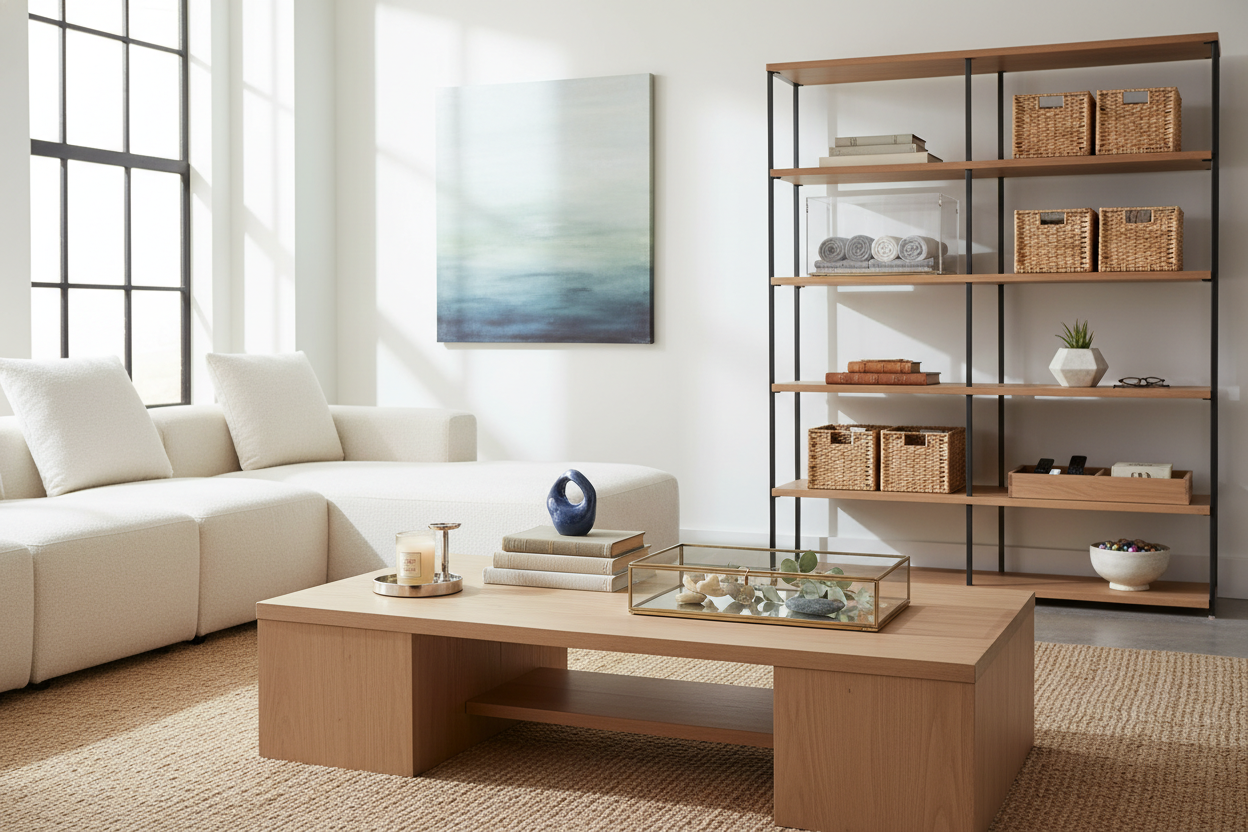
Perhaps the most defining shift of 2026 is the collective rejection of sterile, all-white interiors. The era of bleached Scandinavian minimalism is fading, replaced by spaces that feel richer, darker, and more layered.
Design experts are reporting a strong return to warm, classic sensibilities — think deep teals, muted greens, warm neutrals, and walnut-toned wood. Hans Lorei, a New York-based designer and brand consultant, captured the mood perfectly: homeowners are exhausted by pristine, emotionless spaces and are actively seeking rooms with character and depth.
This doesn't mean we're heading into visual chaos. The philosophy of 2026 is best described as "curated calm" — interiors that feel intentional and atmospheric, not cluttered. Tokyo architect Keiji Ashizawa put it well: the most memorable interiors are not necessarily those with the strongest statements, but the ones where people naturally want to stay longer.
Pantone's 2026 Color of the Year, "Cloud Dancer," might suggest softness, but the real action is in the bold and saturated end of the spectrum. Cherry wood cabinetry is making a surprising comeback with its warm, reddish undertones. Electric blue kitchen cabinets and hot pink dining rooms are appearing in serious design publications. And a new painting technique called "color capping" — which applies tonal gradients from floor to ceiling — is emerging as the sophisticated evolution of the color-drenching trend.
The Rise of Imperfection
If 2026 has a single design buzzword, it's irregularity.
Surfaces are deliberately rougher. Edges are less uniform. Finishes look intentionally uneven. Designers and consumers alike are gravitating toward pieces that look better the longer you live with them — furniture and decor that patina with age rather than deteriorate.
This extends to materials and craftsmanship. There is a growing obsession with hyper-local craft: artisans using both hand tools and CNC machines to turn salvaged wood and offcuts into one-of-a-kind furniture. Buyers want to know where their pieces come from. Traceability and authenticity are the new luxury.
Mosaic mirrors made from broken ceramic shards, oversized and chaotic, are replacing polished glass. Heirloom-style textiles with vintage character are showing up on beds, walls, and headboards. Even the ornamental is making a comeback — sculpted brickwork, patterned facades, and fluted surfaces are returning to architecture after years of smooth, featureless walls.
The message is clear: perfection is out. Character is in.
Wellness Is No Longer a Luxury — It's the Foundation
The wellness-at-home trend has been building for years, but 2026 marks a turning point. Clean air, natural light, water quality, and biophilic materials are no longer considered upgrades — they are the baseline expectation for how a home should function.
Engel & Völkers' 2026 Home Design Trends Report puts it plainly: homeowners are making deliberate choices about how their homes support their physical health and emotional wellbeing. This shows up in everything from material selection and room layout to lighting and color palettes.
The more dramatic expression of this trend? Dedicated wellness spaces within the home. Cold plunge tubs, saunas, red light therapy rooms, and AI-powered fitness mirrors are moving from elite gyms into residential floor plans. Multi-use rooms are being designed to serve as both living spaces and recovery zones.
Even the kitchen and bathroom are getting the wellness treatment. Smart showers offer customizable temperature and pressure with voice-activated controls. Smart toilets with heated seats, motion-sensing lids, and adaptive bidet features are becoming mainstream. The bathroom of 2026 is less of a utility room and more of a personal spa.
The Kitchen Gets Smarter — and Calmer
The kitchen, always the heart of the home, is undergoing a particularly interesting evolution in 2026.
The dominant trend is concealed storage. Open shelving, which dominated Instagram feeds for years, is giving way to streamlined cabinetry that hides everything from appliances to phone chargers. Appliance garages, pantry pull-outs, toe-kick drawers, and built-in docking stations for devices are becoming standard features. When clutter is concealed, the space feels more harmonious — and that sense of calm is exactly what homeowners are chasing.
On the materials front, natural stone (marble, granite, quartzite) continues to dominate countertops, while darker wood stains are replacing the lighter oak tones of previous years. Cherry wood cabinets, in modern slab or slim shaker profiles, are emerging as a fresh alternative to walnut — offering warmth without the dramatic grain variation.
Smart Homes Grow Up: Invisible, Predictive, and Unified
Smart home technology has reached what many industry observers are calling a maturity phase. The focus at CES 2026 and across the industry has shifted decisively from novelty to reliability, design integration, and practical value.
The Matter Protocol Changes Everything
For years, the biggest frustration in smart home technology was getting devices from different ecosystems to talk to each other. The Matter protocol — an open, royalty-free connectivity standard — is finally solving this problem at scale. With over 550 companies developing Matter-compatible products, homeowners can now mix and match devices from Apple, Google, Amazon, Samsung, and others without juggling multiple apps. It's the single most important infrastructure shift in the smart home space.
AI That Learns Your Life
The next generation of home automation goes far beyond simple scheduling. AI-powered systems now use sensors and machine learning to study your patterns — when you arrive home, your lighting preferences, your climate comfort zone — and act proactively. Your home adjusts before you even think to press a button. The result is a hands-off experience where the house genuinely feels like it knows you.
Energy Intelligence
With rising energy costs and growing environmental awareness, smart energy management has become a pillar of the connected home. Systems that optimize heating, cooling, and lighting based on your habits can reduce energy bills by up to 30%. When paired with solar panels and battery storage — now easier than ever to integrate through unified home automation platforms — homes are evolving into semi-autonomous energy ecosystems.
The Disappearing Device
Perhaps the most elegant trend in smart home design is the push toward invisibility. Bulky control panels and visible sensors are being replaced by hidden outlets, flush-mount sensors, recessed speakers, and integrated displays. The goal is technology that enhances the beauty of a space rather than disrupting it. Smart home hardware is increasingly being co-engineered with interior designers, ensuring that devices match materials, finishes, and textures rather than looking like afterthoughts.
Smart locks exemplify this shift: they're becoming more design-conscious, more reliable even without internet connectivity, and increasingly flexible in how they grant access — through fingerprint, voice, mobile app, or traditional key.
Aging in Place, Beautifully
An important but often overlooked trend is the growing conversation around aging-in-place design. As more homeowners plan to stay in their homes for the long term, designers are rethinking popular features through the lens of safety and accessibility.
High-gloss floors, handle-free cabinets, and decorative sunken living rooms — all visually appealing — are being reconsidered for their practical risks as mobility changes over time. The emerging philosophy is that a home should be beautiful and functional for decades, not just for a photoshoot.
This doesn't mean sacrificing style. It means choosing matte finishes over high-gloss, ensuring adequate handrails and grab bars are incorporated into the design from the start, and selecting smart home features that genuinely make daily life easier — from voice-controlled systems to automated lighting.
The Bigger Picture: Homes as Counter-Spaces to a Digital World
Perhaps the most resonant theme of 2026 is the idea of the home as a refuge from the digital world. As AI becomes more pervasive in workplaces and public life, designers are predicting that homes will move in the opposite direction — becoming sanctuaries that support human connection, sensory experience, and emotional grounding.
One designer called 2026 the "battle of machines versus meaning." The consensus among industry leaders is that even as technology plays a larger role in managing our homes behind the scenes, the experience of being in a home should feel analog, tactile, and deeply human.
That means more natural materials. More handmade objects. More rooms designed for conversation rather than content consumption. More spaces that feel like yours — not like a showroom, not like a hotel lobby, and certainly not like a tech demo.
Key Takeaways for 2026
- Color is back: Deep, saturated hues and warm neutrals replace the all-white palette
- Texture over polish: Rough, irregular, handcrafted surfaces are the new aesthetic ideal
- Wellness is foundational: Clean air, natural light, and recovery spaces are non-negotiable
- Kitchens go concealed: Hidden storage and natural materials create calm, functional spaces
- Smart tech matures: The Matter protocol, predictive AI, and energy intelligence define the new smart home
- Technology disappears: Devices are engineered to be invisible and design-integrated
- Homes become sanctuaries: The strongest counter-trend to our digital lives
The home of 2026 doesn't shout. It whispers. It doesn't impress — it embraces. And in a world that feels increasingly noisy and uncertain, that might be exactly what we need.


Dejar un comentario
Este sitio está protegido por hCaptcha y se aplican la Política de privacidad de hCaptcha y los Términos del servicio.