










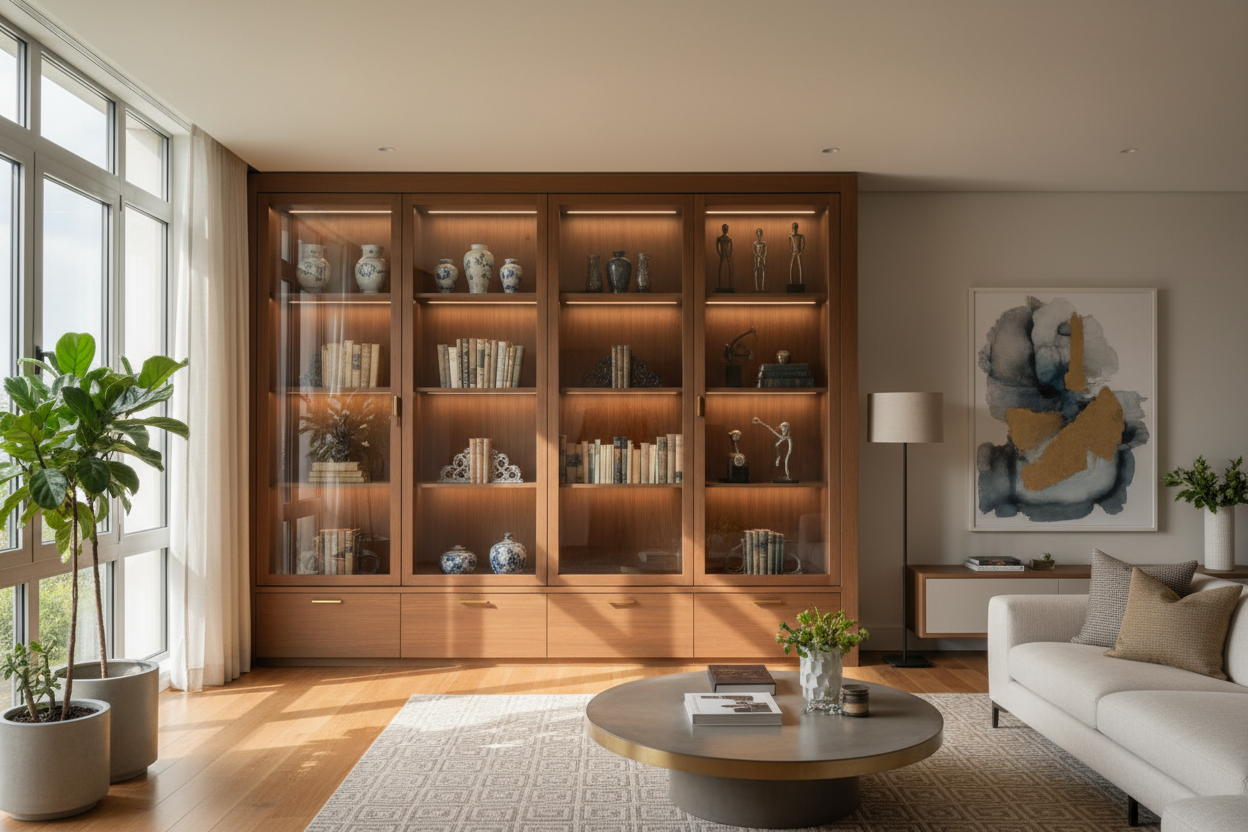
I used to spend my Saturday mornings with a microfiber cloth in one hand and a can of compressed air in the other. I fell for the 'curated bookshelf' trend hard, thinking my collection of vintage paperbacks and ceramic bowls needed to 'breathe.' In reality, they were just breathing in a thick layer of grey dust every forty-eight hours. My living room didn't look like a magazine; it looked like a high-maintenance storage unit.
The breaking point came when I realized I was avoiding buying new books because I didn't want to clean them. That is when I decided to ditch the open boards and invest in display case shelves. It was a total shift in how I view my home. Suddenly, my glass case with shelves wasn't just a place to shove things—it was a protected gallery that stayed clean for more than two days.
Quick Takeaways
- Dust Protection: Enclosed glass reduces cleaning time by about 90%.
- Visual Depth: Glass reflections make small rooms feel larger than solid wood does.
- Adjustability: Always choose units with movable pins to accommodate tall vases or art books.
- Material Matters: Look for tempered glass and solid wood frames for longevity over cheap MDF.
The Open Shelving Trap (And Why I Wanted Out)
We’ve all seen the photos: perfectly spaced white ceramics, a single trailing ivy plant, and three artfully leaned books. It looks effortless. But if you actually live in your home, open shelving is a trap. If your shelves aren't 100% 'styled' at all times, the whole room feels cluttered. There is no middle ground between 'minimalist masterpiece' and 'total mess.'
I struggled with the constant pressure to curate. My mismatched mugs and half-finished LEGO sets felt like failures. Plus, the grime was real. Kitchen grease and household dust create a sticky film that is a nightmare to scrub off delicate book spines. I wanted a glass shelf case that would act as a barrier between my life and the elements. I wanted to see my stuff without having to touch it every single weekend with a duster.
Why Enclosed Glass Actually Looks More Expensive
There is a psychological shift that happens when you put an object behind a pane of glass. It goes from being 'clutter' to being an 'exhibit.' Even my thrifted 5-dollar vases started looking like museum pieces once I moved them into a glass shelf display case. It adds a layer of intentionality that open wood just can't match.
Adding glass fronts is the fastest way to get stylish glass door shelving units without paying for custom built-ins. The glass creates a subtle reflection that catches the light from your windows, adding a 'shimmer' to the room that matte shelves absorb. It gives the piece an architectural weight, making it feel like a permanent part of the home rather than a temporary storage solution. Using a glass shelving case also forces you to organize better, but the glass provides a finished 'frame' that makes even a slightly full shelf look tidy.
The Secret to Awkward Items? Ditch the Fixed Shelves
One of my biggest regrets with my old built-ins was the fixed shelf height. I had a beautiful 14-inch tall art book that had to lay flat for three years because the shelves were only 12 inches apart. It was a waste of space and looked awkward. When I started shopping for glass shelves for display case units, I made one rule: no fixed heights.
Finding a glass display case with adjustable shelves changed everything. I could drop one shelf down to fit my oversized photography books and raise another to perfectly frame a tiny collection of mineral specimens. I highly recommend looking for flexible adjustable shelf storage because your collection will change. A fixed shelf is a snapshot of who you were when you bought the furniture; an adjustable shelf grows with your hobbies. Don't let a manufacturer dictate the size of your joy.
Wait, Won't a Massive Cabinet Shrink My Room?
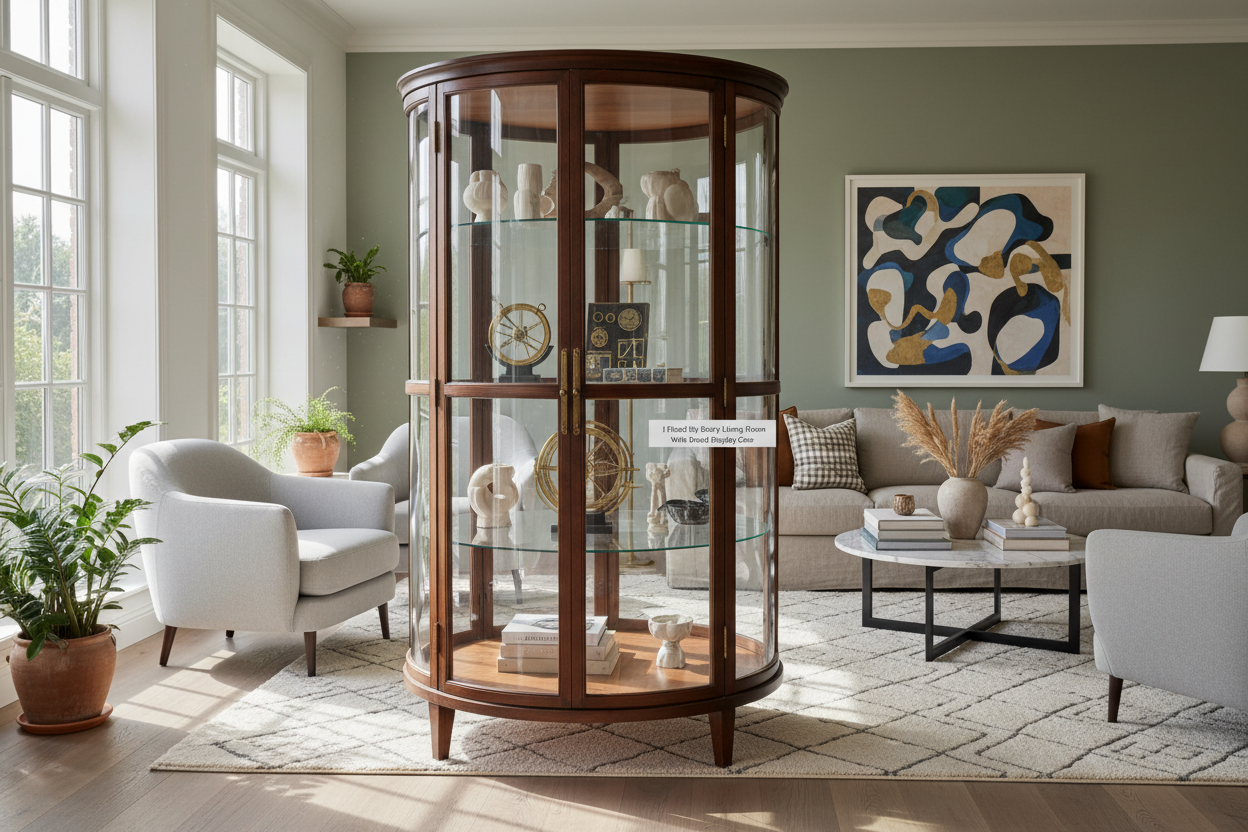
This is the number one fear people have when they see large glass display cabinets. They think a 72-inch tall piece of furniture is going to swallow their living room. In my experience, the opposite is true. Because glass is transparent and reflective, it doesn't create the same 'visual wall' that a solid dark wood bookcase does. It feels airy.
If you choose a large display cabinet storage unit, the glass doors allow your eye to travel all the way to the back of the unit, which actually preserves the sense of depth in the room. I’ve found that a single large piece of furniture often makes a room look more organized and spacious than three small, mismatched shelves scattered around. It anchors the space. Plus, the metal handles and glass panes add a touch of 'glam' that breaks up the monotony of drywall.
The Warmth Factor: Mixing Wood and Glass
The danger with glass is that it can start to look like a retail store if you aren't careful. You don't want your living room to feel like a cell phone kiosk. The key is the frame. I always steer people toward a vintage wood bookcase with tempered glass to keep things grounded. The wood provides the organic texture and warmth, while the glass provides the modern clean lines. This mix ensures your glass shelf showcase feels like a home, not a showroom.
My 3 Low-Effort Rules for Styling Behind Glass
Once you have your showcase glass shelves set up, the temptation is to overfill them. Don't. You have the glass to protect things now, so let them have some space. My first rule is the 30% rule: leave 30% of each shelf empty. This 'negative space' is what makes it look professional and not like an antique mall booth.
Second, use the 'Triangle Method' for color. If you have a blue vase on the top left, place another blue item on the middle right, and maybe a third on the bottom left. This pulls the eye across the glass showcase shelf in a pleasing way. For more specific layout formulas, I’ve found that styling a 3 shelf glass cabinet works best when you keep the heaviest items (visually and literally) at the bottom and the lighter, airier items at the top. It keeps the piece from feeling top-heavy.
FAQ
How do I keep fingerprints off the glass?
Honestly? Use the handles. If you have kids, you’re going to be cleaning the bottom panes regardless, but a good quality glass cleaner and a lint-free cloth once a week is still less work than dusting 50 individual items on an open shelf.
Is tempered glass really necessary?
Yes. Absolutely. Standard glass can shatter into dangerous shards if a door slams or someone bumps into it. Tempered glass is much stronger and, if it does break, it crumbles into small, relatively harmless chunks. Don't skimp here.
Can I add lighting to my glass shelves?
Most modern cabinets have a small gap at the back or pre-drilled holes for LED puck lights. Adding warm (2700K) lighting to the top of your cabinet makes the whole room feel cozy at night and really makes the glass 'pop.'

Dejar un comentario
Este sitio está protegido por hCaptcha y se aplican la Política de privacidad de hCaptcha y los Términos del servicio.