










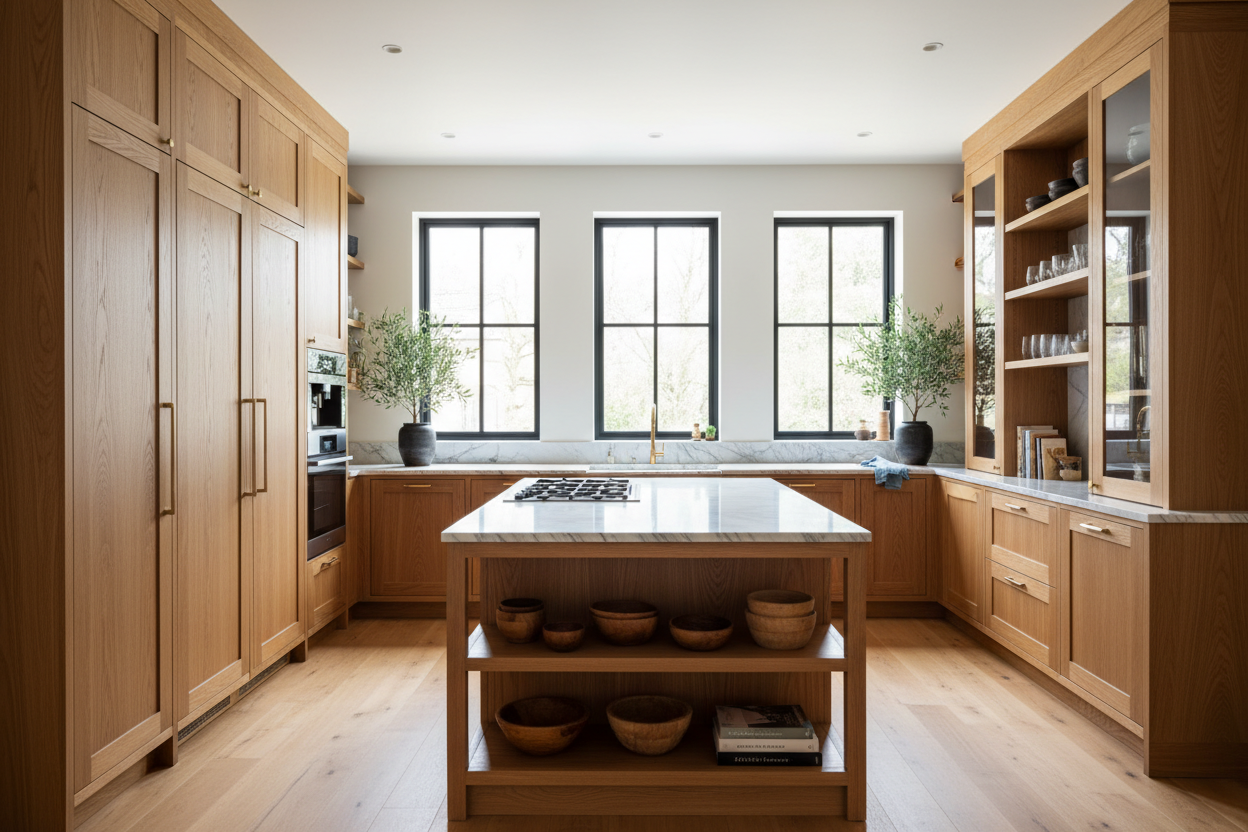
I spent three weeks staring at a kitchen quote that cost more than my first car, sitting on a subfloor covered in sawdust and regret. I was obsessed with finding the perfect shade of 'greige' paint, but I hadn't even glanced at the species of cabinet makers wood listed in the fine print. It was a classic rookie mistake.
I realized then that picking the wrong timber is like putting a Ferrari engine in a cardboard box. You can paint it any color you want, but if the bones are soft, the whole thing will look like a wreck within two years. I wanted that heirloom feel I got from my solid wood storage cabinet in the dining room, but I didn't know how to get it without going bankrupt.
Quick Takeaways
- Hardwoods like maple and oak are non-negotiable for high-traffic base cabinets.
- Pine and poplar are 'paint-grade' but dent if you look at them funny.
- Plywood boxes are often more stable than solid wood for the actual 'carcass' of the cabinet.
- Spend your money on the doors and face frames; that's where the abuse happens.
I Almost Chose the Wrong Lumber (And It Scared Me)
When the first cabinet makers wood quote came back, I saw a massive upcharge for 'Hard Maple' over 'Poplar.' Being a budget-conscious human, I figured wood was wood. I was wrong. Poplar is technically a hardwood, but it's soft enough that you can dent it with a thumbnail. In a kitchen, that means every stray grocery bag or kicked toe leaves a permanent scar.
I had to decide if I wanted a kitchen that looked good for the 'gram on day one, or one that still functioned on day one thousand. Most solid wood cabinet manufacturers will tell you that moisture is the real enemy. If you use a porous, soft wood in a room that fluctuates between 'boiling pasta steam' and 'winter radiator dry,' your doors will warp faster than you can say 'remodel.'
Why Your Wood Cabinet Maker Will Try to Upsell You
Every wood cabinet maker I've ever interviewed has a favorite species, and it's usually the one that doesn't gum up their saw blades. But they'll push you toward hardwoods for a reason: callbacks. If they build your cabinets out of pine, they know you'll be calling them in six months because the hinges are pulling out of the soft grain.
Hardwoods like maple, cherry, and white oak have a tighter cellular structure. This means they hold screws better and resist the 'expansion and contraction' dance that happens with the seasons. When a wood cabinet manufacturer suggests an upgrade, they aren't just trying to pad their margin; they're trying to make sure the stiles and rails of your doors don't develop ugly gaps at the joints.
The Softwood vs. Hardwood Reality Check
Here is the reality: if you drop a cast iron pan against a pine cabinet door, you now have a rustic-looking hole. If you drop it against a maple door, the pan might actually be the thing that takes the damage. Softwoods are great for crown molding where nobody touches them, but for anything below waist height, they are a liability.
When to Actually Trust Solid Wood Cabinet Manufacturers
There are moments where the premium price is absolutely mandatory. If you are planning a solid wood tall cabinet to act as your primary pantry, do not skimp. I’ve seen cheap particle board shelves bow under the weight of a few heavy Dutch ovens and a Costco-sized pack of flour. It’s not a pretty sight when a shelf collapses at 2 AM.
Weight-bearing units require structural integrity that only high-grade timber or high-density plywood can provide. Any wood cabinet manufacturer worth their salt will insist on solid wood face frames. These frames act as the 'skeleton' of your kitchen, keeping everything square and providing a solid anchor for those heavy, soft-close hinges we all love.
The High-Traffic Zones That Demand the Good Stuff
Think about your trash pull-out. You kick it, you slam it, and you probably touch it with wet hands fifty times a day. This isn't like a contemporary chest cabinet in a guest bedroom that sees action once a month. The sink base and the utensil drawers are the front lines of your home. If you're going to splurge on the 'good' wood, put it there.
How to Grill a Wood Cabinet Manufacturer Like a Pro
Before you hand over a deposit, you need to ask three specific questions. First: 'What is the moisture content of your lumber?' It should be between 6% and 8%. Anything higher and those cabinets will shrink and crack once the HVAC kicks on in your house. Second: 'Are you using mortise and tenon joinery or just pocket screws?' Mortise and tenon is the gold standard for longevity.
Third: 'What is your finishing process?' A great wood can be ruined by a cheap, thin lacquer. You want a conversion varnish that creates a chemical bond. It’s the difference between a finish that chips like nail polish and one that wears like iron. If they can't answer these, they aren't a high-end manufacturer; they're just a guy with a table saw.
My Sneaky Trick for Mixing High and Low Materials
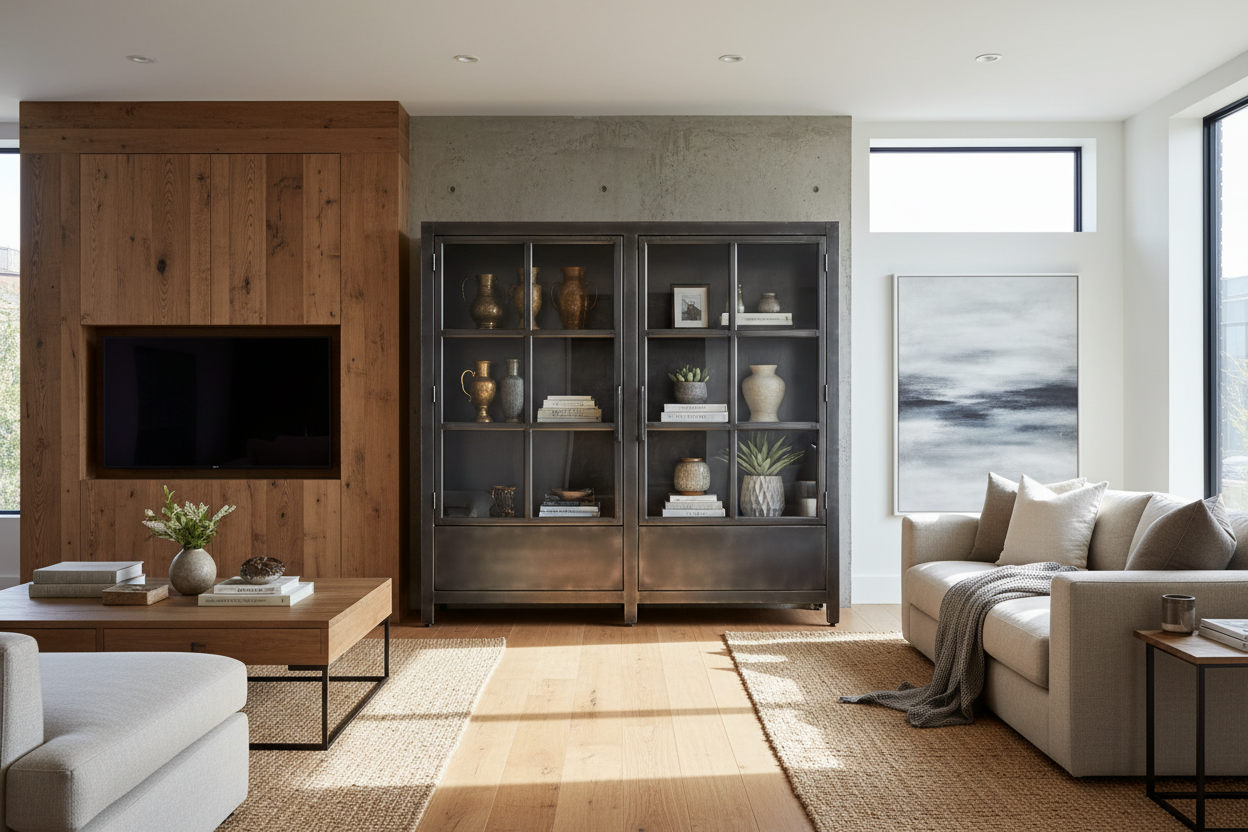
You don't have to use the most expensive cabinet makers wood for every single inch of the house. My favorite budget hack is to use heavy-duty hardwood for the base cabinets and something more decorative for the uppers. For instance, a black cabinet with glass doors on the upper wall can be made of a lighter, cheaper material because it doesn't take the same physical beating as the lowers.
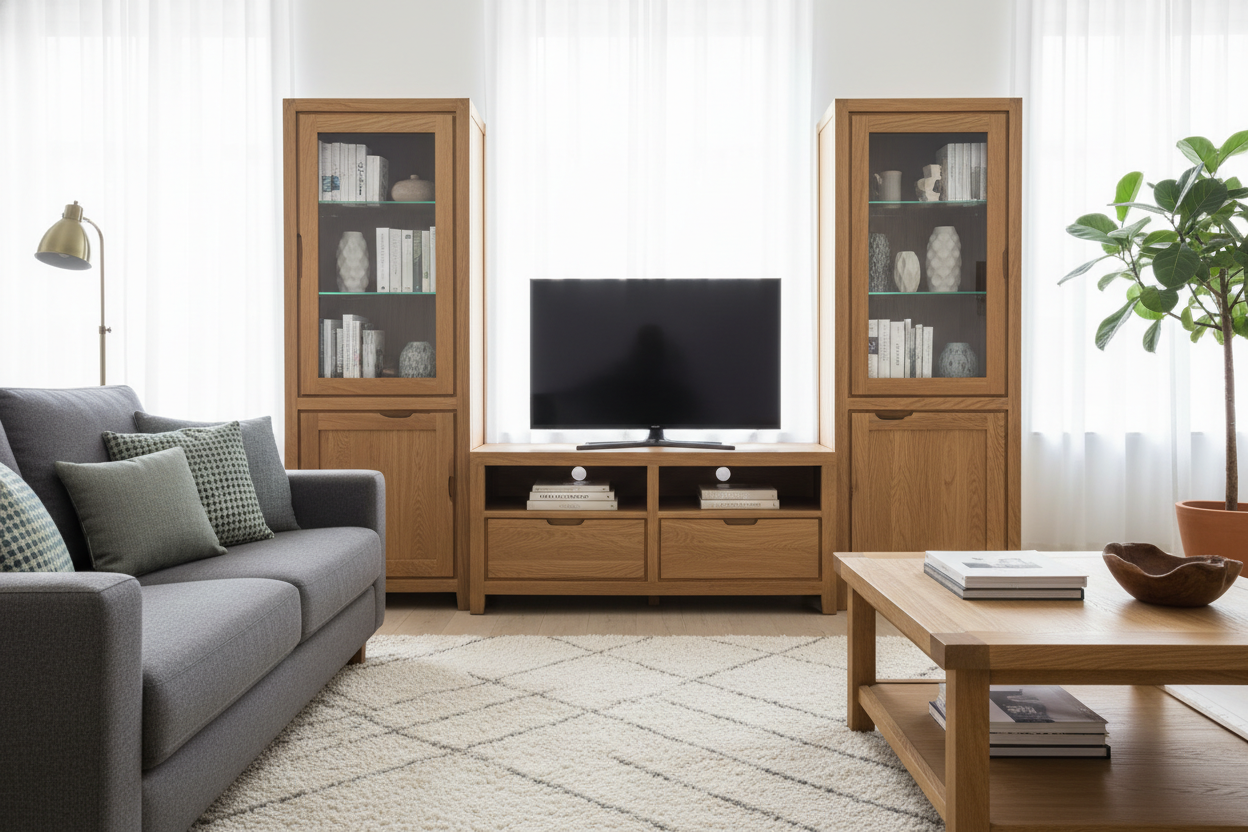
I also love using standalone pieces to fill gaps. Instead of a $4,000 custom built-in for a coffee nook, I’ll drop in a modern sideboard with 2 doors. It carries the high-end look of the rest of the kitchen but saves me a fortune on labor and custom installation costs. It’s about being smart with where the 'real' wood lives.
FAQ
Is MDF ever better than solid wood?
Yes, for the center panels of painted doors. MDF doesn't expand or contract, so you won't get those annoying 'paint cracks' at the joints when the humidity changes. Just make sure the frames are still solid wood.
What is the most durable wood for cabinets?
Hickory is the toughest, but it has a very 'busy' grain. Hard Maple is the best all-rounder—it's incredibly dense, takes paint beautifully, and can handle a beating from a busy family.
Why are my cabinet doors warping?
It's usually because the wood wasn't properly acclimatized to your home's humidity before installation, or it was a low-grade softwood that couldn't handle the internal stress of the grain.

Leave a comment
This site is protected by hCaptcha and the hCaptcha Privacy Policy and Terms of Service apply.