










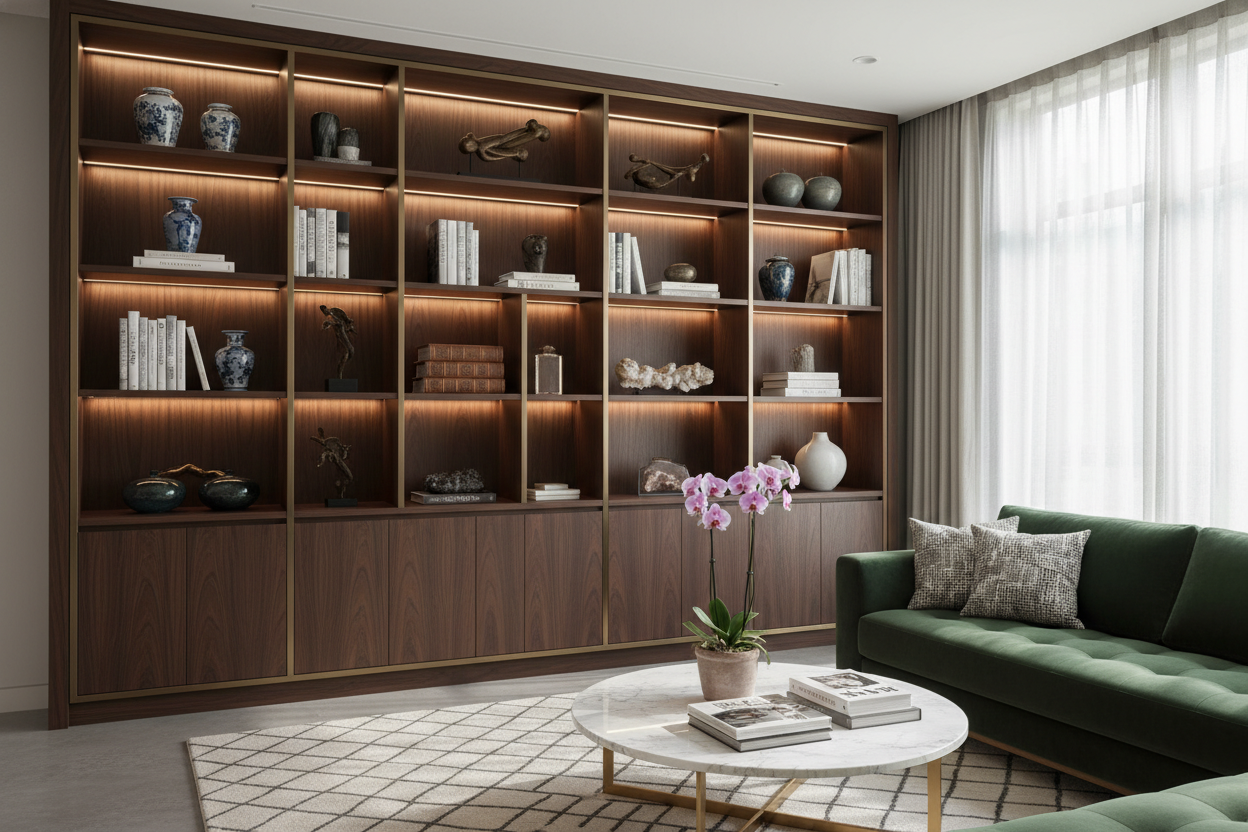
I spent years hunting for the perfect vintage glass jars and mid-century ceramics, only to shove them onto a $40 particle-board shelf from a big-box store. It looked like a yard sale. My living room didn't feel curated; it felt like I was hoarding in a dorm room. That's when I realized that custom showcases aren't just for museums—they're the only way to stop your home from looking like a disorganized thrift shop.
- Standard retail shelves often leave 'dead air' that makes a room feel unfinished.
- Integrated lighting is the difference between a 'cabinet' and a 'gallery.'
- Custom builds hide architectural flaws like uneven floors or weird alcoves.
- High-quality materials like tempered glass and solid wood last decades longer than flimsy MDF.
The 'Thrift Store Shelf' Trap I Kept Falling Into
Retail shelves are built for the 'average' item, but my collection is anything but average. I have oversized 1960s art books that are 14 inches tall and tiny espresso cups that are barely two. On a standard shelf, the books wouldn't fit, and the cups disappeared into the shadows of a 12-inch deep abyss. I ended up with five inches of useless air above every shelf, which is a visual nightmare.
Every time I tried to organize my vintage finds on these generic units, the proportions were off. The shelves were either too flimsy to hold the weight of real stoneware or too deep, making the room feel cramped. It didn't look like a home; it looked like a garage sale that never ended. I was constantly fighting the furniture instead of enjoying my things.
What Actually Makes a Cabinet Look 'High-End'?
High-end furniture isn't just about the price tag; it's about how it interacts with the room. A tailored custom showcase display can hug your crown molding or fill a weird alcove with millimeter precision. When a unit looks like it grew out of the wall, the whole room feels intentional. It's about the 'reveal'—the tiny gap between the door and the frame—and the weight of the hardware.
If you know how to style a custom display cabinet, you can play with negative space. You aren't just cramming things in to save floor space; you're creating a focal point. Cheap cabinets usually have thick, clunky frames that block your view. Custom work uses thinner, stronger materials that let your collection do the talking.
The Lighting Dilemma No One Talks About
Most big-box cabinets are essentially dark caves. Unless you have professional-grade integrated LED strips or recessed puck lights, your favorite pieces are just sitting in the dark. I once bought a 'nice' retail unit only to realize I couldn't see my grandmother’s crystal after 4 PM. It was depressing.
Custom builds allow you to hide the wiring inside the wood itself. You don't have ugly black cords snaking down the back of the glass. Proper lighting adds depth and makes even a modest collection look like it belongs in a gallery. If a cabinet doesn't have a plan for light, it’s just a box.
How I Finally Justified the Price Tag
I did the math, and it was embarrassing. I bought and replaced four different 'temporary' cabinets over five years. Each one eventually sagged in the middle or the fake wood veneer started peeling at the corners. I spent roughly $1,200 on junk that ended up in a landfill. Comparing those flimsy units to a tall white curio cabinet with actual structural integrity changed my perspective.
Investing in one permanent, high-quality solution saved me from the cycle of 'disposable' furniture. When you pay for custom, you're paying for kiln-dried hardwoods and tempered glass that won't shatter if a cat sneezes near it. It’s a one-time hit to the bank account that pays off every time you walk into the room and don't see a sagging shelf.
The 3 Things You Must Get Right If You Go Custom
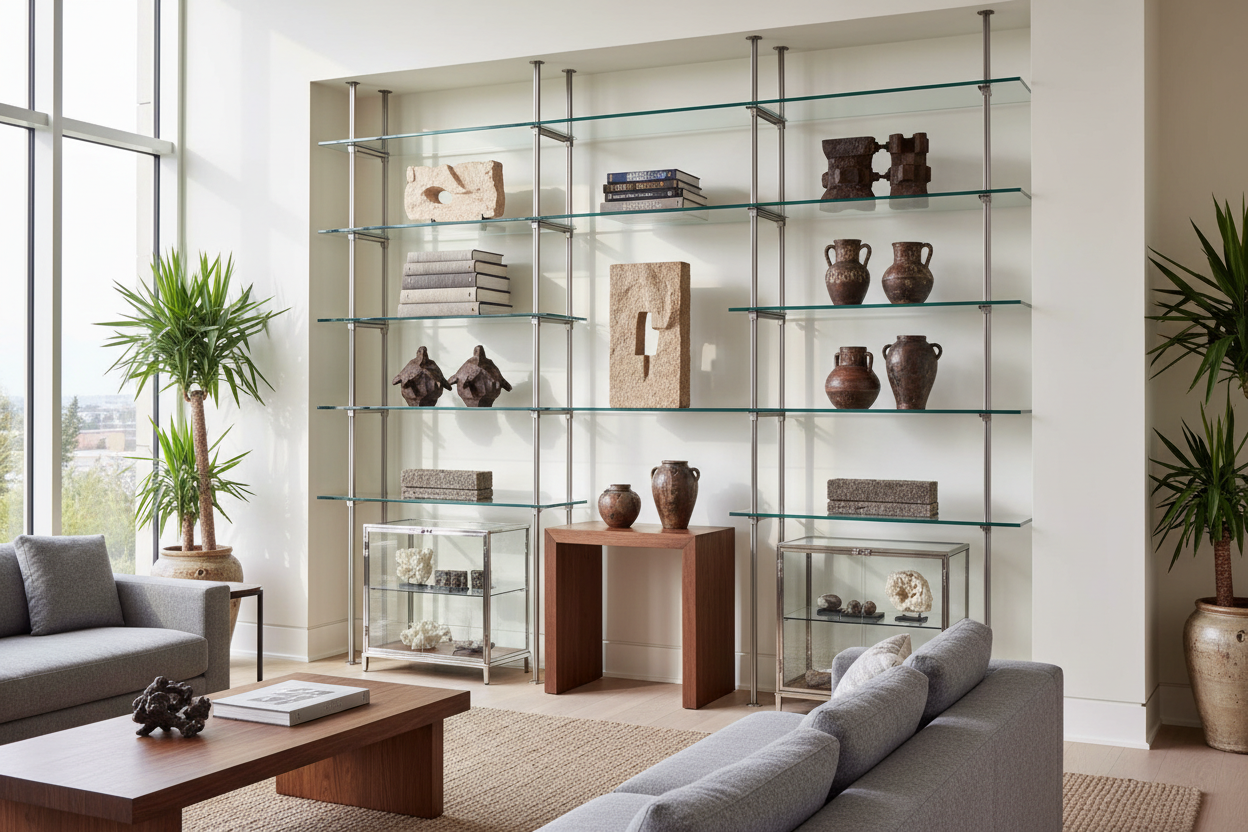
First: measure your tallest, widest, and heaviest items. Don't guess. If you have a 15-inch platter, your shelf needs to be 16 inches deep. Second: choose your glass wisely. Standard glass has a green tint that can distort the colors of your items. Ask for low-iron glass for a crystal-clear view. It costs more, but it’s worth it for the clarity.
Third: pick a finish that has staying power. A painted cabinet for a custom look is a fantastic way to add personality, but stick to colors that feel classic to you. I once went with a trendy 'millennial pink' and regretted it within six months. Now, I stick to deep navies, forest greens, or classic wood stains that let the grain show through.
My Favorite Alternatives If You Can't Splurge Yet
I get it—dropping three grand on a cabinet isn't always in the cards. If you're in a rental or just saving up, look for pieces that offer a built-in feel without the bespoke price tag. A space-saving corner china cabinet is a brilliant way to use that awkward 90-degree angle that usually just collects dust bunnies.
You can find plenty of solid, well-proportioned bookcases and display cabinets that offer the weight and presence of custom work if you shop carefully. Look for real glass doors and adjustable shelving. It might not be a 'forever' piece, but it will certainly bridge the gap until you're ready to go full custom.
FAQ
Is custom furniture really that much better than high-end retail?
Yes, because it fits your specific walls. Even 'high-end' retail is mass-produced to fit a general space. Custom solves the weird 2-inch gap between your cabinet and the wall where dust goes to die.
How do I stop my display from looking cluttered?
Follow the rule of three. Group items in odd numbers and varying heights. And please, leave some empty space. If every square inch is covered, nothing looks special.
Is integrated lighting hard to maintain?
Not if you use LEDs. They last for years and don't put off heat, which is better for your vintage items. Just make sure the transformer is accessible in case it ever needs a swap.

Leave a comment
This site is protected by hCaptcha and the hCaptcha Privacy Policy and Terms of Service apply.