








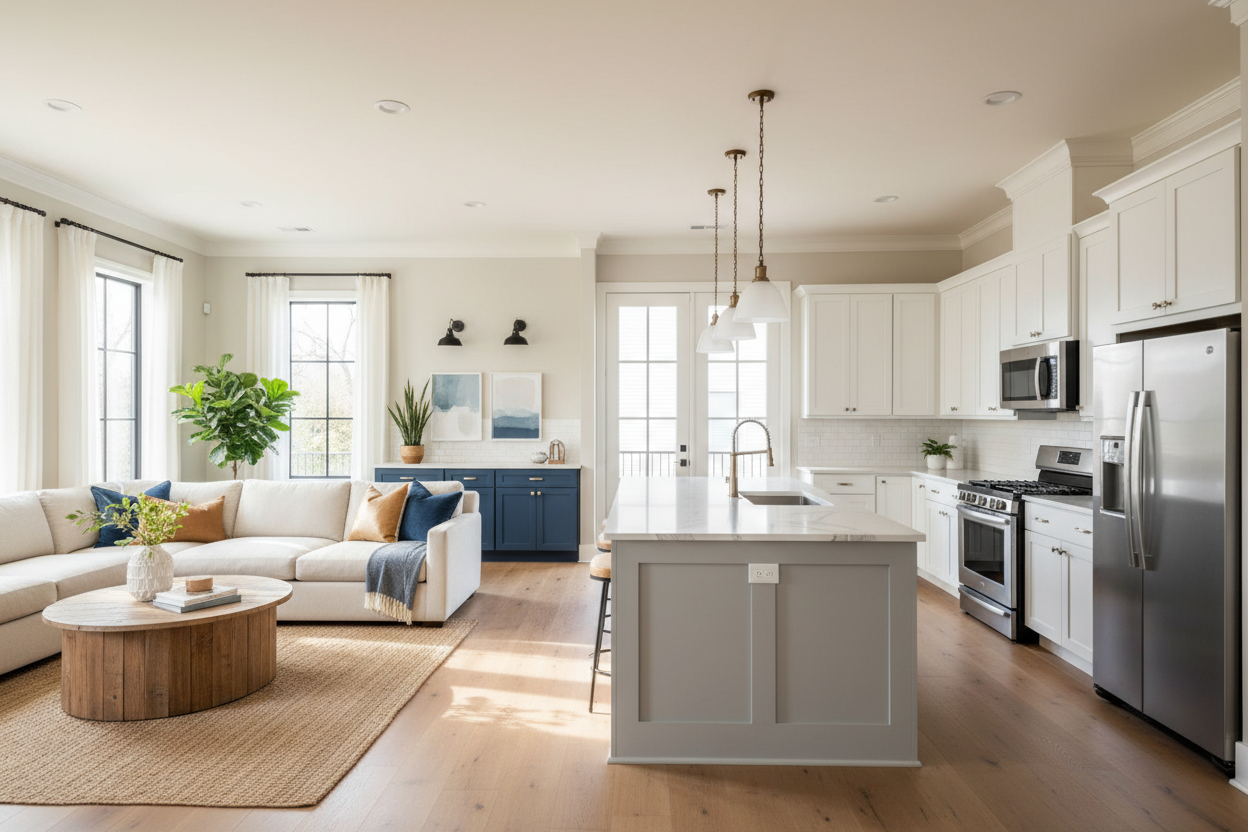
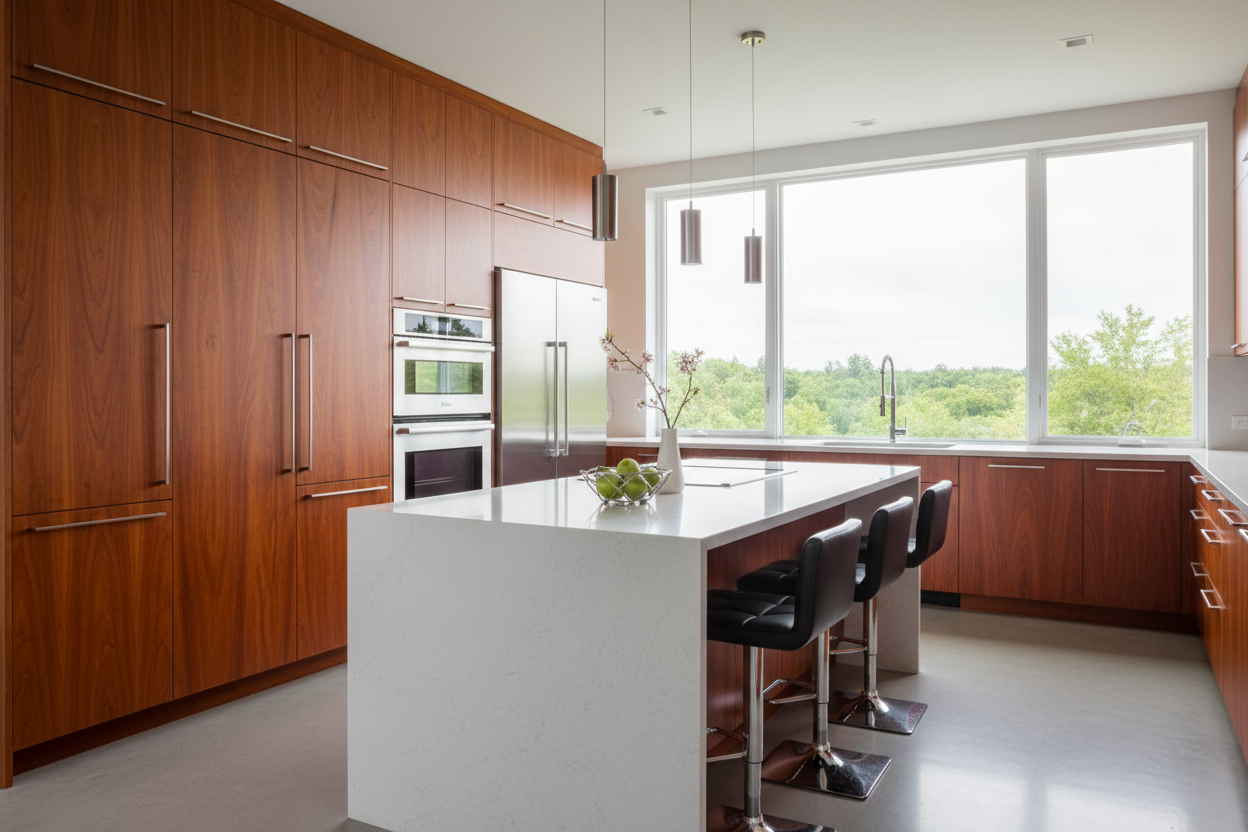
The wood that defined the 1990s kitchen is staging an unlikely comeback — and this time, it looks nothing like your parents' house.
If you'd told a kitchen designer in 2020 that cherry wood cabinets would be trending again, they'd have raised an eyebrow. For the better part of two decades, cherry was considered shorthand for "dated" — synonymous with arched raised-panel doors, Tuscan-inspired granite, and the heavy, ornate kitchens of the late 1990s and early 2000s.
But taste has a way of circling back, and the return of cherry in 2026 is not a case of nostalgia. It's a reinvention. According to the 2026 Houzz Kitchen Trends Study, wood has officially overtaken white-painted cabinets as the most preferred finish for kitchen renovations — the first time in over a decade. And within the wood category, cherry is emerging as one of the most exciting choices, driven by a design world that's rediscovering warmth, character, and the beauty of materials that deepen with time.
The difference between the cherry cabinets of 1998 and the cherry cabinets of 2026 is dramatic. The door profiles are simpler. The finishes are lighter and more natural. The pairings are cleaner. And the result is a kitchen that feels warm, modern, and unmistakably alive.
Here's how to get it right.
Why Cherry, and Why Now?
The cherry comeback is part of a much broader cultural shift away from all-white, surface-level perfection and toward materials that feel honest, warm, and personal. Several forces are converging to put cherry back in the spotlight.
The death of the all-white kitchen. For years, white shaker cabinets with subway tile and quartz countertops were the default for every renovation and every flip. That formula still works, but it has become so ubiquitous that it now reads as generic rather than clean. Homeowners are looking for alternatives that still feel neutral enough to live with long-term, but carry more visual warmth and individuality. Cherry fills that gap.
The warmth imperative. The dominant trend across all interior design in 2026 is warmth — warm palettes, warm textures, warm lighting. Cherry's reddish-brown tones align naturally with this direction. Where cool gray and bright white kitchens required effort to feel inviting, cherry kitchens come by their warmth honestly.
The aging-well factor. One of cherry's most distinctive properties is photosensitivity — it darkens and enriches over time when exposed to light. A fresh cherry cabinet has a light pinkish-brown tone; within a few years, it develops the deep, golden reddish-brown that makes aged cherry so prized. In a design era that values patina and the passage of time over perpetual newness, this natural aging process is a feature, not a flaw.
The affordability advantage. Cherry occupies a sweet spot in the wood market. It's unambiguously a premium hardwood — beautiful grain, smooth texture, rich color — but it typically costs 15 to 25 percent less than walnut, the other dark-toned wood dominating high-end kitchens. For homeowners who want luxury without walnut's price tag, cherry offers genuine value.
Cherry vs. Walnut vs. White Oak: How They Compare
Understanding how cherry sits relative to its two main competitors helps clarify when it's the right choice.
Color and Grain
Cherry starts as a light pinkish-brown and darkens significantly to a warm reddish-brown over time. Its grain is fine, smooth, and relatively subtle — one of the most uniform among premium hardwoods. This subtlety is key to cherry's modern potential: it reads as warm wood without the dramatic grain variation that can make a kitchen feel busy.
Walnut is deep chocolate brown with occasional purplish or grayish tones. Its grain is open and flowing, with more visual movement than cherry. Walnut darkens initially but actually lightens slightly over years, unlike cherry's progressive deepening. It's a bolder presence in a room.
White oak ranges from pale gold to light brown with a pronounced, straight grain pattern. It has a cool-to-neutral undertone compared to cherry's warmth. White oak is the most versatile of the three for mixing with other materials, but it carries less inherent richness.
Hardness and Durability
All three are genuine hardwoods suitable for kitchen cabinetry, but they differ on the Janka hardness scale:
| Wood | Janka Rating | Relative Hardness |
|---|---|---|
| White Oak | 1,360 lbf | Hardest of the three |
| Walnut | 1,010 lbf | Mid-range |
| Cherry | 950 lbf | Softest, but still durable |
Cherry is the softest of the three, which means it's slightly more susceptible to dents and scratches in a high-traffic kitchen. In practice, this difference is minor for cabinetry — you're not walking on it or dragging furniture across it. And cherry's smooth grain makes superficial marks less visible than they'd be on oak's more textured surface.
Cost
Pricing varies by region, grade, and manufacturer, but as a general guide for semi-custom to custom cabinets:
| Wood | Typical Cost Range (per linear ft) | Relative Price |
|---|---|---|
| White Oak | $250–$600 | Premium |
| Walnut | $350–$800 | Most expensive |
| Cherry | $200–$550 | Mid-premium |
Cherry consistently comes in below walnut and close to or slightly above white oak, making it the most accessible entry point into premium wood cabinetry. For homeowners who love the idea of a wood kitchen but find walnut's pricing prohibitive, cherry is the answer.
Staining and Finishing
This is where cherry diverges most from its competitors. Because cherry's natural color is already rich and warm, most designers in 2026 are choosing clear coat or very light stain finishes that let the wood's true character show through. Heavy staining — which was common in the 1990s and often turned cherry an aggressive orange-red — is precisely what made it look dated. The modern approach lets cherry be cherry.
Walnut is similarly best left natural or with a clear coat. White oak, with its more neutral baseline, accepts a wider range of stains and is more commonly used in both natural and custom-stained applications.
The Old Cherry vs. the New Cherry: What Changed
The cherry cabinets that people associate with the 1990s and 2000s shared several characteristics that collectively created a dated look. Understanding what made them look that way is the key to avoiding the same result in 2026.
Then: Heavy raised-panel doors with ornate profiles, arched tops, and decorative molding. These busy door styles created visual weight and complexity that made kitchens feel dark and fussy.
Now: Slab or slim shaker doors. The simplest possible door profile — flat panels with clean edges or a thin, crisp shaker frame. This single change is the most dramatic difference between old cherry and new cherry. A slab door in cherry reads as warm and modern; a raised-panel door in the same wood reads as a period piece.
Then: Heavy lacquer or high-gloss finishes that gave the wood an almost plastic sheen and amplified the reddish tones to an aggressive degree.
Now: Matte or satin clear coats that let the wood's natural texture and grain show through. The finish should feel like you could touch the wood, not like it's been sealed under glass.
Then: Dark, heavy stains that pushed cherry toward uniform mahogany or orange-red tones, hiding the wood's natural variation.
Now: Natural, unstained, or lightly oiled finishes that preserve cherry's pinkish-brown starting point and allow it to age naturally into deeper tones. If a stain is used, it's typically a light amber or clear tone designed to warm the wood slightly without fundamentally changing its character.
Then: Wall-to-wall cherry — every cabinet, every surface, every piece of trim, all in the same wood.
Now: Selective use. Cherry works best when it's one element in a composed palette, not the only material in the room. Using it on base cabinets, an island, or a feature wall — while keeping upper cabinets in a contrasting color or material — prevents the overwhelming effect that gave cherry its dated reputation.
Five Modern Cherry Kitchen Designs That Work
1. Cherry Base + White Upper Cabinets
The most approachable way to introduce cherry into a modern kitchen. Cherry on the base cabinets and island provides warmth at the visual center of the room, while white or cream upper cabinets keep the space bright and open. This two-tone approach is one of the most requested configurations in 2026 kitchen design.
Pair with: Quartzite or white marble countertops, brushed brass hardware, a simple white tile backsplash.
2. Full Cherry Slab with Matte Black Accents
For homeowners ready to commit, a full cherry kitchen in slab door profile with matte black hardware, faucet, and light fixtures creates a striking, contemporary look. The warm wood and cool black create a high-contrast pairing that feels bold without being overwhelming.
Pair with: Honed black granite or dark soapstone countertops, integrated matte black pulls, pendant lighting in black metal.
3. Cherry Island as Focal Point
If your perimeter cabinets are already painted (white, sage, navy — any of the popular 2026 kitchen colors), introducing a cherry island turns it into a standalone furniture piece. This approach works particularly well in open-plan layouts where the island is visible from the living area.
Pair with: A thick natural stone countertop with visible edge, unlacquered brass hardware, open shelving in the same cherry tone on a nearby wall.
4. Cherry + Natural Stone + Plaster
This combination is deeply aligned with the 2026 aesthetic of natural, honest materials. Cherry cabinets (base or full), a natural stone backsplash or countertop with visible veining, and plaster or limewash walls create a kitchen that feels like it grew from the landscape rather than being assembled from a showroom.
Pair with: A stone-look or zellige tile backsplash, warm-toned plaster walls, aged brass or bronze hardware, open wood shelving.
5. Cherry + Concealed Everything
For the design philosophy that values visual calm above all else, cherry pairs beautifully with the concealed-storage trend. Integrated appliance panels in cherry, push-to-open drawers with no visible hardware, and streamlined runs of cabinetry create a kitchen that feels like a warm wooden box — serene, unified, and deeply peaceful.
Pair with: Flush-mounted appliances, integrated handles or push-to-open mechanisms, a single-material countertop that wraps seamlessly.
Practical Considerations
The Darkening Factor
Cherry's photosensitivity is its most distinctive characteristic and the one that requires the most planning. The wood will darken noticeably in the first six to twelve months, and continue to deepen gradually for several years. Areas shielded from light (behind appliances, under items left on counters) will darken more slowly, potentially creating uneven coloring.
The solution is simple: during the first year, periodically rearrange items on counters near cabinets and avoid permanently covering any cabinet surfaces. The wood will eventually reach a stable, even tone. Many cherry owners consider this aging process one of the material's greatest pleasures — watching your kitchen develop its own unique patina over time.
Maintenance
Cherry cabinets are low-maintenance by hardwood standards. Regular cleaning with a soft cloth and mild soap is sufficient. Avoid ammonia-based cleaners, which can damage the finish. If your cabinets have an oil finish rather than a polyurethane clear coat, plan to reapply oil once or twice a year — a simple process that takes about an afternoon and keeps the wood looking rich and hydrated.
Resale Considerations
Wood cabinets in general are increasing in resale value as the market shifts away from white-painted alternatives. Cherry specifically signals quality and investment. The key to maximizing resale appeal is keeping the styling modern — slab or shaker doors, natural finishes, clean hardware — so that the kitchen reads as intentionally contemporary rather than as a holdover from a previous era.
Who Should Choose Cherry — and Who Shouldn't
Choose cherry if: You want a premium wood kitchen with more warmth than white oak and more affordability than walnut. You appreciate materials that evolve over time. You're comfortable with warm, reddish-brown tones as a dominant element. You prefer subtle, fine grain over dramatic wood patterns.
Consider alternatives if: You're strongly committed to cool-toned interiors (cherry's warmth will fight against gray, blue, or cool white schemes). You want maximum hardness for a household with young children or heavy kitchen use (white oak will perform better). You prefer a darker, more dramatic wood tone from the start (walnut delivers that immediately, while cherry needs time to deepen).
The Bottom Line
Cherry wood's return to the modern kitchen is not an accident or a fad. It's a natural consequence of a design world that is rediscovering the value of warmth, honesty, and materials that improve with age. The cherry kitchen of 2026 looks nothing like the cherry kitchen of 1998 — and that's entirely the point.
With the right door profile, the right finish, and the right pairings, cherry delivers something that very few materials can: a kitchen that feels luxurious on day one and more beautiful on day one thousand. In a world of disposable trends and replaceable surfaces, that's a rare and valuable thing.
Quick Reference
| Feature | Cherry | Walnut | White Oak |
|---|---|---|---|
| Starting Color | Light pinkish-brown | Deep chocolate brown | Pale gold to light brown |
| Aging Behavior | Darkens significantly | Lightens slightly | Minimal change |
| Grain Character | Fine, smooth, subtle | Open, flowing, bold | Pronounced, straight |
| Janka Hardness | 950 lbf | 1,010 lbf | 1,360 lbf |
| Price Range | $$ | $$$ | $$ – $$$ |
| Best Finish | Natural / clear coat | Natural / clear coat | Stain or natural |
| Best Modern Door | Slab or slim shaker | Slab | Slab or shaker |
| Ideal Use | Full kitchen or island | Island or accent | Full kitchen |
| Warmth Level | High (red undertone) | Medium (brown-purple) | Low-Medium (neutral) |
| Best Pairings | White, brass, natural stone | Black, concrete, steel | Most versatile |

Leave a comment
This site is protected by hCaptcha and the hCaptcha Privacy Policy and Terms of Service apply.