











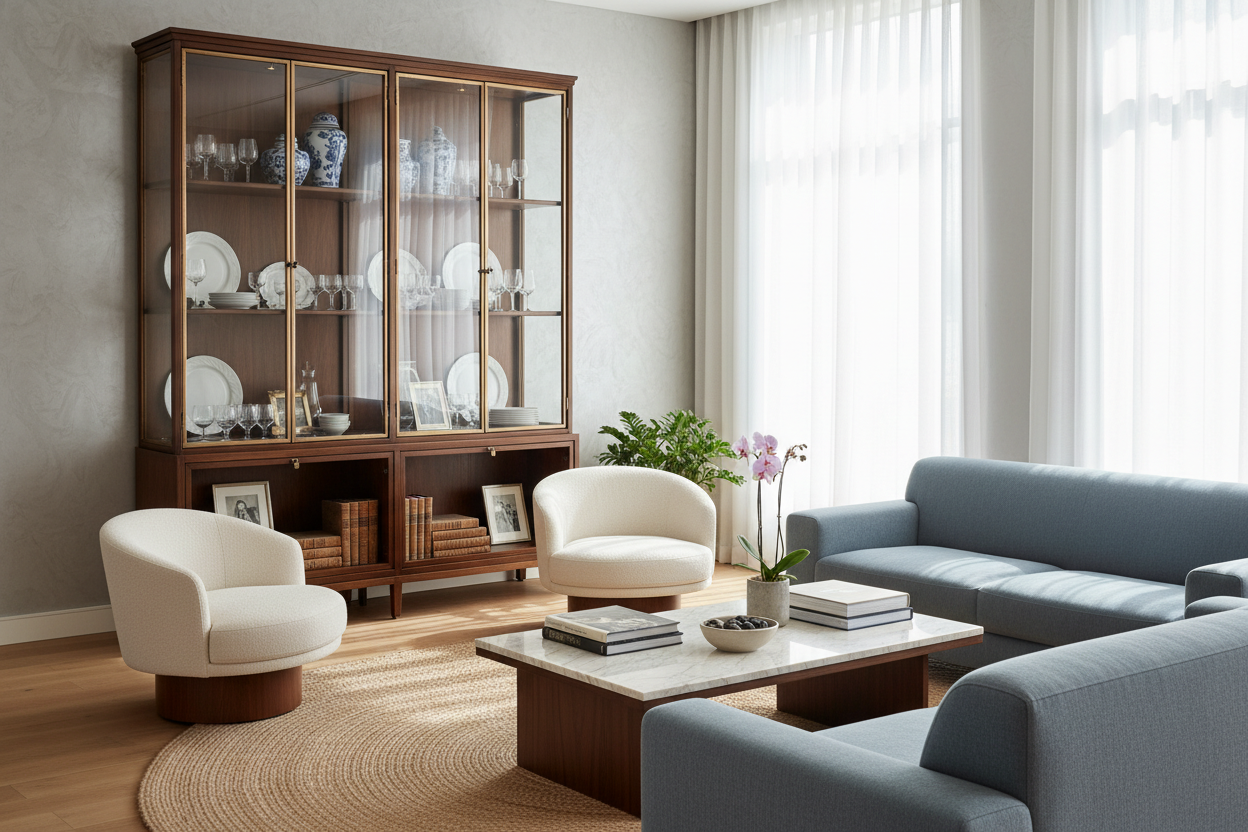
I remember walking into a client's new apartment last year. They'd just moved from a house with a formal dining room to a condo with one great living space. In the middle of the room sat their grandmother's beautiful, but very traditional, china cabinet. They looked at me and said, 'We love it, but here it just feels... wrong. Too stuffy.' This is the exact moment I love as a designer—taking a piece with history and finding its new, perfectly comfortable place in your daily life.
Quick Takeaways
- A china cabinet solves the 'where do I put my nice things?' problem in open-concept homes.
- Placement is about balance: leave at least 36 inches for walkways and consider the room's focal point.
- Style it with a mix of heights and textures—books, ceramics, a trailing plant—not just china.
- Use the lower cabinets for actual living room storage: board games, blankets, tech cords.
- Integrated LED strip lighting (warm white, 2700K) makes all the difference for display.
Why a China Cabinet Belongs in Your Living Room
Forget the rulebook that says fine china only belongs behind closed dining room doors. Our homes have changed. That formal dining room? For many, it's now a home office, a playroom, or simply doesn't exist. The living room has become the heart of everything—entertaining, relaxing, working. This shift creates a practical need: where do you display the heirloom teacups, the art pottery you collect, or those beautiful glasses you actually want to use?
A china cabinet is the answer. It's a dedicated display case that protects your pieces from dust while putting them on show. I find that clients who move pieces like this into the living room end up using and enjoying their collections more. They're part of the daily landscape, not tucked away for 'special occasions' that never come. If you're wondering about this trend, I wrote more about it in my guide, Can You Put a China Cabinet in the Living Room?
From my experience in over 200 homes, the key is intention. Don't just shove the cabinet against a wall because it fits. Think of it as a functional art piece. A well-styled cabinet adds vertical interest, personality, and solves storage issues in one go.
Finding the Perfect Spot: Placement Strategies
This is where most people go wrong. They measure for width and depth but forget about the room's flow. Let's get specific. First, traffic flow: you need a minimum of 36 inches for a main walkway. If the cabinet has doors that swing open, factor in that arc too. I once placed a 24-inch deep cabinet in a narrow hallway leading to a patio—it became a major bottleneck.
Consider natural light. Direct, harsh sunlight can fade fabrics and damage wood finishes over time. A spot that gets gentle, indirect light is ideal. If you have a large window, placing the cabinet on a perpendicular wall often works well. It balances the light source without blocking it.
What about that awkward, empty corner everyone has? A tall, slender cabinet can be perfect there. It uses dead space without encroaching on the room. For more inspiration on tackling those tricky spots, check out these Tall Cabinet Living Room Ideas.
Finally, think about balance. If your sofa is 96 inches long, a petite 48-inch cabinet on the opposite wall will look dwarfed. Scale matters. The cabinet should feel like a considered anchor, not an afterthought.
Beyond China: Creative Display Ideas
Now for the fun part: what goes inside? The goal is a curated, collected look, not a museum exhibit. Start by editing. You don't need to display every piece you own. Group items in odd numbers—three vases, five books, one statement sculpture.
Play with height and texture. Stack large, artful books horizontally to create a platform for a small ceramic bowl. Let a pothos or philodendron trail from a top shelf. Mix your grandmother's porcelain with modern, matte black stoneware. The contrast tells a story.
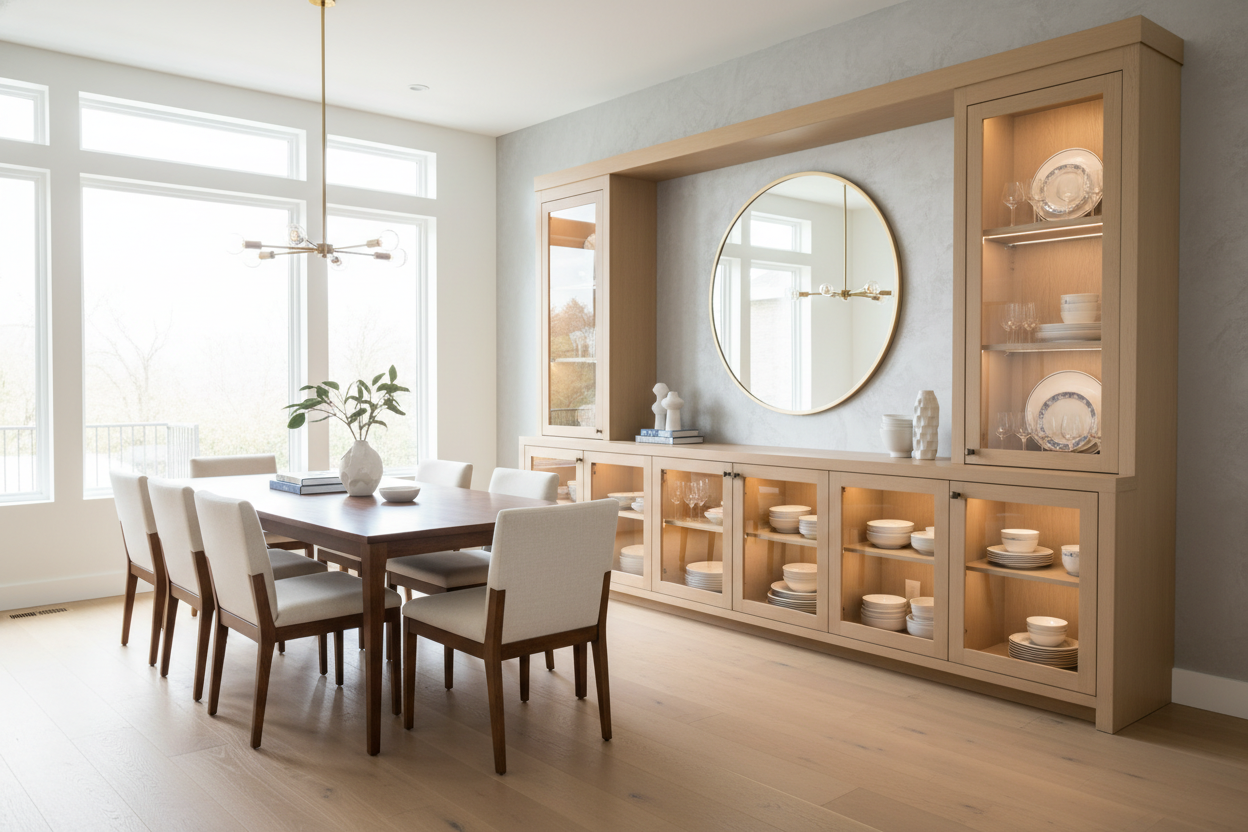
For glass-front cabinets, like the Display Cabinet With Glass Doors, layering is key. Place taller items at the back, shorter in front. Use the cabinet's interior back panel—a quick coat of paint in a contrasting color (like a deep navy or warm terracotta) can make your items pop.
My personal favorite trick? Dedicate one shelf to a rotating 'collection of the month.' It could be seashells from a summer trip, a set of vintage cameras, or colorful glass paperweights. This keeps the display dynamic and personal.
Making It Functional: Storage Solutions That Work
The bottom half of a china cabinet is prime real estate. This is where you marry beauty with utility. Those deep lower cabinets are perfect for storing living room essentials that you want out of sight.
I use them for: board games and puzzles (neatly stacked in baskets), spare throw blankets, a toolkit, or all those device chargers and cables. If your cabinet has drawers, they're ideal for coasters, remote controls, playing cards, and napkins for impromptu snacks.
The key is containment. Use matching bins, baskets, or even decorative boxes to keep things organized. An open cabinet door revealing a jumble of cords defeats the purpose. For a piece designed specifically for this kind of smart storage, the Elegant Solid Wood Modern Sideboard is a great example of form meeting function.
Honest downside? Dust. Glass doors help, but open shelves require a quick once-over with a microfiber cloth every week or two. I consider it a small trade-off for having your favorite things in view.
Designer Tips for Seamless Integration
Lighting is non-negotiable. It transforms a cabinet from furniture to a focal point. I install slim, plug-in LED tape lights (2700K for warm light) along the top interior edge of the cabinet. It washes the shelves in a gentle glow, perfect for evenings. Battery-operated puck lights are a good rental-friendly option.
Accessorize around it. Place a floor lamp with a complementary finish (brass, wood, black) beside it. Layer a small rug underneath to ground it in the space. Style the top: a framed family photo, a small sculptural object, or a low, spreading plant like a ZZ plant.
The final trick is to repeat materials. If your cabinet has brass hardware, echo that finish in a nearby picture frame or lamp base. If it's oak, add a woven rattan basket next to it. These connections make the piece feel intentional, not isolated. For pieces that would complement your new setup, browse our full Living Room Collection.
FAQ
Can a dark, traditional china cabinet work in a light, modern living room?
Absolutely. Contrast adds depth. The dark wood becomes a striking anchor. Just balance it with lighter elements nearby—a light-colored rug, sheer curtains, or a pale wall.
How high should items be on the shelves?
Leave breathing room. Don't cram items to the very top of the shelf. A good rule is to leave 20-25% of the shelf height empty above your tallest object on that shelf.
What if my cabinet feels too 'grand' for my casual space?
Style it down. Remove any overly ornate decorative plates. Fill it with a mix of your nice dishes and everyday, casual ceramics like mugs or pasta bowls. Add in some hardcover books. It's about blending the formal with the familiar.
Is a china cabinet a good idea in a small living room?
Yes, if you choose wisely. A tall, narrow cabinet (think 18-22 inches wide) provides vertical storage without eating up much floor space. It actually makes a small room feel more designed by drawing the eye upward.

Leave a comment
This site is protected by hCaptcha and the hCaptcha Privacy Policy and Terms of Service apply.