










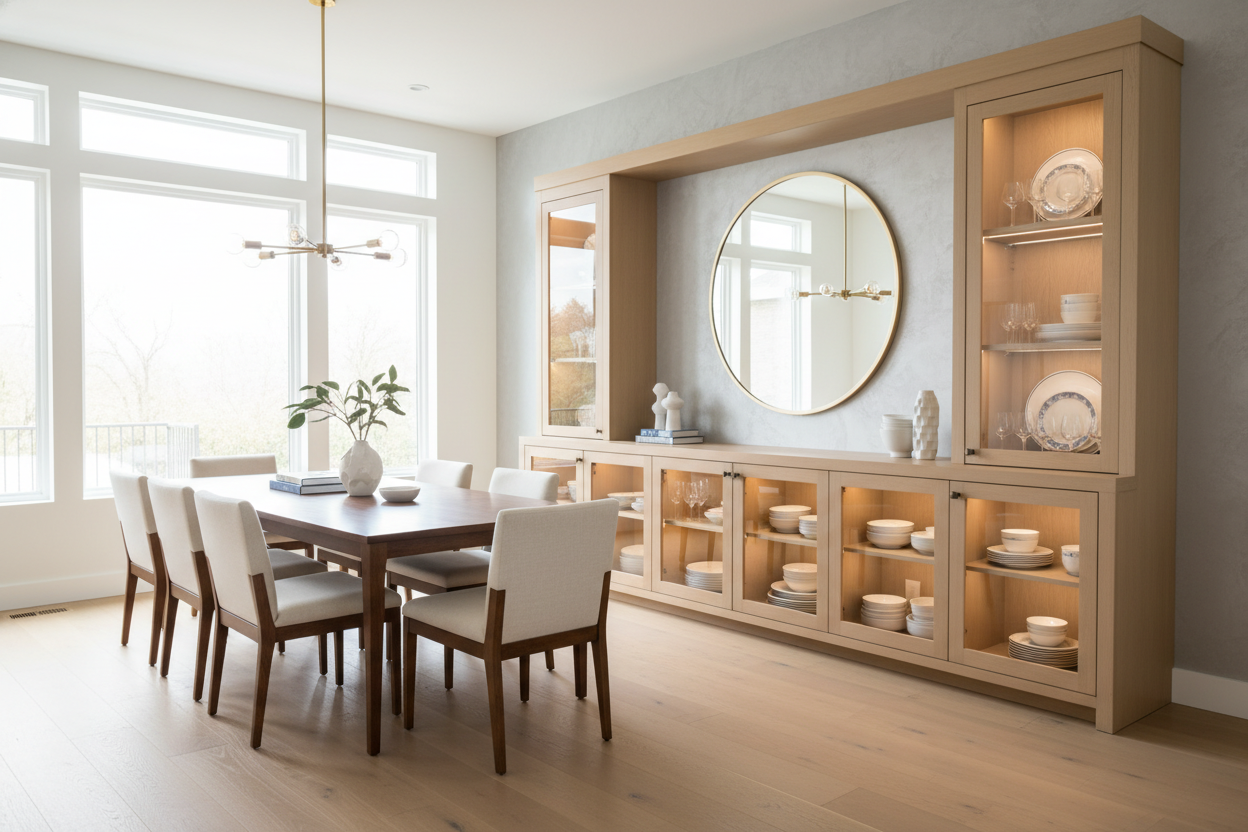
I remember walking into a client's home last year—a beautiful 1920s Craftsman in Seattle. The dining room had a gorgeous built-in hutch, but inside was just her grandmother's formal china, stacked neatly and untouched for years. 'I love these pieces,' she told me, 'but they feel like a museum exhibit, not part of my life.' That's when we started talking about what a china display could really be.
If you've inherited china, collected pieces from travels, or simply appreciate beautiful dishes, you might feel the same. The formal dining room display feels outdated, but you don't want to box everything up. The good news? With 200+ homes under my belt, I've found beautiful ways to make china displays feel personal, intentional, and perfectly suited to how we live now.
Quick Takeaways
- Your china display should tell your story, not just show dishes
- Choose display furniture based on your collection's style and your room's function—not tradition
- Mix china with books, art, and plants for a curated look
- Lighting and backgrounds transform storage into decor
- China displays work beautifully beyond the dining room
Why Your China Display Should Tell a Story, Not Just Show Dishes
Remember when china cabinets were strictly for formal dining rooms? The complete set would be displayed behind glass, perfectly arranged but rarely used. Today, our homes serve multiple purposes—we eat in kitchens, work in dining rooms, and entertain in living spaces. Your china display should adapt to this reality.
I encourage clients to think of their display as a curated collection rather than storage. That blue-and-white transferware from England? Pair it with the pottery you bought in Santa Fe and your favorite art books. The formal Limoges? Mix it with modern ceramics and a trailing pothos plant. The goal isn't perfection—it's personality.
Consider scale and visibility. In a 12x14 living room, I recently used a 62-inch wide china cabinet as a room divider. The glass doors kept the space feeling open while displaying a mix of heirloom plates and contemporary glassware. The client uses pieces regularly because they're visible and accessible, not hidden away for 'special occasions.'
Choosing the Right Display Piece for Your Story
Before you style anything, you need the right canvas. The days of one-size-fits-all hutches are over. Now we consider: What's your collection's style? Where will it live? How much space do you have?
For modern, light-filled spaces, I often recommend pieces like a Tall White China Curio Cabinet. The clean lines and transparent glass work with contemporary decor while providing ample display space. Just ensure you have proper clearance—at least 36 inches of walkway in front for comfortable access.
Construction matters more than you might think. Look for kiln-dried hardwood frames rather than particle board, and tempered glass that's at least 1/4-inch thick. The hardware should feel substantial, with smooth-gliding drawers and doors that close securely. I always check What Designers Look For in a Display Cabinet when evaluating new pieces for clients.
Open shelving works beautifully in kitchens and dining nooks. I recently installed floating shelves in a client's breakfast area—just 12 inches deep, perfect for displaying her collection of Japanese teacups alongside cookbooks and small plants. The key is keeping the arrangement intentional rather than cluttered.
The Designer's Formula for a Curated Display
Here's my practical approach to styling, developed through countless installations. First, clear everything out. Yes, everything. Start with your largest or most special piece as the focal point—maybe that serving platter from your wedding or the vase from your Paris trip.
Create visual triangles by varying heights. Place a tall candlestick next to a medium bowl, then a stack of smaller plates. Mix textures: glossy porcelain next to matte stoneware, smooth glass beside woven baskets. Leave breathing room—negative space is your friend. On a 48-inch wide shelf, I typically leave 20-30% empty space.
Incorporate non-china elements. Books add color and texture (lay them flat to create platforms). Small artworks or photographs personalize the display. Plants bring life—a succulent in a vintage teacup, or ivy trailing from the top shelf. For specific techniques, I reference How Designers Actually Display China when training my team.
Personal experience: Early in my career, I over-styled a client's hutch. Every inch was filled with 'perfect' arrangements. She confessed months later that she never used anything because it felt too precious. Now I leave room for life to happen—space for that new mug from a friend, or the bowl her child made in art class.
Lighting and Backgrounds: The Unsung Heroes
Lighting transforms display from storage to showcase. LED strip lights installed along the top interior edge of a cabinet provide even, warm illumination without heat damage. For glass-front cabinets, I use puck lights mounted to the top—spaced every 18-24 inches for consistent coverage.
Background treatments add depth and personality. In a recent project, we lined the back of a built-in with removable wallpaper featuring a subtle botanical print. The client's white china popped against the pattern. For a more subtle approach, paint the interior a contrasting color—navy blue makes white porcelain shine, while sage green complements earth-toned pottery.
Consider fabric as a temporary solution. I once used velvet ribbon tacked along shelf edges in a rental apartment—an easy way to add color without permanent changes. The key is choosing materials that won't fade under display lighting (ask for lightfast ratings).
Real Spaces: China Displays Beyond the Dining Room
Let's look at practical applications. In a Toronto condo living room, we used a mid-century modern hutch to display the client's collection of Scandinavian ceramics. Mixed with design books and a single orchid, it became a focal point that felt intentional, not traditional.
For small spaces, consider corner solutions. An Elegant Corner China Cabinet maximizes unused space while providing display area. I recently installed one in a 10x12 entryway—it stores keys and mail in drawers below while displaying heirloom teacups above.
Kitchens offer great opportunities. Open shelves above a peninsula can display everyday dishes alongside special pieces. Just maintain 18 inches of clearance above countertops for practical use. In one project, we installed glass-front upper cabinets in the kitchen specifically for the client's collection of colorful Fiestaware—now she enjoys it daily while cooking.
The common thread? Each display serves the homeowner's lifestyle while honoring the pieces they love. If you're exploring options, Browse More Display Cabinets to find pieces that fit your space and style.
Frequently Asked Questions
How do I protect my china from sunlight damage?
Use UV-filtering window film on nearby windows. For valuable pieces, consider museum glass for cabinet doors—it blocks 99% of UV rays while maintaining clarity.
Can I mix different china patterns?
Absolutely. The key is finding common elements—similar color palettes, consistent scale, or complementary shapes. I often group by color family rather than pattern.
How often should I rearrange my display?
Seasonally works well for most people. It keeps the arrangement fresh and lets you clean thoroughly. Some clients change elements monthly—adding holiday pieces or rotating collections.
What if I have young children?
Consider higher placement or secure doors with child locks. Acrylic dividers on shelves prevent items from shifting. Many of my clients with children display special pieces safely while keeping everyday dishes accessible.


Leave a comment
This site is protected by hCaptcha and the hCaptcha Privacy Policy and Terms of Service apply.