










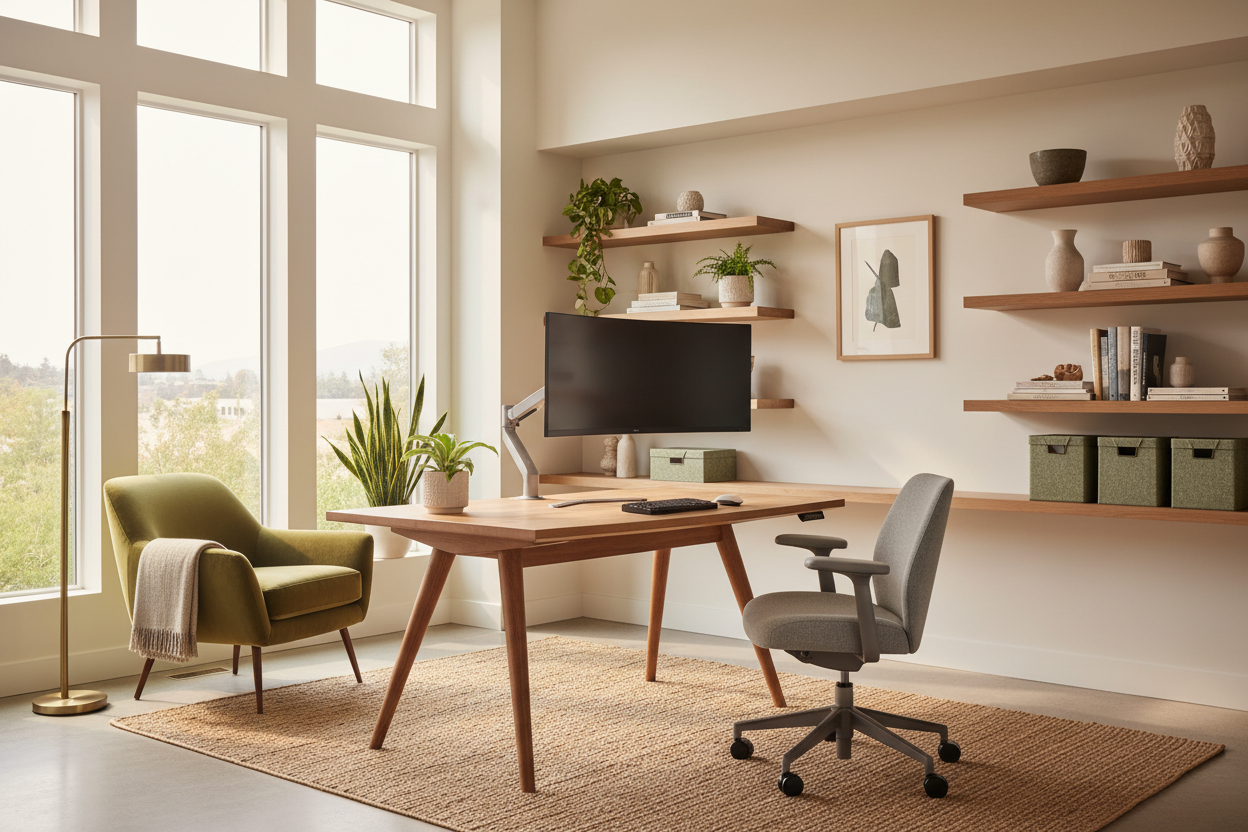
One of the most frequent dilemmas I encounter when consulting with clients is the clash between corporate functionality and residential warmth. You want a workspace that performs like a powerhouse but looks like a sanctuary. The mistake many make is dragging sterile, industrial pieces into a curated living space, disrupting the visual flow. Successful design lies in selecting furniture for office in the home that respects your interior architecture while supporting your 9-to-5 workflow.
Quick Decision Guide: Key Selection Criteria
If you are rushing to furnish your space, prioritize these four elements to ensure your investment holds its value and style:
- Scale & Proportion: Ensure the desk footprint allows for at least 36 inches of clearance behind the chair for movement.
- Material Tactility: Opt for solid woods or high-grade veneers over cold laminates to blend with existing home or office furniture.
- Cable Management: Look for desk furniture for home with integrated modesty panels or hidden channels to maintain a clean visual.
- Ergonomic Disguise: Choose seating with advanced lumbar support hidden within upholstered, residential silhouettes.
The Art of Material Selection
When specifying furniture office home setups, the material palette is what separates a temporary workstation from a permanent design feature. In a commercial setting, durability against hundreds of employees is key. In your residence, tactile comfort reigns supreme.
Solid Wood vs. Veneer
For a home study, solid wood offers longevity and the ability to refinish surfaces over time. However, high-quality engineered wood with a thick walnut or oak veneer is often more stable against humidity changes in a residential environment. Avoid high-gloss finishes; they reflect overhead lighting and create glare on video calls. A matte, oil-rubbed finish absorbs light and hides fingerprints effectively.
The Anchor: Choosing Desk Furniture for Home
Your desk is the focal point. The trend of pushing a desk against a wall is fading. If you have the square footage, floating the desk in the center of the room commands authority and improves your view.
When selecting desk furniture for home office layouts, consider the silhouette. A writing desk with slender legs opens up a small room, creating a sense of airiness. Conversely, a pedestal desk with heavy storage grounds a large library but can feel imposing in a shared bedroom space. If you are integrating office furniture at home into a living area, look for pieces that mimic console tables or sideboards when not in use.
Seating: The Ergonomic Compromise
The standard black mesh chair rarely complements a carefully curated room. I often advise clients to look for home desk furniture seating that utilizes fabric or leather upholstery. Look for "synchro-tilt" mechanisms and seat depth adjustments that are concealed beneath the seat pan. The goal is to have a chair that invites you to sit for eight hours but doesn't look like it belongs in a cubicle farm.
Lessons from My Own Projects
I want to share a reality check from a recent renovation I did for a client—and a mistake I almost made myself. We fell in love with a stunning, sculptural vintage dining table to use as a desk. It had incredible visual weight and texture. However, once we installed it, we realized the apron (the wood panel beneath the tabletop) was too low.
Every time the client crossed their legs, their knees hit the wood. It was a beautiful disaster. We had to hire a carpenter to shave down the underside of the apron and adjust the chair height significantly.
Another detail often overlooked is the "cold factor." I once bought a glass-top desk for my own study because it looked invisible and sleek. After two weeks, I sold it. Resting my forearms on cold glass during early winter mornings was uncomfortable and distracting. Now, I always test the thermal tactility of furniture for home study areas. If it feels cold to the touch in the showroom, it will feel freezing in your home at 8 AM.
Conclusion
Designing a workspace is not just about filling a room; it is about creating an environment that fosters focus without sacrificing style. By choosing furniture for office in the home that prioritizes warm materials, proper scale, and hidden functionality, you build a space that serves you for years to come.
Frequently Asked Questions
What is the ideal depth for a home office desk?
For a laptop setup, 24 inches is sufficient. However, if you use multiple monitors or require space for paper review, aim for a depth of 30 inches to maintain proper focal distance and prevent eye strain.
Can I mix wood tones in my office furniture?
Absolutely. In fact, matching everything perfectly can look flat and catalog-like. Try to keep the undertones (warm vs. cool) consistent. For example, a walnut desk pairs beautifully with oak shelving if both have warm, honey undertones.
How do I fit a workspace in a small apartment?
Focus on verticality. Wall-mounted ladder desks or shelving units with a drop-down work surface are excellent space-savers. They utilize height rather than floor area, keeping the footprint of your home or office furniture minimal.


Leave a comment
This site is protected by hCaptcha and the hCaptcha Privacy Policy and Terms of Service apply.