










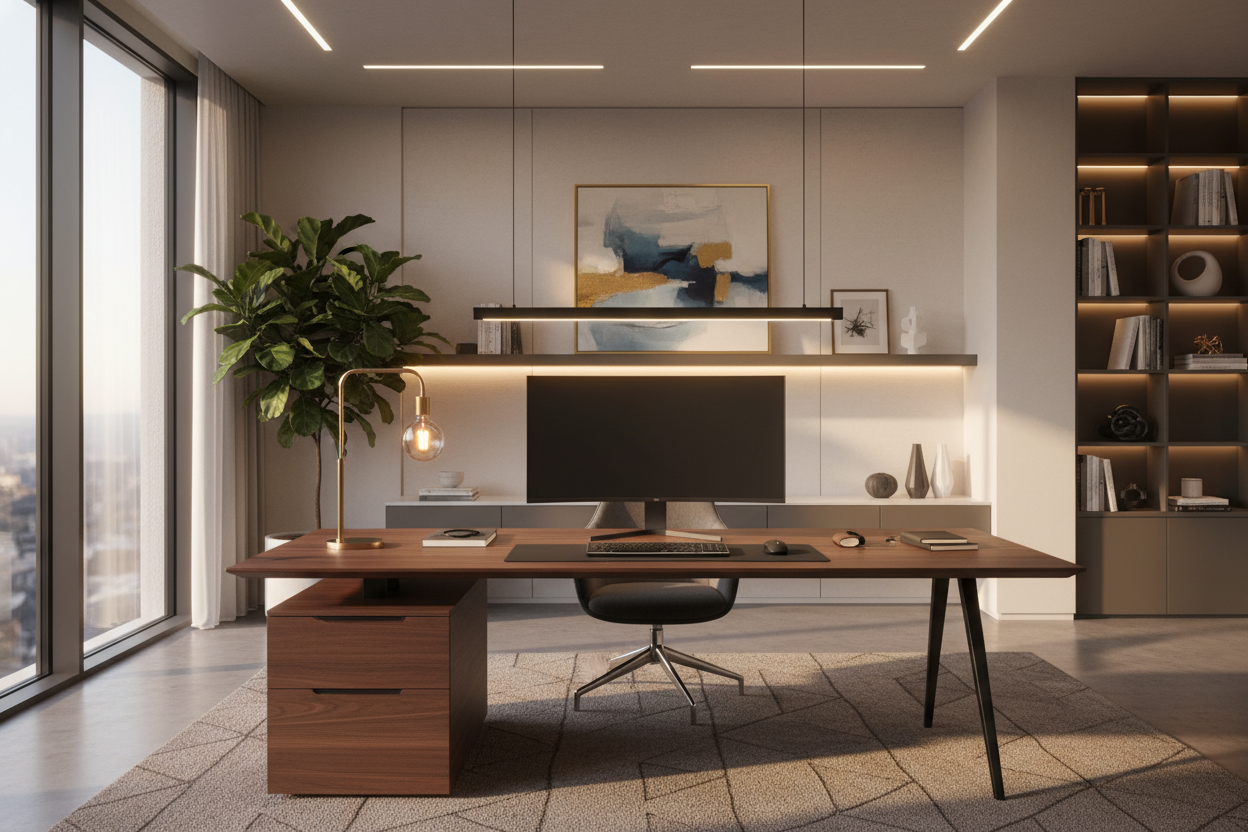
We often treat lighting as an afterthought, prioritizing the desk silhouette or the ergonomic chair. Yet, nothing dictates the mood and functionality of a workspace quite like illumination. Relying solely on a harsh overhead ceiling fixture is a design felony that leads to eye strain and a flat, uninspiring atmosphere. To achieve the best desk lighting setup, you must move beyond simple utility and embrace the architectural concept of layering light.
Key Features to Look For
- Layering Strategy: Combine ambient (general), task (focused), and accent lighting to eliminate shadows.
- Color Temperature (Kelvin): Aim for 3500K to 4500K for focus; avoid overly warm yellow or sterile blue tones.
- Color Rendering Index (CRI): Look for a CRI of 90+ to ensure wood grains and fabric colors look authentic.
- Adjustability: High-quality tension springs and articulating arms are essential for directing light away from screens.
- Glare Control: Matte finishes and diffusers prevent light from bouncing off the desk surface into your eyes.
The Art of Layering: Beyond the Single Lamp
In high-end interior design, we never rely on a single light source. A sophisticated desk setup lighting plan requires a hierarchy of illumination. Your goal is to balance the contrast ratios in the room so your iris isn't constantly expanding and contracting as you look from your bright monitor to the dark room behind it.
Ambient vs. Task Lighting
Start with bias lighting behind your monitor. An LED strip or a wash light against the wall softens the contrast between the screen and the background. Once that baseline is set, introduce your primary task light. This fixture should cast a pool of light specifically on your documents or keyboard, not the screen. The interplay between these layers creates depth and visual interest.
Choosing the Right Fixtures: Material & Ergonomics
When selecting lights for desk setup integration, the tactile quality of the fixture matters as much as the light it emits. I always advise clients to look for solid brass, anodized aluminum, or weighted steel bases. Avoid lightweight plastics; they lack stability and cheapen the aesthetic.
Ergonomics play a massive role here. A classic architect’s lamp with articulating joints allows you to physically move the light source. However, check the tension mechanisms. A premium lamp will hold its position instantly without drooping, whereas cheaper alternatives slowly lose their posture over time.
Technical Specs: Understanding Kelvins and CRI
The quality of light is defined by two metrics: Color Temperature and CRI. For a home office, you want a neutral white light. A bulb rated at 2700K is too sleepy (like a sunset), while 6000K is too clinical (like a hospital). The sweet spot for productivity is around 4000K.
Furthermore, pay attention to the Color Rendering Index (CRI). If your desk is a beautiful solid walnut or oak, a low CRI bulb will make the wood look gray and washed out. A high CRI (90+) reveals the richness of the grain and the true colors of your decor.
My Personal Take on the Best Desk Lighting Setup
I learned a hard lesson about finishes during a project for a client who insisted on a high-gloss black lacquer desk lamp. While it looked stunning in the catalog, in practice, it was a nightmare. Every time the overhead lights hit the lamp base, it created a distracting specular highlight that bounced right into the client's eyes. Furthermore, the glossy finish magnified every single fingerprint and dust mote.
In my own studio, I use a matte-finish monitor bar paired with a vintage matte-gray articulating arm lamp. The monitor bar handles the keyboard area without inducing screen glare—a common issue with traditional lamps. However, the specific detail I look for now is the switch placement. I once owned a sleek minimalist lamp where the switch was on the cord behind the desk. It drove me crazy. Always ensure the tactile dimmer or switch is within arm's reach; functionality should never be sacrificed for a cleaner wire run.
Conclusion
Lighting is the jewelry of the room, but in a workspace, it is also a tool for focus. By layering your light sources and paying close attention to material quality and color temperature, you can create a space that feels visually expansive and conducive to deep work. Invest in fixtures that offer both structural integrity and luminous quality.
Frequently Asked Questions
What is the best position for a desk lamp to avoid shadows?
If you are right-handed, place the lamp on your left side, and vice versa. This prevents your hand from casting a shadow across your writing or drawing surface while you work.
Are monitor light bars worth the investment?
Yes, especially for limited desk real estate. They provide excellent task lighting without taking up surface area and are engineered specifically to avoid screen glare, which is difficult to achieve with traditional lamps.
How bright should my desk light be?
For general office work, aim for roughly 450 to 500 lumens focused on the desk surface. Dimmable options are superior, allowing you to adjust intensity based on the time of day and natural light levels.

Leave a comment
This site is protected by hCaptcha and the hCaptcha Privacy Policy and Terms of Service apply.