










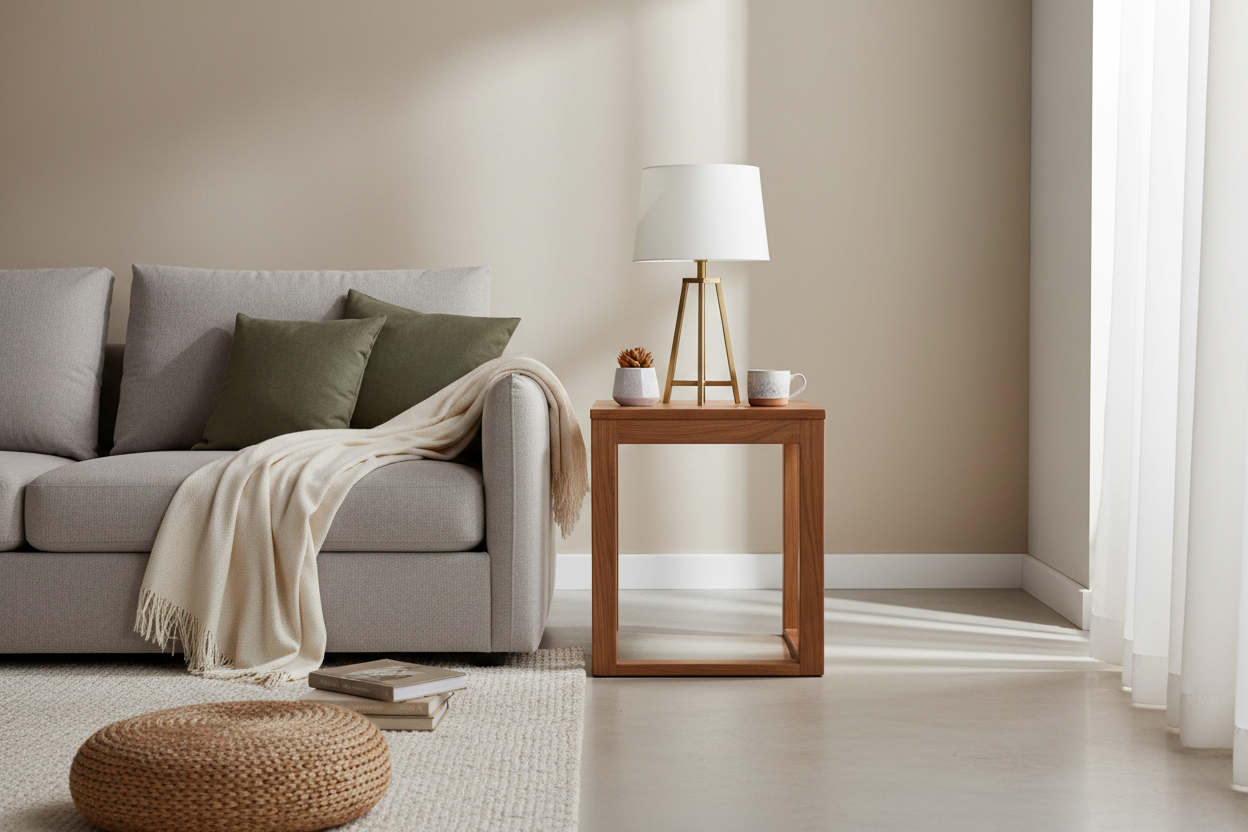
There is a specific warmth that natural timber brings to a room that metal or glass simply cannot replicate. A wooden side table is often the unsung hero of living room design. While the sofa gets all the attention and the rug sets the boundaries, the side table is where life actually happens. It holds your morning coffee, supports your reading lamp, and displays the treasures you’ve collected over the years. Choosing the right one isn't just about filling an empty corner; it is about balancing functionality with the organic texture that only wood can provide.
I learned this lesson the hard way in my first apartment. I bought a cheap, laminate metal table because it looked modern. Within a month, it felt cold and clinical. I eventually replaced it with a battered oak piece I found at a garage sale. I spent a weekend sanding it down and oiling it. That table didn't just hold my lamp; it changed the acoustic feeling of the corner and added a sense of history to a brand-new building. The grain had imperfections, knots, and swirls that caught the light differently throughout the day. That experience taught me that wood is a living material, even after it has been cut and shaped, and it brings a necessary grounding element to any interior space.
Understanding Scale and Proportion
The most common mistake people make is ignoring scale. You might fall in love with a piece in the showroom, but if it towers over the arm of your sofa or sits too low to reach comfortably, it becomes a nuisance. Generally, the surface should be within two inches of your sofa's arm height. If you are working with limited square footage, wood small tables are invaluable. They provide the necessary surface area for a coaster and a phone without impeding traffic flow. Round designs are particularly good in tight spaces because the lack of sharp corners makes the room feel easier to navigate.
Conversely, if you have a deep sofa or a large sectional, a tiny round table will look lost. In these scenarios, a long wood side table is a better fit. These rectangular pieces run along the depth of the sofa, offering ample surface area for a lamp at the back and a drink at the front. They bridge the gap between furniture pieces, making a large room feel cohesive rather than scattered.
Functionality: Shelves, Drawers, or Stands?
Design is important, but utility is paramount. Before purchasing, ask yourself what will live on this table. If you are a voracious reader who likes to keep current reads close at hand, a wooden shelf table is a smart investment. The lower tier doubles your surface area, allowing you to keep the top clutter-free for aesthetics while the bottom handles the heavy lifting of storage. This is also an excellent place to put a woven basket for remotes or charging cables to keep them out of sight.
Sometimes, however, you don't need storage. You might just need a pedestal for a specific object, like a trailing pothos plant or a sculptural lamp. In this case, a wood stand table is the ideal choice. These are typically taller and have a smaller footprint. They draw the eye upward, adding vertical interest to a room that might otherwise feel too horizontal. Because they are often lightweight, they are easy to move around when you need to rearrange the layout for a gathering.
The Art of Mixing and Matching
For a long time, the standard advice was to buy a matching suite of furniture. You would get the coffee table and two end tables all from the same line. While this creates instant uniformity, it often lacks personality. Today, designers lean toward a more curated look. You don't necessarily need a wood side table set where everything is identical. Instead, consider buying two tables that share a similar wood tone—like walnut or white oak—but have different silhouettes. One might be a drum table, while the other is leggier and more open.
If you do prefer the symmetry of a set, try to break up the visual repetition with styling. Use a tall lamp on one and a stack of books with a low bowl on the other. This keeps the eye moving and prevents the room from looking like a catalog page.
Versatility Throughout the Home
The beauty of these pieces is that they aren't confined to the living room. A wood occasional table can solve problems in almost any room of the house. In a bathroom with a freestanding tub, a water-resistant teak table is perfect for holding a candle or a glass of wine. In a guest bedroom that is too small for a full dresser, a compact table serves as a functional nightstand.
We often overlook the utility of a wood little table in a nursery or a child's room. Wood is durable and can withstand the wear and tear of family life better than glass or acrylic. As the child grows, that same table can migrate to the hallway or serve as a plant stand in the sunroom. Quality timber furniture ages gracefully, often looking better with a few years of use than it did the day it was bought.
Caring for Your Wood Furniture
Maintenance is the trade-off for the beauty of natural materials. Wood reacts to its environment. Direct sunlight can bleach the color over time, and extreme changes in humidity can cause swelling or cracking. To keep your table looking its best, use coasters religiously. If you do get a water ring, there are plenty of home remedies, but prevention is always easier. Dust regularly with a soft cloth to prevent grit from scratching the finish. Once or twice a year, depending on the finish, a little bit of furniture wax or oil can rejuvenate the grain and keep the wood nourished.
Selecting the Right Wood Tone
Mixing wood tones can be intimidating, but it is the secret to a layered, professional look. You don't want everything to match perfectly, or the room will feel flat. If you have hardwood floors, try to choose a side table that is either two shades lighter or two shades darker than the floor. This creates contrast and ensures the furniture doesn't visually disappear into the ground. A dark mahogany or walnut table looks stunning against a light oak floor, while a blonde maple table can pop beautifully against a dark rug or espresso-stained floorboards.
Frequently Asked Questions
How tall should a side table be compared to the sofa?
Ideally, the side table should be level with or slightly lower than the arm of your sofa. A table that is significantly higher can feel awkward when reaching for a drink, while one that is too low can be visually underwhelming and hard to use. Aim for a range within two inches of the arm height.
Can I mix different types of wood in the same room?
Yes, mixing wood types adds depth and character to a space. The trick is to keep the undertones consistent; for example, mix warm tones like cherry and oak together, or cool tones like ash and walnut. Using a rug between the wood floor and a wood table can also help separate the tones visually.
What is the best way to remove water rings from a wooden table?
For fresh water rings, using a hair dryer on a low setting to gently evaporate the trapped moisture often works well. For older rings, a mixture of baking soda and toothpaste applied gently with a cloth can help buff it out, though you should always test a small, hidden area first to ensure it doesn't damage the finish.


Leave a comment
This site is protected by hCaptcha and the hCaptcha Privacy Policy and Terms of Service apply.