










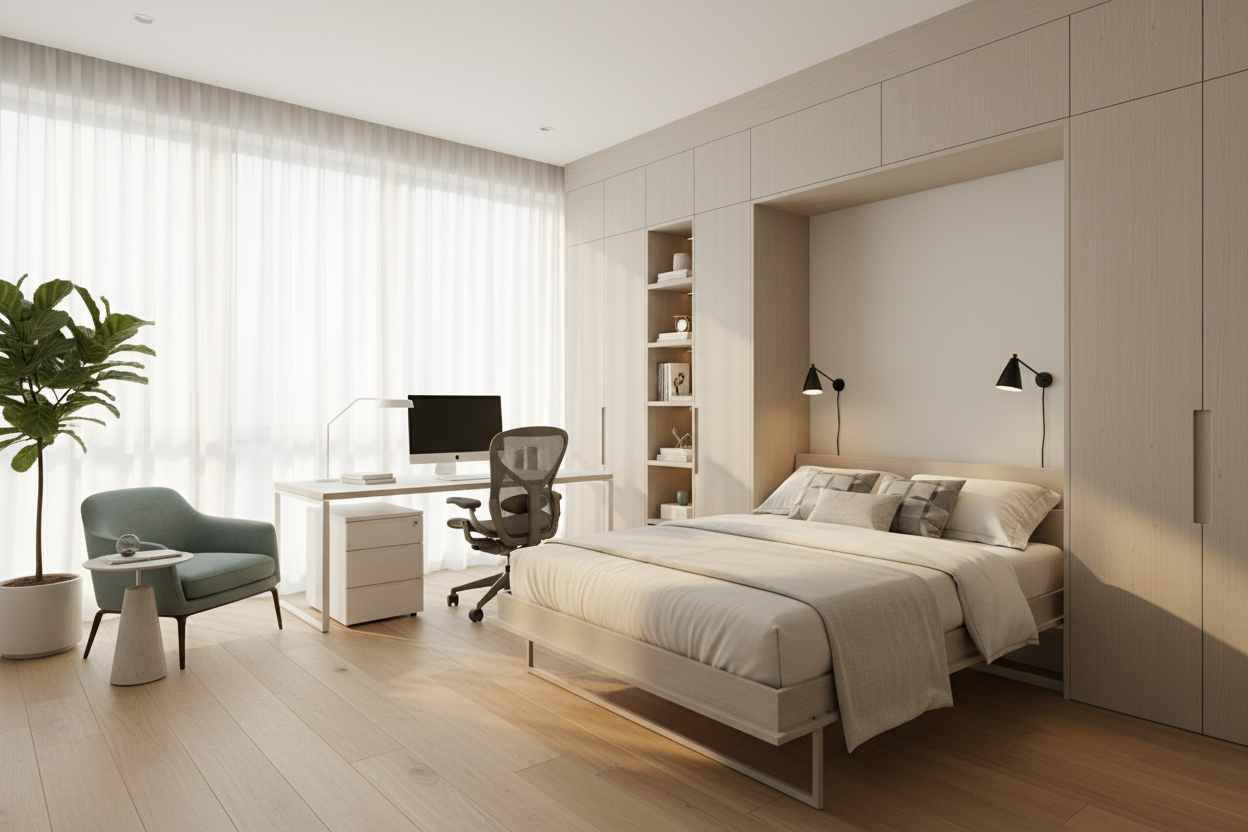
The modern spare room often suffers from an identity crisis. Is it a dumping ground for laundry, a dusty museum for visiting relatives, or a cluttered workspace? The challenge lies in creating a space that performs two contradicting functions: the high-energy focus required for work and the serene relaxation needed for sleep. Achieving a successful home office guest room combo layouts requires more than just shoving a desk in the corner next to a queen bed; it demands intentional zoning and clever furniture specification.
Key Elements for a Functional Dual-Purpose Room
- Zoning Strategy: Distinctly separating the 'sleep zone' from the 'work zone' using rugs, lighting, or room dividers to maintain mental separation.
- Scale and Proportion: Selecting furniture with a lighter visual weight (e.g., legs vs. solid bases) to prevent the room from feeling cramped.
- Multi-functional Joinery: Prioritizing pieces like Murphy beds or daybeds that reclaim floor space when guests aren't visiting.
- Lighting Layers: combining high-kelvin task lighting for the desk with warm, dimmable ambient lighting for the bedside.
- Concealed Storage: Ensuring work clutter (cables, files, printers) can be completely hidden to preserve the guest room aesthetic.
Mastering the Floor Plan: Space Planning & Layout
When looking at spare room office layout options, traffic flow is paramount. In a standard 10x12 room, placing a bed in the center often kills the functionality of the workspace. Instead, consider perimeter layouts.
The L-Shaped Configuration
For a half office half guest room, an L-shaped arrangement often works best. Place the desk against one wall and the bed (or sleeper sofa) on the adjacent wall. This keeps the center of the room open, making a tiny office guest room feel significantly larger. If you are dealing with a guest bedroom desk scenario, ensure the chair has enough clearance to swivel without hitting the bed frame—you need at least 36 inches of clearance for comfortable movement.
The Murphy Bed Solution
If you are turning a guest room into an office full-time and only host guests occasionally, a wall bed is the gold standard. When retracted, the room is purely a workspace. When designing this, look for units with integrated shelving. This allows you to style the shelves with books and decor, blending the bulky cabinet into the architecture of the room.
Furniture Selection: Balancing Form and Function
The furniture you choose dictates the room's primary identity. In a modern office guest room, heavy executive desks and filing cabinets are design failures. They scream "workplace" and make guests feel like they are sleeping in a cubicle.
The Desk as a Console
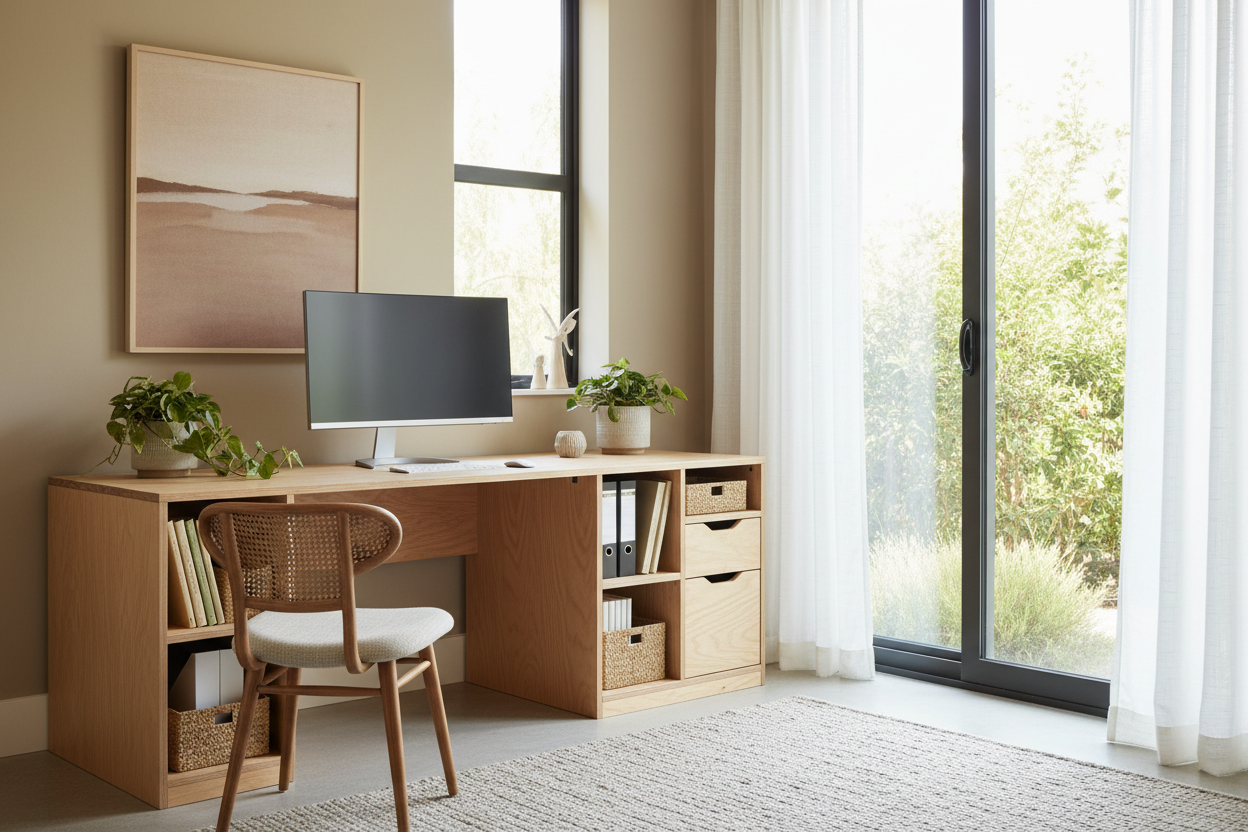
Opt for a writing desk with a slim silhouette—think Parson's style or a floating shelf desk. When the room is in "guest mode," the desk should be able to double as a vanity or a console table. Keep the surface clear of monitors if possible, or mount a screen on the wall that can double as a TV for guests.
The Bed Dilemma: Daybed vs. Sleeper
A daybed guest room office setup is brilliant for narrow rooms. Styled correctly with bolsters, it acts as a reading sofa during the workday. However, be wary of cheap foam mattresses. For a guest room and office combo, invest in a daybed that accommodates a standard twin mattress to ensure your guests actually sleep well.
Visual Cohesion and Decor
Office guest room decorating ideas should lean towards residential, not corporate. Avoid standard office chairs with aggressive lumbar supports and plastic bases if the chair is visible from the doorway. Instead, choose a bucket chair or an upholstered dining-style chair on casters. It softens the look.
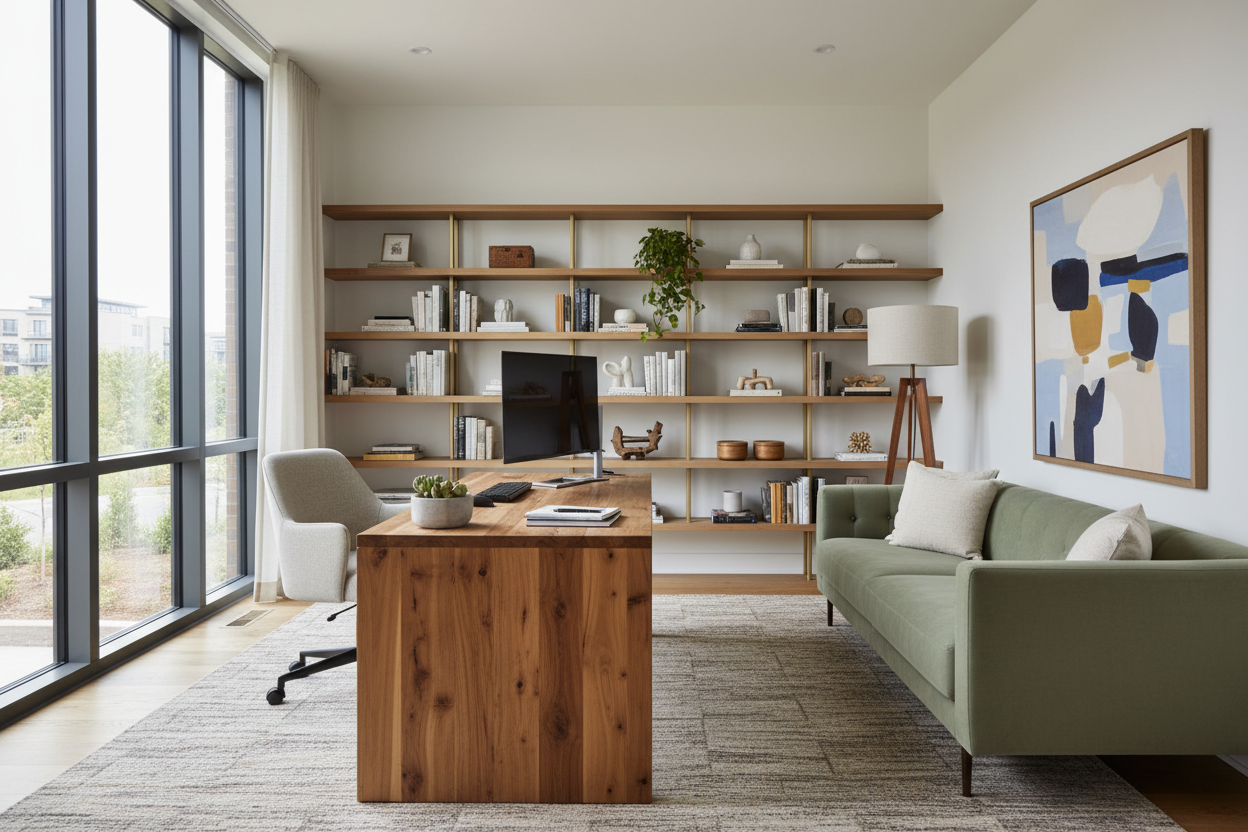
For office guest room decor, color psychology is vital. You might want a bold, energizing color for work, but guests need calm. A compromise is a monochromatic palette—warm greys, sage greens, or navy blues. These tones promote focus while remaining restful. Use a large area rug to anchor the bed and a smaller, distinct texture (like a sheepskin) under the desk to subconsciously delineate the zones.
Lessons from My Own Projects: The "Daybed Dilemma"
I once designed a high-end guest bedroom study for a client in a pre-war apartment. We were tight on space, so I specified a custom, extra-deep daybed upholstered in a stunning Belgian linen. Visually, it was a masterpiece—it looked like a luxury sofa.
However, I learned a hard lesson about functionality versus aesthetics. Because the daybed was sized for a twin mattress (39 inches deep), it was too deep to sit on comfortably as a sofa without massive bolster pillows, which ended up cluttering the small room when removed for sleeping. Furthermore, the linen, while beautiful, showed every wrinkle after the client sat on it for a Zoom call.
Now, when I design a bed in home office scenarios, I prioritize high-performance velvet (which doesn't crease) and ensure we have a dedicated storage basket or trunk specifically for the extra pillows needed to make a deep daybed sit like a sofa. It’s those unglamorous logistics that make or break the livability of the room.
Conclusion
Creating a successful workspace that doubles as a retreat is about compromise and clever concealment. By prioritizing vertical storage, selecting residential-style office furniture, and respecting the flow of the room, you can create a space that serves your 9-to-5 needs without making your guests feel like an afterthought. It is entirely possible to have a productive sanctuary that transforms into a welcoming suite.
Frequently Asked Questions
How do I design a tiny office guest room without it feeling crowded?
In small spare room office ideas, verticality is your friend. Use floor-to-ceiling shelving to draw the eye up. Opt for a ghost chair (acrylic) or a desk with open metal legs to reduce visual clutter. A wall-mounted drop-leaf desk is also a great solution for extremely tight spaces.
Is a Murphy bed worth the investment for a guest room office?
If the room is used as an office 90% of the time, yes. It reclaims roughly 30-40 square feet of floor space. However, if you have guests monthly, a high-quality sleeper sofa or daybed is often more practical and cost-effective than a custom joinery wall bed.
How can I hide the computer monitor in a guest room?
To elevate your office with guest bed aesthetic, consider a monitor lift that hides the screen inside the desk, or simply place the desk inside a closet (a "cloffice"). Alternatively, use a Samsung Frame TV as your monitor, which displays art when not in use.

Leave a comment
This site is protected by hCaptcha and the hCaptcha Privacy Policy and Terms of Service apply.