










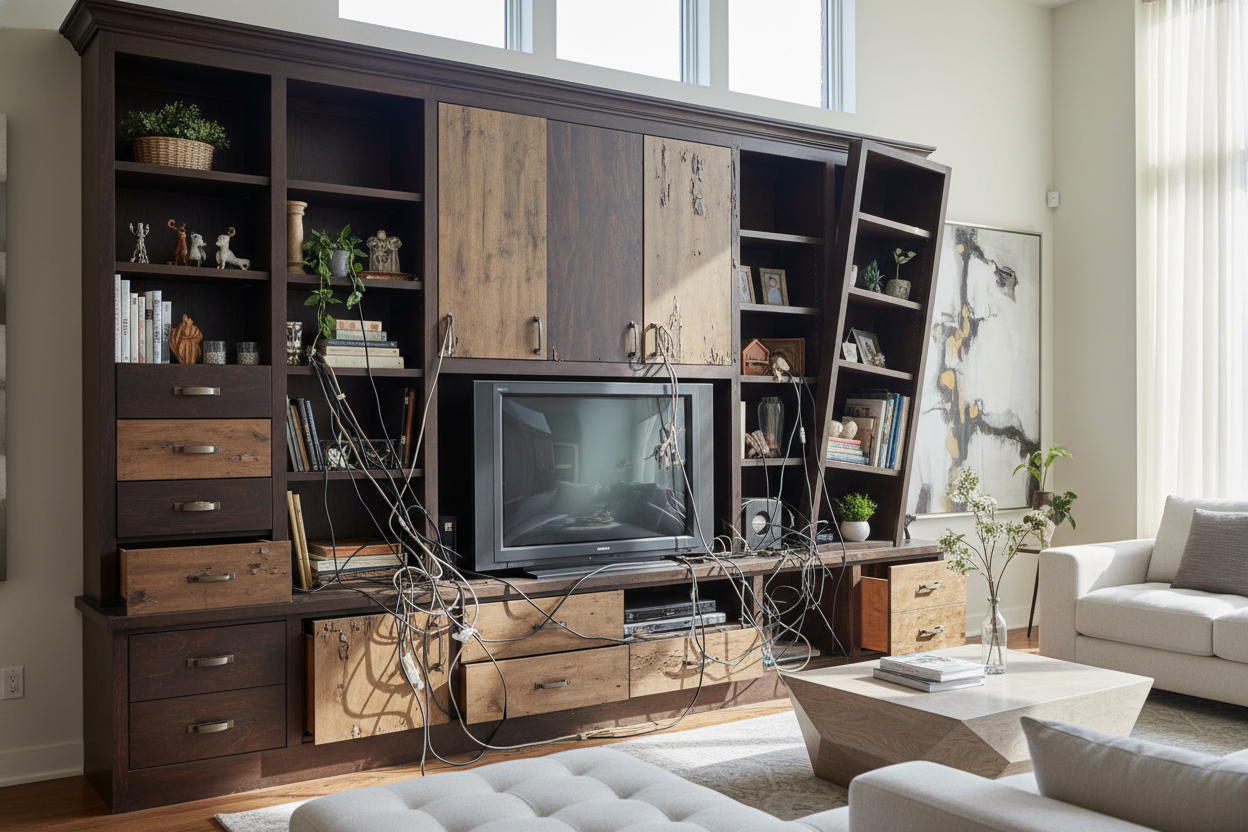
I spent three hours last Tuesday night staring at a pile of ceramic vases and stack of oversized art books, wondering why my living room felt like a high-end thrift store that had just been looted. I’d fallen for the floor-to-ceiling shelving trap, thinking more space meant more 'curation.' In reality, it just meant more surface area for dust and random mail to congregate. If you’re a fellow neat-freak, you know the panic of a shelf that looks like a Tetris game gone wrong.
The fix wasn't more hidden storage, which usually just hides the problem until the doors won't close. It was downsizing to a small open cabinet. By limiting the real estate, I forced myself to actually look at what I was displaying. It turns out, when you only have two or three shelves to work with, you stop treating your furniture like a staging ground for clutter.
- Keep it low: Waist-high units feel like furniture; tall units feel like architecture.
- The 60/40 Rule: Leave 40 percent of the shelf empty to let the eye rest.
- Material matters: Solid wood or heavy-gauge metal prevents the 'cheap college dorm' look.
- Dust is the enemy: If you can't commit to a Swiffer once a week, go for glass doors instead.
My Long-Standing Beef With Open Shelving
For years, I told anyone who would listen that open shelving was a scam invented by people who don't actually live in their homes. I’ve seen enough 84-inch bookcases sagging under the weight of paperbacks and forgotten hobby gear to know that 'exposed' usually just means 'messy.' Floating shelves are even worse—one slightly heavy bowl and suddenly you’re looking at a 5-degree tilt that ruins the whole vibe.
The problem is the scale. When you have six feet of vertical shelving, the pressure to fill it is immense. You start grabbing things just to fill the gaps. A small unit changes the psychology. It’s a pedestal, not a warehouse. It’s where you put the three things you actually like looking at, rather than the fifty things you’re too lazy to throw away.
The Waist-High Rule: Why Size Changes Everything
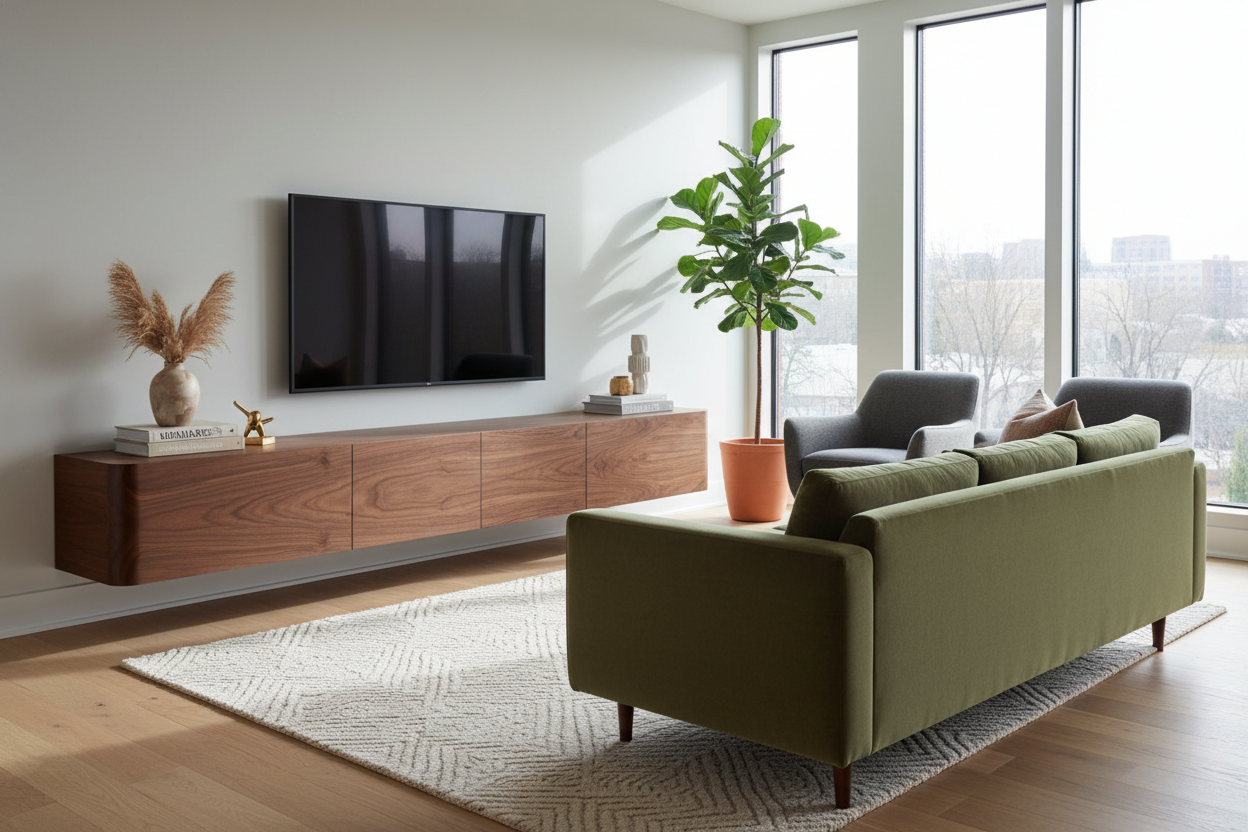
There is a specific magic to furniture that stops at your hip. A tall cabinet looms over a room, sucking up light and making a small apartment feel like a hallway. A low-profile short wood cabinet acts as an anchor. It provides a surface for a lamp or a drink while keeping the visual line of the room open.
I’ve found that 30 to 36 inches is the sweet spot. At this height, the top of the cabinet serves as a secondary tabletop. It’s functional. You can lean a piece of art against the wall or set down a tray. Because it doesn't dominate your field of vision, the items on the shelves below feel intentional rather than cluttered. It’s the difference between a gallery display and a storage locker.
How to Style a Small Open Shelf Cabinet (Without Losing Your Mind)
Styling a small open shelf cabinet requires a level of ruthlessness that most people aren't ready for. You have to embrace negative space. If you jam every square inch with 'stuff,' you’ve failed. I follow the rule of three: one tall item, one horizontal item (like a stack of two books), and one sculptural object. That’s it. Stop touching it.
Group items by texture rather than color. A matte ceramic vase next to a high-gloss tray creates depth without looking like a rainbow exploded. And please, for the love of all things holy, hide your cords. If your cabinet is near an outlet, use cord clips to run wires down the back of the legs. Nothing kills the 'curated' look faster than a tangled mess of black plastic hanging behind your expensive oak shelves.
When You Should Probably Just Use Glass Instead
I’ll be honest: some people are just 'stuff' people. If your idea of a shelf is a place to store 400 Lego mini-figs or a massive collection of vintage cameras, an open cabinet is going to be a nightmare to clean. You will spend your Saturdays with a can of compressed air and a heavy heart. In that case, a short glass display cabinet is the superior choice. You get the visual lightness of an open piece, but the glass acts as a barrier against the elements.
If you want something that feels a bit more grounded and 'grown-up,' a black cabinet with glass doors provides a moody, sophisticated frame for your collections. It hides the dust but keeps the contents on display. It’s the ultimate compromise for the person who wants to show off their treasures but hates the maintenance of exposed surfaces. I personally use one in my dining room for glassware because I’m not about to wash a wine glass every time I want a drink just because it’s been sitting out.
Personal Experience: The MDF Mistake
I once bought a $45 'wood-look' open shelf from a big-box retailer. Within six months, the middle shelf had a noticeable frown because I dared to put five hardcover books on it. The laminate started peeling at the corners where my vacuum hit it. Now, I only buy solid wood or powder-coated steel. If it’s open, every detail is visible—including the cheap construction. Spend the extra $100 for something with real joinery. Your eyes (and your books) will thank you.
FAQ
Do open cabinets make a room look smaller?
Actually, the opposite. Because you can see the wall behind and through the furniture, it creates an illusion of more floor space. Just don't overstuff the shelves, or you'll lose that benefit.
How do I keep the dust off my open shelves?
You don't. You just have to clean them. Use a microfiber cloth once a week. If that sounds like a chore you'll skip, buy a cabinet with doors. Don't lie to yourself about your cleaning habits.
What is the best material for a small cabinet?
Solid white oak or walnut is king for longevity. If you're on a budget, look for high-quality birch plywood with finished edges. Avoid thin particle board; it won't survive a move or a heavy stack of books.

Leave a comment
This site is protected by hCaptcha and the hCaptcha Privacy Policy and Terms of Service apply.