










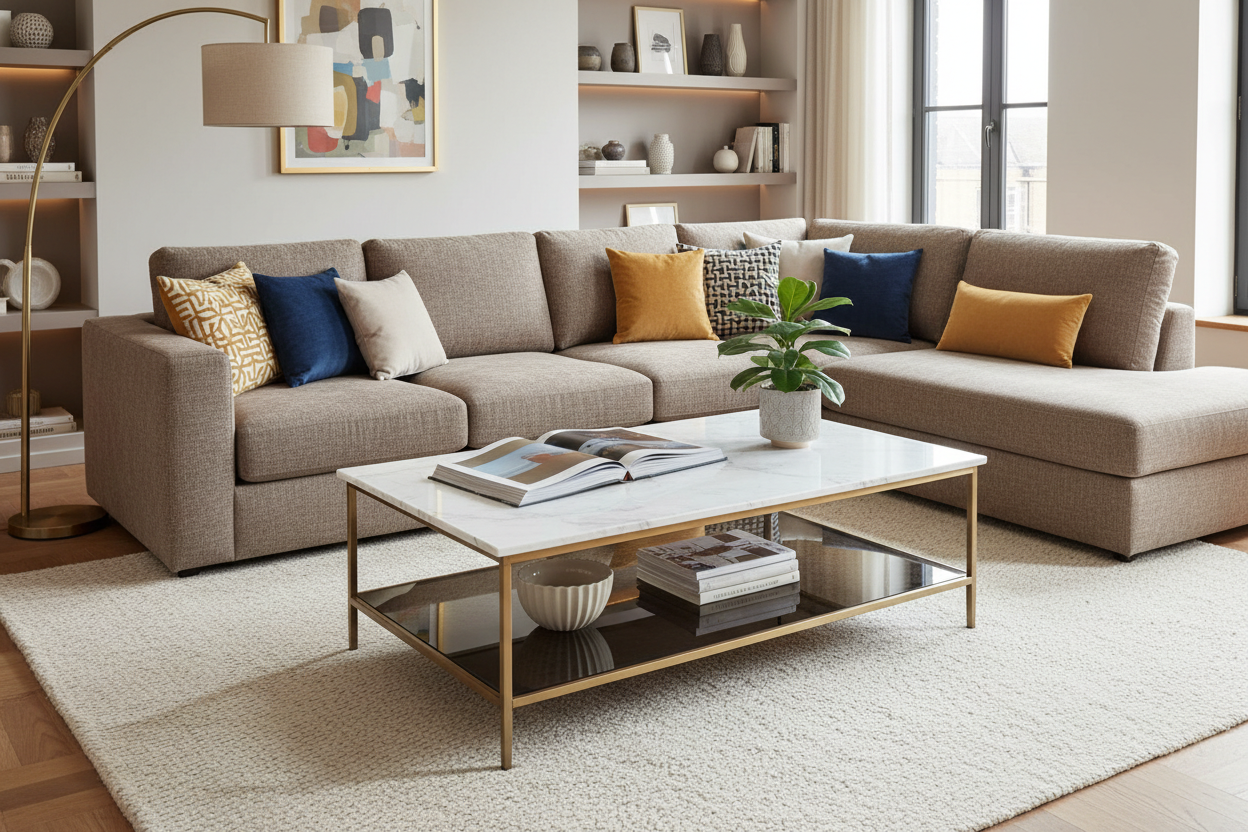
A single surface next to your sofa often isn't enough. Between a table lamp, your current read, a coffee mug, and the endless rotation of remote controls, a standard tabletop gets crowded fast. The solution isn't necessarily a larger footprint, but rather better vertical utilization. A side table with bottom shelf capability instantly doubles your usable space without eating up more square footage in your living room. It separates the functional items you need within arm's reach from the decorative elements that ground the room's aesthetic.
The Practical Magic of the Second Tier
Furniture design is at its best when it solves a specific problem. In high-traffic living areas, the primary problem is usually surface clutter. When you rely on a single-level table, everything competes for the same prime real estate. By selecting an end table with bottom shelf storage, you create a hierarchy of necessity.
The top tier remains sacred ground for immediate needs: your drink, your phone, or the lamp providing task lighting. The lower tier becomes the home for items that need to be accessible but not constantly handled. This is where the stack of magazines, the oversized art books, or the woven basket for charging cables belongs. This separation keeps the visual line of the room clean. When the top surface is clear, the entire room feels tidier, even if the shelf below is fully stocked.
A Lesson Learned in Living Room Flow
I learned the value of dual-surface furniture the hard way. A few years ago, I fell in love with a sculptural, single-pedestal drink table. It was beautiful—a piece of art, really—but it was a disaster for actual living. Every time I had guests over, there was a distinctive panic when someone tried to set down a wine glass because the tiny surface was already monopolized by a decorative vase.
The switch to a substantial end table with open shelves changed the dynamic of the room entirely. I opted for a piece with a glass top and a wooden lower deck. Suddenly, the "floating" remote controls had a dedicated home in a leather tray on the bottom level. The anxiety of knocking over a drink vanished because the table offered stability and ample room. It wasn't just about storage; the lower shelf added visual weight that anchored the sofa, making the seating arrangement feel more permanent and intentional rather than temporary.
Balancing Visual Weight and Airiness
One concern people often have is that adding shelves might make a room feel heavy or boxy. This is a valid design concern, particularly in smaller apartments. The trick lies in the materials and the openness of the design. An end table with open shelves allows light to pass through, maintaining a sense of airiness while still providing that crucial second layer of function.
If your room already feels crowded with upholstered furniture, look for tables with slender metal legs or glass components. The transparency keeps the eye moving. Conversely, if your space feels too stark or cold, a solid wood side table with lower shelf space can add necessary warmth and texture. The bottom shelf serves as a visual anchor, drawing the eye down and creating a sense of groundedness.
Styling the Lower Shelf
The bottom shelf is a styling opportunity that many overlook, turning it into a dark corner for dust bunnies. Treating this space with the same design intent as the top surface elevates the entire piece. Here are a few reliable arrangements that work in almost any setting:
- The Stack: Place two or three large coffee table books horizontally. This adds color and structure. You can top the stack with a small decorative object, like a geode or a brass knot, to break up the geometric lines.
- The Container: If you are fighting clutter, a textured basket or a wooden box is your best friend. It hides the unappealing necessities (game controllers, coasters, hand cream) while adding a natural element to the furniture composition.
- The Greenery: Low-light plants like pothos or a small fern can thrive on a lower shelf, provided they get some ambient light. The organic shape of the leaves contrasts beautifully with the rigid lines of the table legs.
Choosing the Right Dimensions
Height is the critical factor that makes or breaks the utility of an end table. Ideally, the top surface should sit just below or at the same height as the arm of your sofa. If the table is too high, reaching for a drink feels awkward; too low, and it looks like a mistake. When you introduce a side table with bottom shelf features, you also need to consider the clearance between the two tiers.
Ensure there is enough vertical space between the shelves to accommodate the items you plan to display. If you want to stand books upright, measure their height against the gap. If the shelves are too close together, the bottom level becomes a dark slit that is difficult to access and clean. A clearance of at least 12 to 15 inches usually allows for versatile styling without the table looking top-heavy.
Beyond the Living Room
While we usually associate these tables with sofa companionship, their utility extends into the bedroom. A nightstand is essentially just an end table with a job to do. In the bedroom, the top surface is often overrun by a lamp, alarm clock, and water glass. Moving your nighttime reading list or a white noise machine to the lower shelf clears mental and physical clutter right before sleep.
In a hallway or reading nook, a side table with lower shelf capacity can serve as a miniature library or a plant stand. The versatility of the two-tier design means the piece can migrate throughout your home as your needs change. It is an investment in adaptability. Whether holding a printer in a home office or extra towels in a guest bathroom, the dual-surface concept remains universally useful.
Material Durability and Maintenance
Since the lower shelf is closer to the floor, it is more susceptible to dust, pet hair, and the occasional accidental kick. Durability matters here. A delicate mirrored bottom shelf might look glamorous, but it requires constant polishing to maintain its shine. Wood with a matte finish or durable metal often forgives the realities of daily life a bit better.
Consider the flooring underneath the table as well. If the table sits on a thick pile rug, ensure the bottom shelf has enough clearance from the floor so it doesn't look like it's sinking into the carpet. A table with legs that elevate the bottom shelf at least a few inches off the ground helps maintain that crucial sense of flow and makes vacuuming underneath significantly easier.
Final Thoughts on Selection
Selecting the right furniture is about predicting how you will live in a space. You might think you want minimalism, but if your reality involves three remote controls and a penchant for reading physical books, a single-surface table will eventually frustrate you. Embracing the side table with bottom shelf design acknowledges that life comes with accessories. It provides a dignified place for your belongings, merging the practical need for storage with the desire for a curated, beautiful home.
Frequently Asked Questions
How tall should a side table be compared to the sofa?
The general rule of thumb is that your side table should be within two inches of your sofa's arm height. Ideally, it should be slightly lower or level with the armrest. This allows for the most natural reach when setting down a drink or reaching for a lamp switch.
What is the best way to dust open shelves without removing everything?
Use a microfiber wand or a duster with an extendable handle to reach between items on the lower shelf. For a thorough clean, however, it is usually best to remove the items, as dust tends to accumulate heavily on lower surfaces near the floor. Doing a full clear-off once a month keeps the area from looking neglected.
Can I use a side table with a bottom shelf as a nightstand?
Absolutely, these tables make excellent nightstands, especially for taller beds. The open bottom shelf is perfect for storing books, a CPAP machine, or a decorative basket for extra linens, keeping the top surface clear for your immediate bedside essentials.

Leave a comment
This site is protected by hCaptcha and the hCaptcha Privacy Policy and Terms of Service apply.