











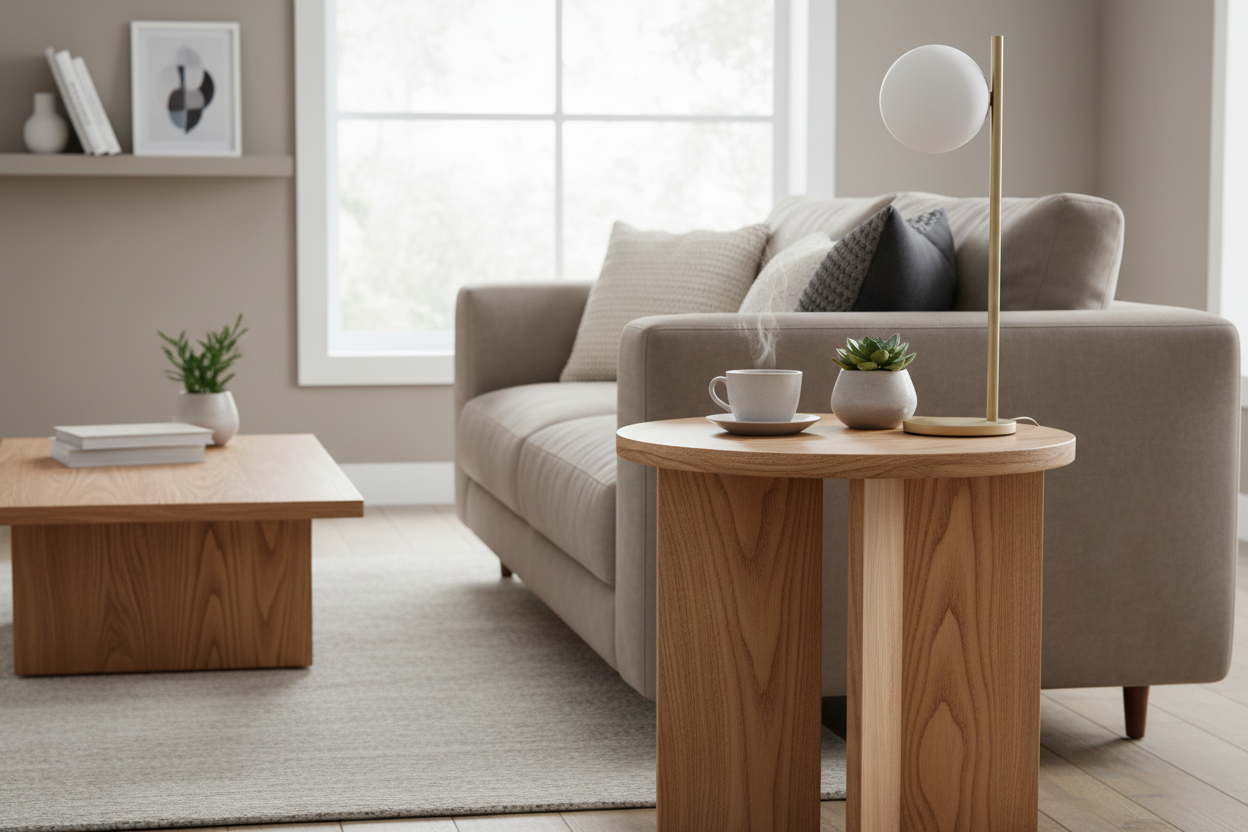
Living rooms often suffer from a surplus of straight lines. Between the rectangular sofa, the square area rug, the television screen, and the boxy windows, a space can quickly feel rigid or overly structured. This is where round wood side tables come into play. They are the most effective way to soften a room's aesthetic while adding essential functionality. By introducing curves, you break up the grid-like monotony of standard furniture layouts, creating a flow that feels more organic and welcoming. Beyond the visual benefits, the lack of sharp corners makes them a safer choice for high-traffic areas or homes with active toddlers.
The Design Impact of Circular Forms
Integrating a wood circular side table into your layout does more than just provide a place to set a drink. It changes the visual movement of the room. Rectangular tables tend to direct the eye along specific lines, whereas round tables allow the gaze to glide past them. This is particularly useful in smaller apartments or tight corners where you want to maximize floor space without blocking pathways. The curved edge allows for easier navigation around the furniture, preventing those painful thigh-bruising collisions that happen with sharp corners.
Natural materials ground a space. Wood brings warmth, texture, and a sense of history that metal or plastic simply cannot replicate. Whether you prefer the deep, chocolate tones of walnut or the light, airy feel of white oak, the grain patterns in wood add a layer of complexity to the design. When you combine this material warmth with a soft shape, the result is a piece of furniture that feels approachable rather than imposing.
Choosing the Right Wood and Finish
Selecting the right material is about more than just matching colors. You need to consider the grain, the hardness, and how the wood will age. An end table round wood construction might feature solid timber or high-quality veneer. Solid wood offers longevity and can be refinished over time, while veneers can offer stunning grain patterns at a lower price point, though they are less forgiving of deep scratches.
Walnut is a perennial favorite for mid-century modern and contemporary spaces. Its rich, dark color usually requires no stain, allowing the natural beauty to shine through. For a farmhouse or Scandinavian look, maple or oak are excellent choices. These lighter woods hide dust better than darker options and can make a small room feel larger. Don't ignore exotic woods like acacia or mango, which often feature dramatic grain variations and offer a distinct, artisan feel.
I learned the importance of finish the hard way a few years ago. I fell in love with a raw, unfinished teak table that looked incredible in the showroom. It had a rustic, tactile quality that seemed perfect for my reading nook. Within two weeks, a single forgotten iced coffee coaster-less, of course left a permanent ring that penetrated deep into the grain. It ruined the look entirely. Now, I always advise looking for a matte, water-resistant sealer. It preserves the natural look of the timber but provides that crucial barrier against real-life messes.
Sizing and Scale for Your Space
Getting the proportions right is the difference between a table that looks curated and one that looks cluttered. A common mistake is buying a table that is too tall or too short for the seating next to it. Ideally, the surface of your table should sit at or just below the arm height of your sofa or chair. This ergonomic sweet spot makes it easy to reach for a lamp switch or a glass of water without straining.
For tight quarters, a round wood small table is often the unsung hero of interior design. A diameter of 16 to 20 inches is usually sufficient for a lamp and a book. If you have a bit more room, a 24-inch diameter table makes a substantial statement and offers enough surface area for styling decor alongside functional items. If you are dealing with a large sectional, consider nesting tables. These allow you to expand your surface area when guests arrive and tuck them away when you need the floor space.
Leg Styles and Visual Weight
The base of the table dictates how heavy or light it feels in the room. A pedestal base is fantastic for cramped seating arrangements because it eliminates leg interference. You can pull the table closer to you without the table legs clashing with the sofa legs. Tripod legs offer a classic mid-century vibe and generally feel lighter and airier. Conversely, a drum-style table, which is a solid cylinder of wood, acts as an anchor. These are great if your sofa is very plush and heavy, as a spindly table might look lost next to it.
Styling Your Accent Table
Once you have your furniture piece, styling it effectively prevents it from becoming a dumping ground for mail and keys. Treat it as a wood accent table round enough to handle a vignette. The rule of three works well here: a lamp for height, a small plant for life, and a stack of coasters or a small decorative bowl for texture. Because the table is round, try to avoid placing square objects on it, which can look jarring. Curved vases, round bowls, or organic sculptures complement the table's geometry.
Lighting plays a huge role here. A table lamp with a round base echoes the shape of the table, creating a cohesive look. If the table is small, opt for a slender lamp base to preserve surface area. The warm glow of a lamp on a wood surface highlights the grain and chatoyancy of the material, making the wood appear richer and more vibrant in the evening.
Maintenance and Longevity
Wood is a living material that reacts to its environment. Sunlight is one of the biggest factors to watch out for. If your table sits next to a sunny window, the UV rays will eventually lighten or darken the wood, depending on the species. Cherry wood, for instance, darkens significantly with light exposure. Rotating your accessories occasionally ensures that the surface ages evenly, preventing lighter patches where a lamp base sat for three years.
Humidity control is also beneficial. Drastic changes in humidity can cause solid wood to expand and contract, potentially leading to cracks in the joinery. Keeping your home at a relatively stable humidity level helps preserve the structural integrity of your furniture. Regular dusting with a microfiber cloth keeps abrasive particles from scratching the finish, and a biannual application of wood conditioner (if the finish allows) can keep the grain looking nourished and supple.
Frequently Asked Questions
How tall should a round side table be compared to the sofa?
The ideal height is within two inches of the sofa's arm height. It is generally better for the table to be slightly lower than the arm rather than higher, as this makes reaching for items more comfortable and keeps the visual lines of the room uninterrupted.
Can I mix different wood tones in the same room?
Yes, mixing wood tones adds depth and prevents the room from looking like a catalog set. The trick is to keep the undertones consistent; mix warm woods with other warm woods, or cool tones with cool tones, and try to vary the grain patterns for contrast.
Is solid wood always better than veneer for side tables?
Not necessarily. While solid wood allows for sanding and refinishing, high-quality veneer over a stable core like MDF is less prone to warping or cracking in fluctuating humidity. Veneer also allows for intricate grain patterns, such as sunburst designs, that are difficult to achieve with solid planks.


Leave a comment
This site is protected by hCaptcha and the hCaptcha Privacy Policy and Terms of Service apply.