










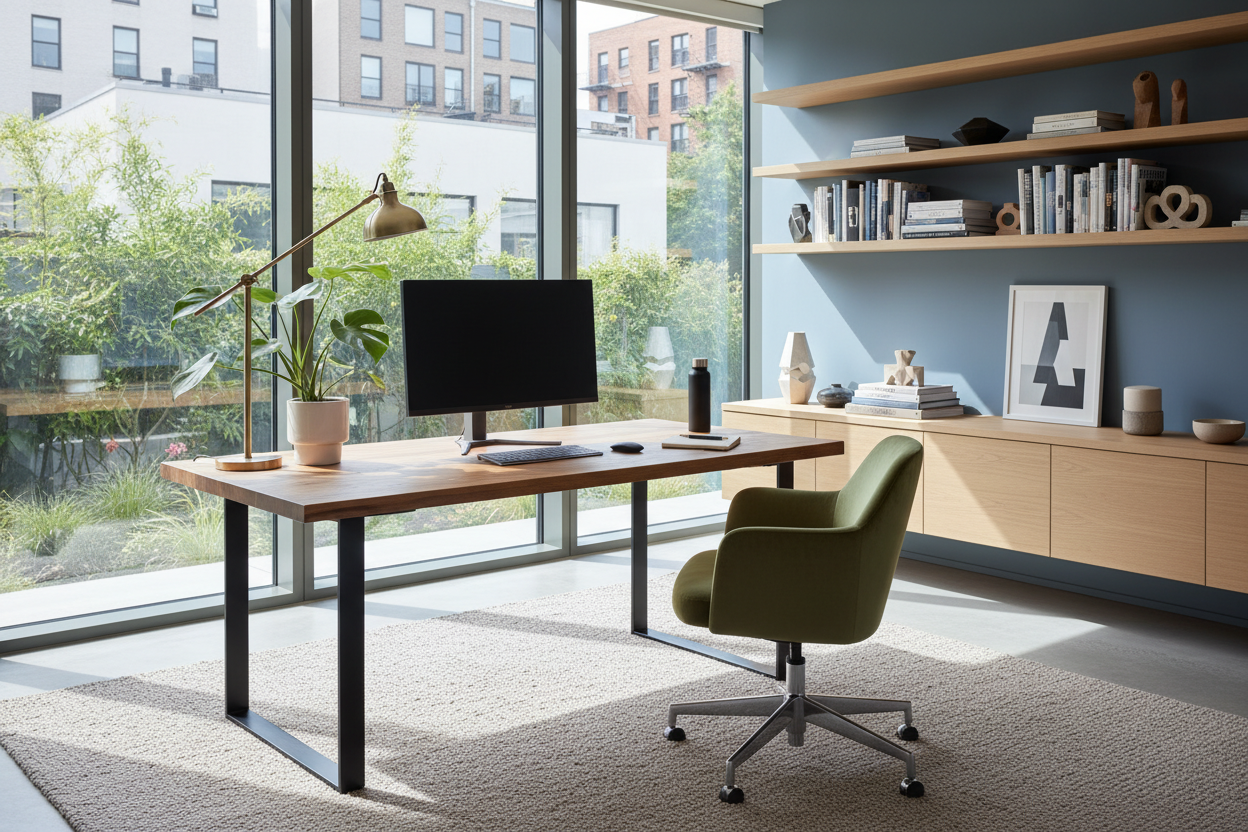
In my twenty years of designing home offices and corporate suites, I have found that the desk is rarely just a piece of furniture; it is the anchor of your productivity. A poorly chosen desk creates visual clutter and physical strain, while the right choice establishes a rhythm for your entire workday. Whether you are working with a sprawling executive suite or a compact urban nook, finding the right ideas for desk configurations requires balancing architectural scale with ergonomic necessity.
Key Features to Look For
Before committing to a purchase, review this checklist to ensure the piece meets professional standards for longevity and function:
- Material Integrity: Distinguish between solid wood (durable, repairable) and particle board veneers (cost-effective but prone to peeling).
- Surface Depth: Aim for a minimum depth of 24 to 30 inches to accommodate monitors without causing eye strain.
- Visual Weight: Consider leg style—chunky plinths ground a large room, while hairpin or tapered legs maintain airiness in small spaces.
- Cable Management: Look for integrated grommets or hidden channels to maintain a clean aesthetic.
Choosing the Right Material Palette
The tactile experience of your workspace is just as vital as the visual impact. When sourcing great desk ideas for clients, I often start with the surface material because it dictates how the user interacts with the piece daily.
Solid Wood vs. High-Grade Veneer
Solid wood, such as walnut or white oak, offers an unmatched sense of permanence and warmth. It ages beautifully, developing a patina over time. However, be mindful of humidity; solid wood expands and contracts. For environments with fluctuating temperatures, a high-grade architectural veneer over a stable plywood core is often the superior technical choice, offering the look of wood without the warping risks.
Glass and Metal: The Modern Silhouette
If you are looking for cool office desk ideas that maximize light, tempered glass is a strong contender. It reduces the visual footprint of the furniture, making a room feel larger. However, be aware that glass lacks the acoustic dampening properties of wood, which can make a room sound "echoey" during conference calls. Pairing a glass desk with a plush area rug is a non-negotiable design move to counterbalance the acoustics.
Space Planning and Orientation
The placement of the desk is arguably more important than the desk itself. A common error homeowners make is instinctively pushing the desk against a wall. In design terms, this is the "cubicle effect."
Instead, try "floating" the desk in the center of the room or perpendicular to a wall. This places you in the "command position," facing the door, which psychologically reduces stress and improves focus. If you must face a wall, ensure you have a stimulating focal point above the monitor, such as large-scale art or open shelving, to prevent visual fatigue.
Lessons from My Own Projects
I want to share a specific mistake I made early in my career so you don't have to. I once specified a stunning, reclaimed barn-wood desk for a client who was a graphic illustrator. Visually, it was a masterpiece—rich texture, history, and character.
However, within a week, the client called me. The texture that looked so beautiful in the showroom was a nightmare for actual work. Every time he tried to sketch or write on a single sheet of paper, the pen would catch on the wood grain and grooves. We had to have a custom glass top cut to cover it, which completely changed the intended matte aesthetic. The lesson? Always run your hand across the surface. If you do a lot of analog writing, "rustic" textures are the enemy of function. Smooth, tight-grain finishes are mandatory for heavy paperwork zones.
Conclusion
Your workspace should be a reflection of how you work best. By prioritizing surface depth, material durability, and proper placement, you move beyond simple utility and create a space that inspires. Invest in a desk that supports your workflow, and the return on investment will be evident in your daily focus.
Frequently Asked Questions
What is the ideal height for a standard desk?
The industry standard for a fixed desk height is between 29 and 30 inches. However, ergonomic comfort depends on your torso length. Ideally, when seated, your elbows should rest at a 90-degree angle. If you are shorter or taller than average, an adjustable chair or a sit-stand desk mechanism is essential.
How do I style a desk without it looking cluttered?
Use the "triangle rule" for accessories. Group items in threes with varying heights—for example, a tall lamp, a medium-sized plant, and a low tray for small items. This creates visual balance. Always leave 60% of the desktop clear as negative space to maintain a calm mind.
Is a standing desk worth the investment for a home office?
Absolutely. From a health perspective, varying your posture reduces fatigue. If the industrial look of a standing desk clashes with your decor, look for "concealed" motorized desks where the mechanism is hidden inside traditional wood legs, blending ergonomics with high-end residential style.

Leave a comment
This site is protected by hCaptcha and the hCaptcha Privacy Policy and Terms of Service apply.