










We have all been there: staring at a makeshift home office that feels entirely disconnected from the rest of the house. You need a functional workspace, but you also refuse to compromise the aesthetic of your carefully curated living room or guest bedroom. When clients ask me for budget-friendly, accessible options, they are often shocked when I point them toward an escritorio home depot.
While big-box hardware stores might not be your first thought for fine furniture, their desk options—and the raw materials to build your own—offer incredible hidden value. By the end of this guide, you will know exactly how to source, style, and evaluate these pieces so they look like they came from a high-end showroom rather than a flat-pack box.
Quick Decision Guide
- Check the core material: Prioritize solid wood or high-density MDF over low-grade particleboard for better longevity and screw retention.
- Measure your clearance: Always leave at least 36 inches behind the desk for comfortable chair movement and visual breathing room.
- Assess the visual weight: Open metal frames work best in tight spaces, while solid wood pedestals anchor larger, dedicated rooms.
- Consider the hackability: Many designers buy butcher block countertops and separate legs to create a custom, heavy-duty look on a budget.
Material & Build Quality: Separating the Good from the Flimsy
The Truth About Engineered Wood
When browsing ready-to-assemble furniture, you will encounter a lot of engineered wood. Not all composites are created equal. High-density fiberboard (HDF) with a durable melamine veneer can withstand daily coffee spills and heavy monitors. However, paper-thin laminates over cheap particleboard will inevitably peel at the edges, especially in humid climates or homes with active kids and pets.
The Butcher Block Advantage
One of the best-kept secrets in residential design is bypassing the pre-packaged furniture aisle entirely. Instead of buying a standard desk, many of my peers look at the raw materials. Purchasing a solid oak or walnut butcher block and pairing it with heavy-duty metal legs creates a bespoke piece that rivals luxury brands in both durability and style.
Space Planning: Making Big-Box Fit Your Room
Mastering Proportion and Layout
A common mistake I see in suburban homes is buying a desk that technically fits the wall but overwhelms the room's proportion. If you are placing your desk in a multi-use space, like an open-concept living room, pay attention to silhouette. A desk with an open, airy base allows the eye to travel through the piece, making the room feel larger. Conversely, if you have a dedicated home office, a heavier executive-style desk creates a strong focal point.
When looking at various home depot escritorios, always map out the footprint with painter's tape before purchasing. Remember to account for the depth of your monitor and the swing of your office chair.
Style & Coordination: Achieving a High-End Look
Layering Texture and Color
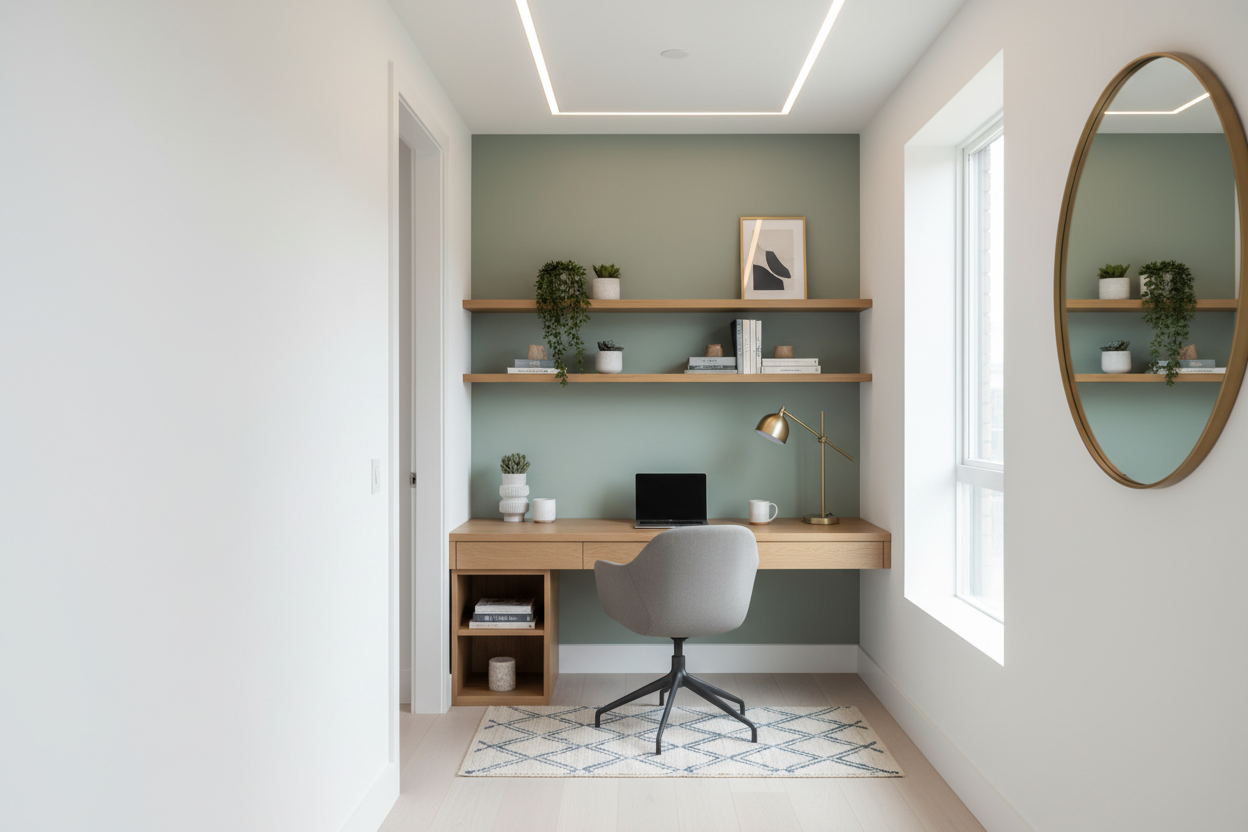
You do not need to spend thousands to achieve a cohesive, designer look. The trick to integrating an affordable desk into a sophisticated room is all about the surrounding elements. Pair a simple, industrial-style desk with a heavily textured, upholstered chair to soften the hard lines. Add a vintage-inspired brass task lamp to introduce a warm metallic accent. By surrounding a basic piece with thoughtfully curated accessories, the desk itself absorbs that high-end context.
Designer's Honest Take
A few years ago, I was designing a modern farmhouse office for a young couple in Austin. The budget was tight, so we opted for a DIY approach using a beautiful, raw birch butcher block and matte black iron pipe legs sourced directly from the hardware store. It looked phenomenal on installation day.
However, I learned a hard lesson about wood conditioning. I advised them to seal it with a basic wax, thinking it would be enough for a desk. Within two weeks, condensation from an iced coffee left a massive, dark ring right in the center of the wood. We had to sand the entire top down and apply three coats of heavy-duty polyurethane. The desk is still going strong today, but I never underestimate the necessity of a commercial-grade topcoat on raw materials again.
Frequently Asked Questions
How do I clean and maintain a wood-veneer desk?
Avoid harsh chemical sprays, which can degrade the adhesive under the veneer over time. Instead, use a slightly damp microfiber cloth with a drop of mild dish soap, and always dry the surface immediately to prevent moisture from seeping into the seams.
What size desk do I need for a dual-monitor setup?
For two standard monitors, you need a desk that is at least 48 inches wide, but 60 inches is ideal. Ensure the depth is a minimum of 24 inches so the screens are not uncomfortably close to your eyes.
Is it cheaper to buy a desk or build one from hardware store parts?
Pre-made desks are often cheaper upfront, but they usually rely on lower-quality materials. Building your own from a solid wood slab and metal legs might cost slightly more initially, but the longevity and custom sizing offer far better long-term value.

Leave a comment
This site is protected by hCaptcha and the hCaptcha Privacy Policy and Terms of Service apply.