










I've helped over 200 clients furnish their homes, and I've seen the same scenario play out countless times. You inherit a beautiful set of fine china, or you finally invest in that heirloom-quality collection you've always wanted. You search for a fine china cabinet to display it, only to find page after page of the same basic, boxy designs from big-box stores. They look fine in the warehouse photo, but in your dining room? They feel generic, underwhelming, and fail to do your treasures justice.
Let's change that. Finding a cabinet that's truly unique isn't about spending a fortune; it's about knowing what to look for beyond the surface. Here are the key takeaways from my years on the floor.
Quick Takeaways
- True quality lies in the joinery (dovetail or mortise-and-tenon), solid wood frames, and proper glass fitting.
- Unique designs often use mixed materials, unconventional shapes, or smart space-saving configurations.
- Professional display uses varying heights, strategic negative space, and considers sightlines from across the room.
- Placement and lighting are non-negotiable; a cabinet needs at least 24 inches of clearance in front and dedicated, adjustable illumination.
What Makes a Fine China Cabinet Actually 'Fine'?
When I'm assessing a cabinet with a client, we look past the finish. The first thing I check is the construction. A 'fine' cabinet should have a frame of kiln-dried hardwood, not particleboard or flimsy plywood. Open a door and feel the hinge—it should be solid, with a soft-close mechanism. The shelves, especially for heavy dinner plates, should be at least 3/4-inch thick glass or solid wood, securely supported without sagging.
The joinery tells the real story. Look for dovetail joints in the drawers or mortise-and-tenon construction in the frame. These techniques, versus simple staples or glue, indicate it's built to last generations. The glass should fit snugly in its channels without gaps or rattles. For a deeper dive into the assessment criteria I use, see my guide on What Designers Actually Look For before you commit.
Beyond Traditional: Finding Unique China Cabinet Designs
Unique doesn't have to mean 'weird.' It means finding a piece that speaks to your space. I recently sourced a cabinet with a reclaimed teak frame and bronze-framed glass doors for a modern loft—it became the room's soul. Look for unconventional materials: think metal framing with glass, or a cabinet with a cerused oak finish that highlights the wood grain.
Configuration is another avenue. Instead of a standard rectangle, consider a curved-front design or a clever corner unit. A well-designed corner cabinet, like this Elegant Corner China Cabinet, can turn dead space into a stunning display nook without dominating a small dining room. I helped a client in a narrow row house use one to create a dining focal point without sacrificing the crucial 36-inch walkway needed around the table.
Display Techniques for Beautiful China Cabinets
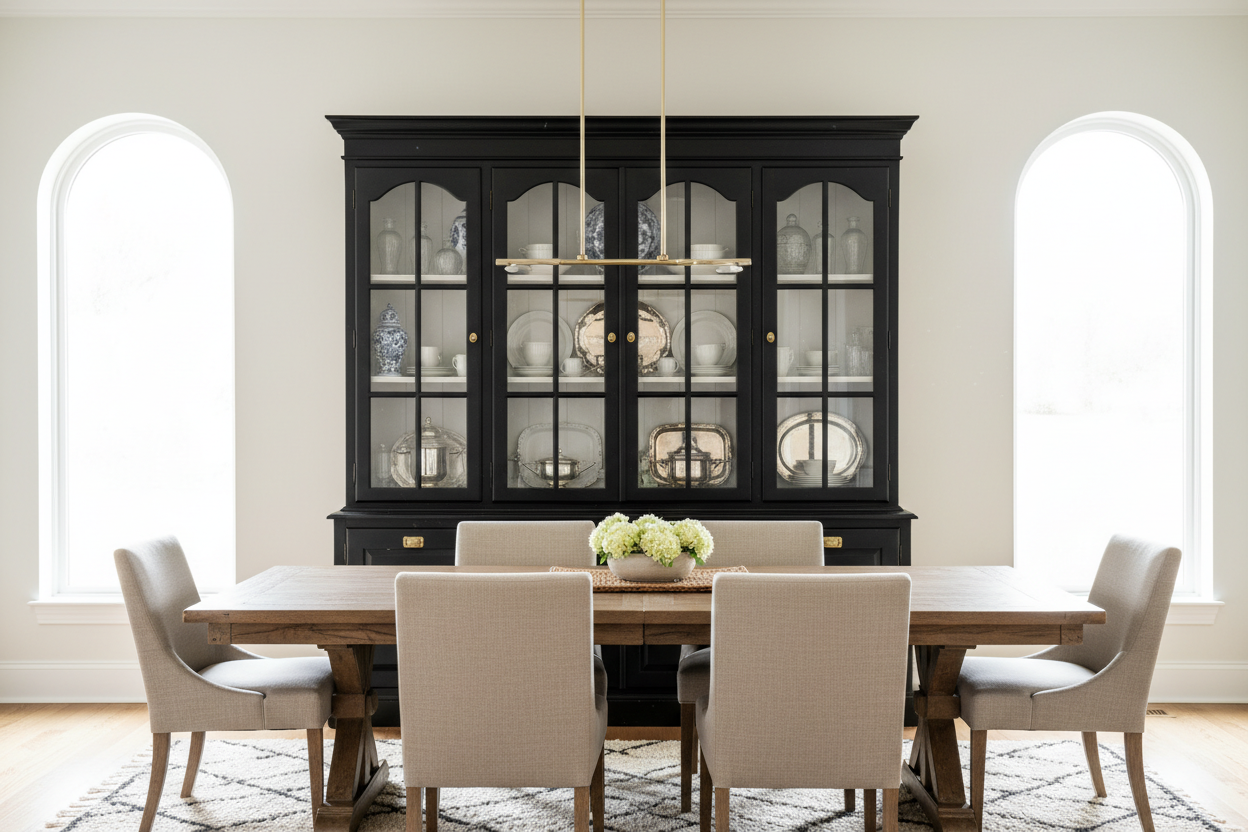
A common mistake is filling every inch of shelf space. Beautiful display is about curation. Start by grouping items in odd numbers—three, five, seven. Vary heights: place a cake stand under a set of teacups, or use small, clear acrylic risers to elevate a salad plate behind a dinner plate.
Create visual layers. Put your boldest, largest pattern at the back of a shelf, with simpler pieces in front. Leave intentional negative space; it lets each piece breathe and prevents a cluttered, flea-market look. For the professional methods I use in my staging work, the principles in How Designers Actually Display China are a perfect starting point.
Fancy China Cabinet Integration: Room Placement and Lighting
The fanciest cabinet in the world will fall flat if it's poorly placed or dimly lit. Never shove it into a dark corner. It needs to be a considered part of the room's flow. As a rule, leave at least 24 inches of clearance in front for comfortable viewing and door access.
Lighting is non-negotiable. Overhead room lighting creates glare on the glass. You need dedicated, internal cabinet lighting. I specify LED tape lights or puck lights with a color temperature of 2700K to 3000K (warm white) to make china glow without a cold, clinical feel. For a tall, statement piece like a Tall White Display Case, I always recommend professional installation of lighting on each shelf to eliminate shadows on the lower displays.
Modern Alternatives to Traditional Fine China Displays
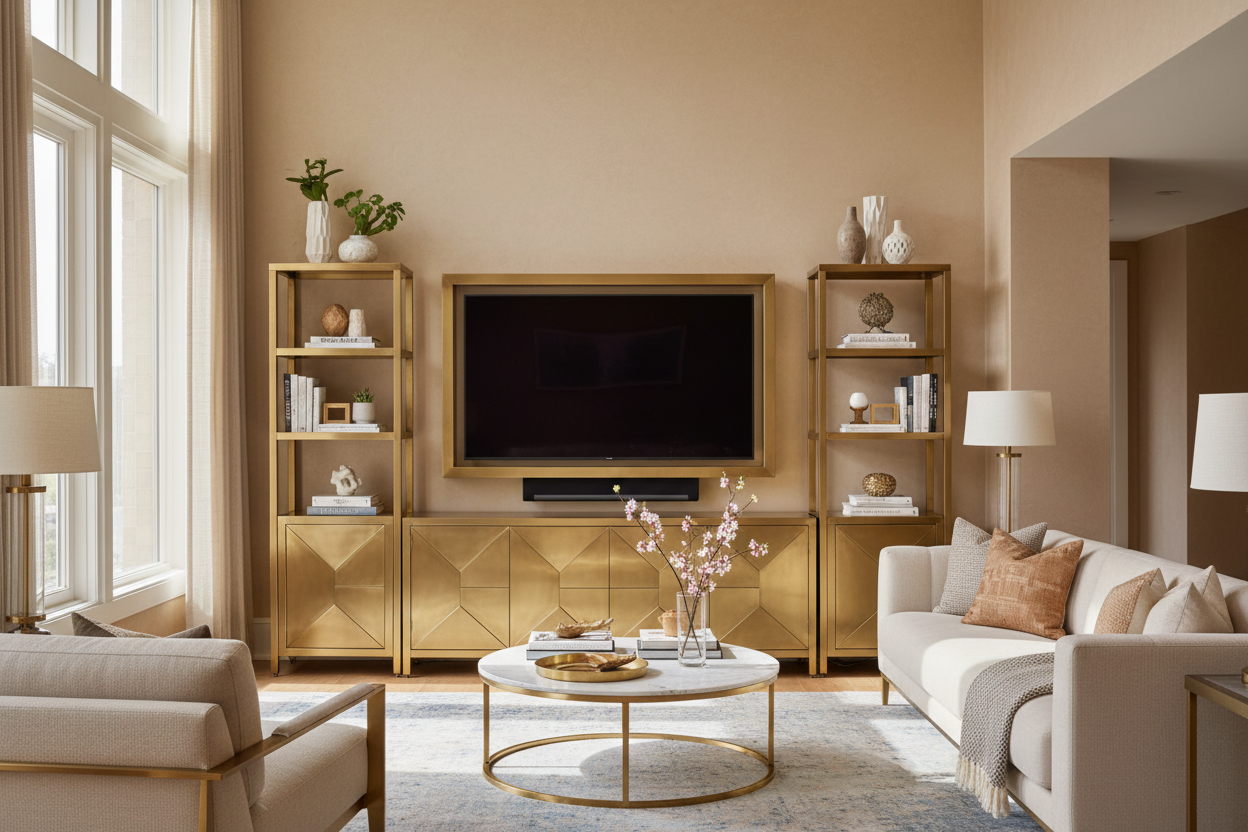
Your grandmother's mahogany breakfront isn't the only option. Modern interpretations are everywhere. I'm using more cabinets that blend materials—a walnut base with matte black metal framing and clear, anti-UV glass doors. Integrated lighting is now often a standard, smart feature, not an add-on.
Consider open shelving units with glass shelves and a minimalist metal frame for a more architectural look. Or, for a dramatic, contemporary statement, a collection of Black Glass Door Cabinets can create a sleek, gallery-like wall display. The key is ensuring the shelving is robust enough (I insist on tempered glass at least 1/2-inch thick) and that the overall design complements, rather than fights, your china's aesthetic.
Personal Experience: The Honest Downside
Early in my career, I was so focused on finding a 'unique' cabinet for a client that I prioritized looks over function. We found a stunning, ultra-modern cabinet with very narrow, fixed glass shelves. It looked like art. But her classic, wide-rimmed dinner plates didn't fit depth-wise, and her gravy boat was too tall. We had to return it. The lesson was searing: always, always measure your actual collection first. Unique is meaningless if it doesn't house what you own. Now, my first question is always, 'Can I see your largest plate and tallest piece?'
FAQ
How much should I budget for a quality unique china cabinet?
For a well-constructed, solid wood cabinet with good hardware and glass, expect to start around $1,200-$1,800. Truly custom or antique pieces will be higher. You're paying for materials and craftsmanship that mass-produced units lack.
What's the ideal height for a china cabinet?
It depends on your ceiling and use. Standard dining room ceiling height is 8 feet. A cabinet around 72 inches tall leaves breathing room. For a curio cabinet displaying smaller collectibles, a taller, narrower profile (up to 84 inches) can work if you have 9-foot ceilings.
Can I use a china cabinet in a room other than the dining room?
Absolutely. I've placed them in living rooms as book and art displays, in hallways as statement pieces, and in home offices. Just ensure the lighting and traffic flow work for the new location.
How do I protect my china from sunlight?
If the cabinet will be in direct sunlight, you must use glass with UV protection. Over time, unfiltered sunlight will fade hand-painted details and discolor fabrics or paper items you might also display.

Leave a comment
This site is protected by hCaptcha and the hCaptcha Privacy Policy and Terms of Service apply.