










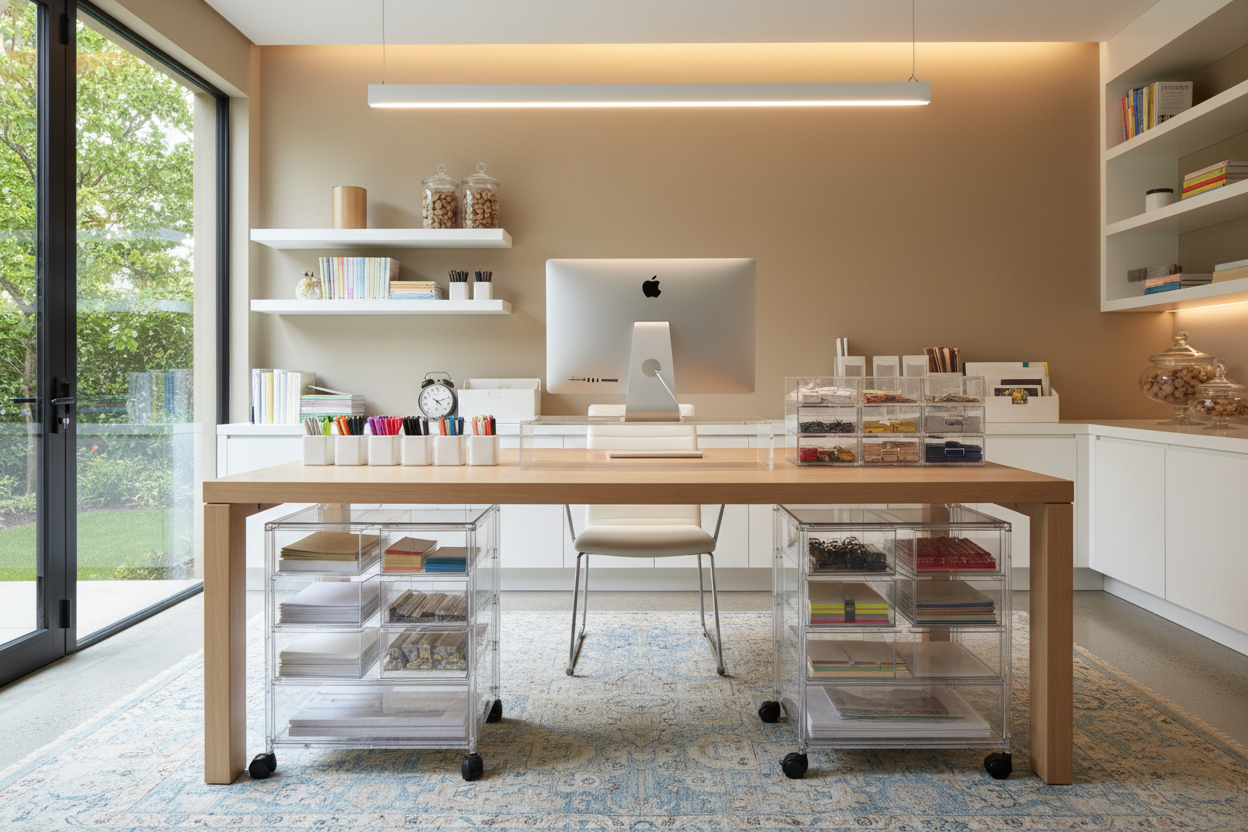
You sit down with your morning coffee, ready to tackle the day's tasks, but your workspace is a chaotic landscape of stray mail, tangled cords, and half-filled notebooks. Sound familiar? Creating a home edit desk isn't just about making things look aesthetically pleasing for social media; it is about establishing a functional baseline that lets you actually focus.
Today, we are walking through how to apply these hyper-organized principles to your daily workspace. You will walk away knowing how to build a system that looks high-end, utilizes your room efficiently, and stays effortlessly tidy long after day one.
Key Takeaways for a Clutter-Free Workspace
- Implement a clear zoning strategy to separate active daily projects from deep storage.
- Use modular acrylics to maintain visual lightness, especially in small or dark rooms.
- Establish a strict daily routine to prevent paper pile-ups and maintain the system.
- Protect your primary desk surface by utilizing vertical wall storage and rolling carts.
Structuring Your Home Edit Home Office
Defining Your Zones
When designing a home edit home office, the biggest mistake I see clients make is treating the entire room as one big storage bin. You need distinct, purposeful zones. Your primary desk surface should only house items you touch daily, like your laptop, a favorite pen, and a notepad. Everything else needs a designated, labeled home. This approach reduces visual weight and keeps your mind clear for deep work.
Mastering the Paper Trail
Effective Home Edit Paper Storage
Paper is the natural enemy of a clean aesthetic. To conquer it, you need reliable home edit paper storage. Instead of tossing everything into a single junk drawer, categorize your incoming documents by urgency. A simple acrylic tray system on your desk can serve as an immediate sorting station for items requiring action today.
Implementing the Home Edit Filing System
For long-term documents, the home edit filing system relies heavily on categorized, color-coded, and clearly labeled hanging folders. This makes retrieval effortless and prevents the dreaded stack of mystery mail. Pair this structured filing approach with a dedicated inbox tray to master the home edit paper organization once and for all.
Aesthetics vs. Reality on the Home Edit Desk
Material Choices and Upkeep
Clear lucite and acrylic organizers are staples of the home edit desk, but they require realistic maintenance. Dust and fingerprints show up immediately on clear surfaces. If you have a high-traffic workspace, consider mixing in opaque materials. White powder-coated steel or warm wood tones can hide the everyday mess while keeping the structural organization completely intact.
Designer's Honest Take: The Acrylic Trap
I genuinely appreciate the clean silhouette of these organizational systems, but I learned the hard way that an all-acrylic setup isn't bulletproof. In a recent suburban project, we decked out a beautiful custom walnut desk with crystal-clear organizers. They looked stunning for the first month.
Then, the reality of daily use set in. Micro-scratches from metal pens, dust clinging to the static of the plastic, and the undeniable fact that clear drawers put your messy, half-used highlighters on full display. The system works beautifully, but you have to be honest with yourself: if you are a 'shove it in a drawer and hide it' kind of worker, opt for opaque bins. Save the clear acrylics for visually pleasing items like fresh stationary or color-coordinated clips.
Frequently Asked Questions
How do I maintain a home edit desk?
Consistency is key. Spend exactly five minutes at the end of each workday resetting the space. Put pens back in their designated cups, file away completed notes, and clear the primary work surface so you can start fresh tomorrow.
Is the home edit filing system practical for heavy paperwork?
Yes, provided you scale up your materials. If you run a paper-heavy business, upgrade from standard desktop acrylics to sturdy metal filing cabinets, but apply the exact same rigorous labeling and categorizing principles to the interior drawers.
What size desk works best for this organization style?
A standard 48-inch to 60-inch wide desk offers plenty of room for this approach. The goal is to keep the surface mostly clear, utilizing drawer dividers and vertical shelving to handle the actual storage burden.


Leave a comment
This site is protected by hCaptcha and the hCaptcha Privacy Policy and Terms of Service apply.