










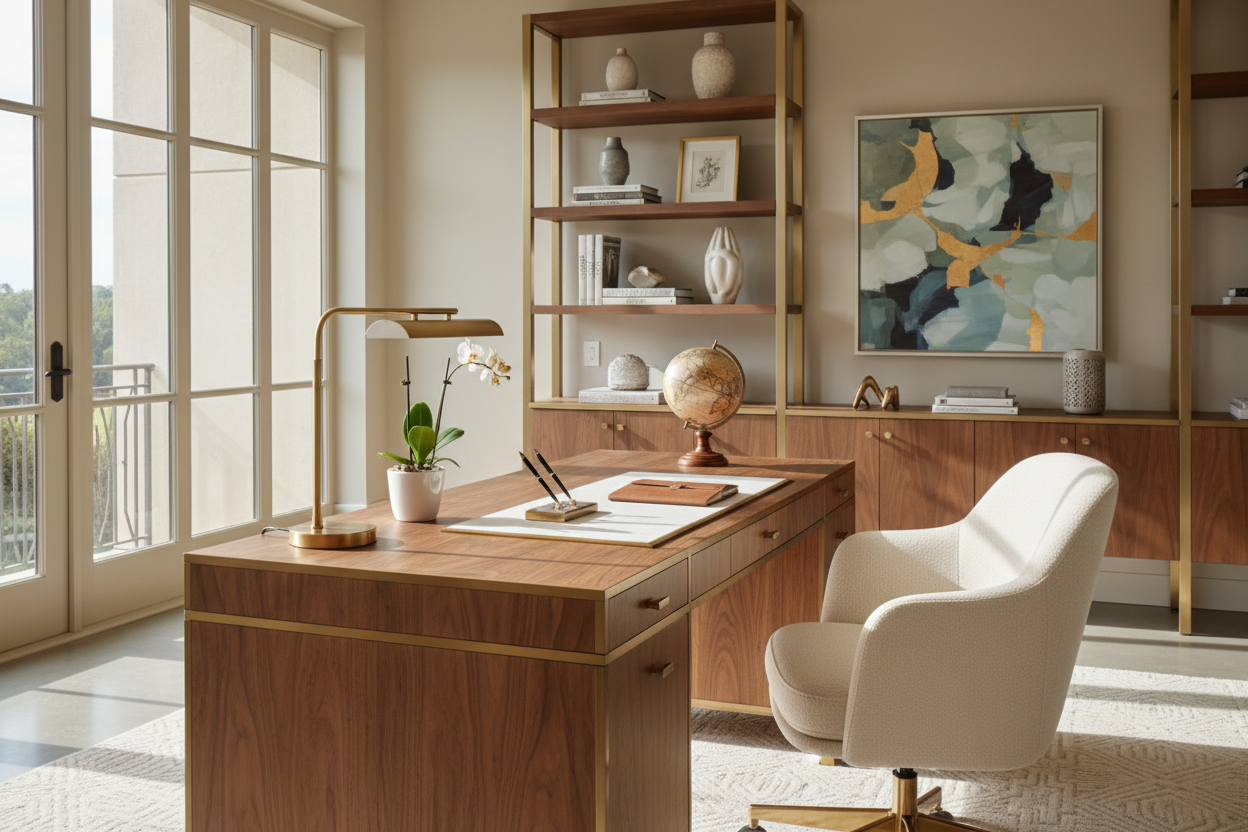
Most home offices suffer from an identity crisis: they are either sterile, corporate replicas or chaotic dumping grounds for household clutter. The secret to a workspace that actually invites productivity lies in intentional styling, not just organizing. As designers, we look for pieces that offer visual weight without consuming valuable work surface area. In this guide, we will explore how to curate chic office desk decor that balances professional function with high-end residential aesthetics, ensuring your desk is as inspiring as it is functional.
Quick Decision Guide: The Essentials of Desk Styling
If you are looking to elevate your workspace immediately, focus on these four pillars of design before purchasing a single accessory:
- Material Palette: Opt for natural materials like marble, solid wood, leather, or unlacquered brass over plastic. These age beautifully and add tactile warmth.
- Scale & Proportion: Ensure accessories do not overcrowd your primary work zone. A lamp should be proportional to the desk width, not dominating it.
- Functionality First: Choose decor that serves a purpose. A beautiful ceramic bowl can hold paperclips; a sculptural object can double as a paperweight.
- Visual Layering: varies heights. Use a tall lamp, a medium plant, and a low tray to keep the eye moving across the composition.
Establishing the Foundation: The Desk Pad
Before adding decorative objects, you must ground the space. In luxury design, we rarely leave a desktop naked. A high-quality leather or felt desk blotter serves as the anchor for your setup. It defines the active work zone and protects the furniture underneath.
For classy desk decor, avoid synthetic, shiny vinyls. Look for full-grain leather that will develop a patina over time. This creates a soft, tactile boundary that reduces the clatter of keyboards and pens, instantly making the room feel quieter and more composed.
The Art of Functional Accessories
The difference between clutter and decor is curation. When selecting organizers, think in terms of "vessels" rather than "bins."
Tray Scaping
A tray is a designer's best trick for containing chaos. By grouping smaller items—like a stapler, post-its, and a pen cup—onto a marble or walnut tray, you turn three distinct items into one cohesive visual unit. This reduces visual noise and makes cleaning easier.
Lighting as Sculpture
Your desk lamp is the jewelry of the workspace. Avoid purely utilitarian, plastic gooseneck lamps. Instead, look for elegant desk decor in the form of architectural lighting. A lamp with a brass finish or a linen shade adds ambient warmth that harsh LEDs cannot replicate. The goal is to cast a pool of light that highlights your work, creating a focal point that draws you in.
Balancing the Aesthetic: The Rule of Three
When arranging your decor, utilize the "Rule of Three." Odd numbers are more pleasing to the eye and prevent the arrangement from looking too stiff or symmetrical. Try grouping a vertical item (like a task lamp), a horizontal item (like a stack of two books), and an organic item (like a small succulent or a stone paperweight). This triangulation creates balance and allows the negative space on your desk to breathe.
Lessons from My Own Projects
I learned a hard lesson about chic office desk decor early in my career while styling a client's penthouse office. We were going for a hyper-modern, "invisible" look, so I specified a glass desk with clear acrylic organizers and high-gloss chrome accessories. It looked stunning in the portfolio photos.
However, two weeks later, the client called me. The issue wasn't the look; it was the sound and the smudges. Every time he set down his phone or a pen on the acrylic or glass, it made a sharp clatter that disrupted his flow. Furthermore, the high-gloss finishes magnified every fingerprint and speck of dust, making the desk look dirty by noon.
I replaced the acrylics with a cognac leather desk pad and swapped the chrome for brushed brass and matte ceramic trays. The acoustics dampened immediately, and the matte finishes hid the daily wear. The lesson? Chic doesn't just mean pretty; it has to feel good to the touch and forgive the mess of real life.
Conclusion
Curating a workspace is about selecting items that spark joy without hindering your workflow. By investing in quality materials like leather and brass, and grouping items intentionally, you can create a space that feels sophisticated and ready for business. Start with one focal piece—perhaps a stunning lamp or a leather blotter—and build your aesthetic from there.
Frequently Asked Questions
How do I hide wires while maintaining a chic look?
Wireless peripherals are the first step, but for necessary cables, use cable management boxes that match your decor (such as wood or white matte boxes) rather than leaving power strips exposed. You can also run cables down the leg of the desk using Velcro ties that match the desk's color.
Can I mix metals in my desk decor?
Absolutely. Mixing metals adds depth and prevents the space from looking like a showroom set. A good rule of thumb is to pick a dominant metal (e.g., matte black) and an accent metal (e.g., antique brass). Just ensure the finishes share a similar undertone (warm vs. cool).
What is the best way to add color without overwhelming the space?
Rely on accessories for color rather than the furniture itself. A rich navy blue desk pad, a forest green planter, or a burgundy notebook can add personality. These items are easily swappable if you decide to change your color scheme later.

Leave a comment
This site is protected by hCaptcha and the hCaptcha Privacy Policy and Terms of Service apply.