










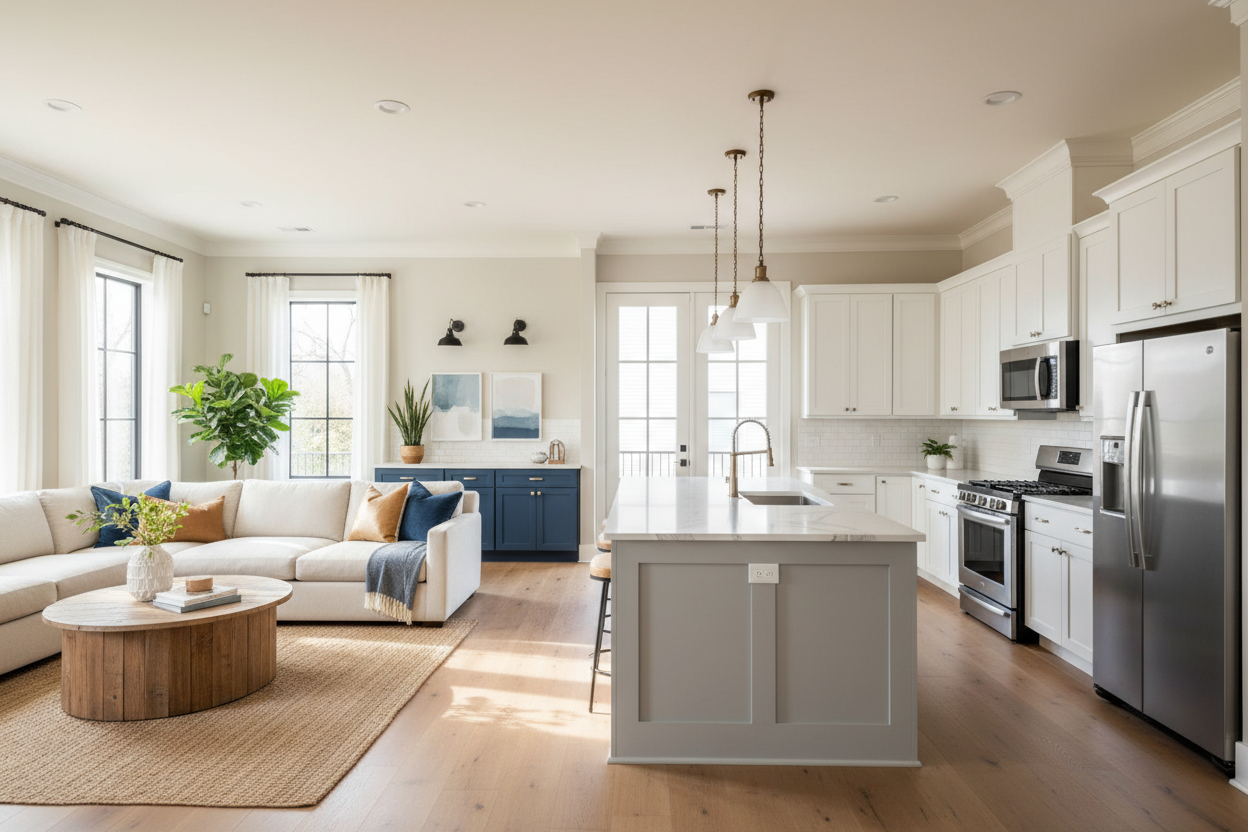

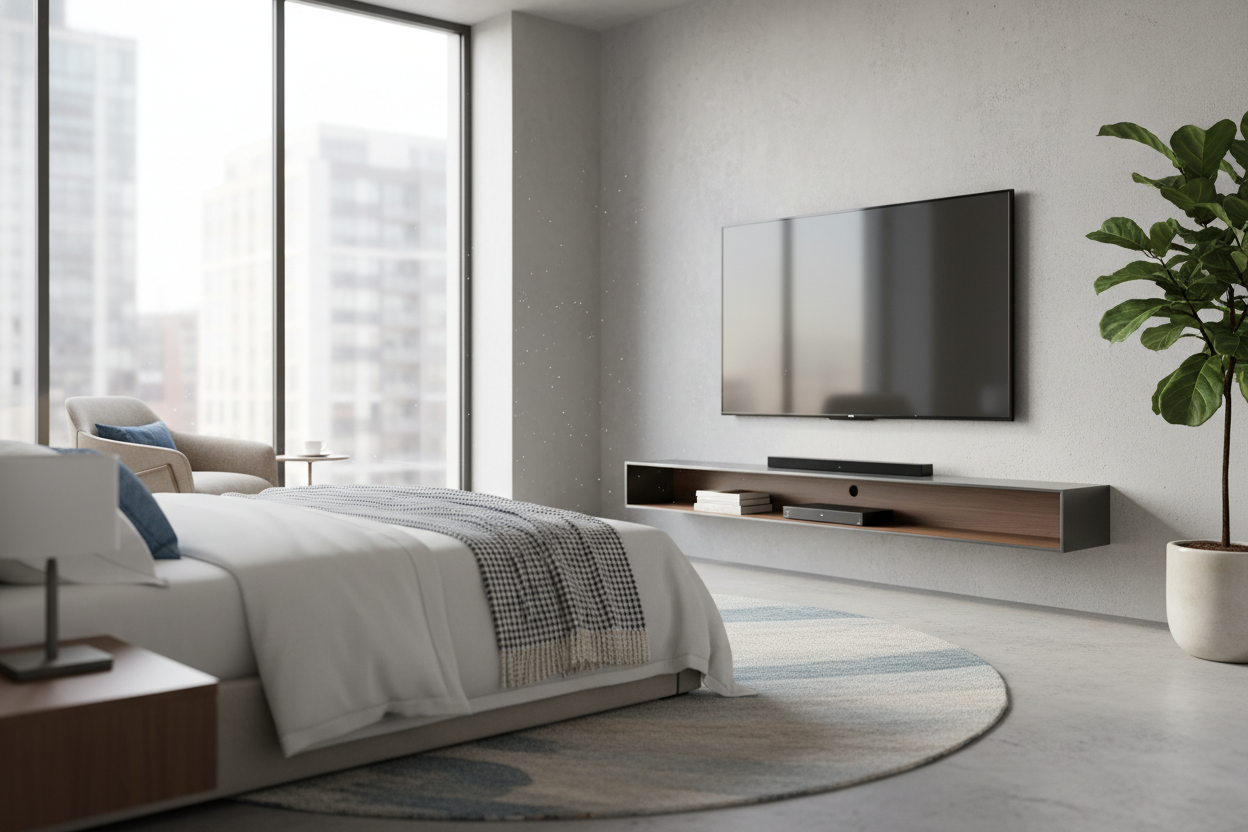
I remember my first open-shelf console. In the catalog, it looked like a minimalist masterpiece. In my apartment, it became a graveyard for half-empty LaCroix cans and a tangled mess of HDMI cables within forty-eight hours. If you've just unboxed a 3 tier wood tv stand, you’re likely staring at those empty shelves wondering how to make them look like intentional decor rather than a tech-store clearance rack.
Styling open shelves is an art of restraint. It's about hiding the plastic junk while letting the warmth of the wood do the heavy lifting. I've spent years testing these setups, and I've learned that without a strict plan, your living room ends up looking like a temporary landing pad. Here is my foolproof method for making a tiered tv stand look curated, not cluttered.
- Keep it low: Avoid tall decor on the top shelf that competes with the screen.
- Group the tech: Use the middle shelf for electronics and balance them with organic textures.
- Anchor the base: Use heavy items like baskets or large books on the bottom shelf.
- Manage the cords: If you can see the wires, the styling has already failed.
The Curse of the Open-Shelf Media Console
There is a specific kind of anxiety that comes with open shelving. We buy tiered TV stands because they look light and airy in professional photos, but real life is messy. Without doors to hide the chaos, every dusty router and knotted power strip is on full display. It takes about five minutes for an unstyled stand to become a catch-all for old mail and dead batteries.
I once owned a gorgeous mid-century unit that I absolutely ruined by treating it like a junk drawer. The key to breaking this curse is treating each tier as its own zone with a specific job to do. If an item doesn't have a dedicated spot, it doesn't belong on the stand. You want to see the grain of the wood, not a pile of tangled black plastic.
Level 1: The Top Shelf (Let the Screen Breathe)
The uppermost tier—the one directly below your television—is the most dangerous area for over-styling. I see people put tall vases or spindly candlesticks here all the time. It’s a mistake. Those objects create a distracting silhouette against the screen and can even reflect light back at you during a movie. It breaks the immersion.
Keep this level sparse. I usually stick to one or two low-profile items. A long, shallow wooden tray is great for corralling remotes so they don't migrate into the sofa cushions. If you must have decor, go for something horizontal, like a decorative marble chain or a small, flat bowl. You want the eye to settle on the screen, not the stuff sitting under it. If your TV is wall-mounted a few inches above the stand, you have a bit more breathing room, but the 'keep it low' rule still applies.
Level 2: Camouflaging the 'Ugly' Tech
The middle shelf of a 3 shelf tv stand wood is usually the 'tech zone.' This is where your PS5, Xbox, or cable box lives. The problem is that plastic electronics rarely look good against high-quality timber. They look cold and industrial. I've found that the best way to handle this is to group your tech to one side and balance it with something 'organic' on the other, like a small stack of linen-bound books or a ceramic object.
If your gear is particularly bulky, look for a TV stand with adjustable center shelf. Being able to drop that shelf by just an inch can be the difference between a console that fits perfectly and one that's crammed in, scratching the wood finish. Also, buy a pack of black Velcro cable ties. Plastic zip ties are permanent and annoying; Velcro lets you swap cables when you inevitably upgrade your gear. Run the wires directly behind the legs of the stand so they disappear from view.
Level 3: Anchoring the Bottom With Visual Weight
A common styling error is putting small, 'fussy' items on the bottom shelf. This makes the whole unit look top-heavy and unstable. The bottom tier needs to feel like an anchor. This is where you put your heaviest, most structured pieces. It grounds the 3 tier wood tv stand so it feels like a permanent piece of architecture in the room.
I swear by woven seagrass or heavy canvas baskets for the bottom shelf. They hide a multitude of sins—like that pile of extra controllers or the fleece blanket you only use when the AC is cranking. If baskets aren't your vibe, try a row of oversized coffee table books stacked vertically. Just make sure whatever you put there fills at least 75% of the vertical height of the shelf. If there's too much empty air at the bottom, the stand looks like it's floating in a way that feels unfinished.
Why I Always Measure Twice for Open Shelving
I learned the hard way that scale is everything. I once bought a 'large' stand for a 65-inch TV without checking the math. When it arrived, the TV hung over the edges by two inches on each side. It looked like a bodybuilder standing on a barstool. It was unstable and, frankly, ugly. A good rule of thumb is that your stand should be at least 20% wider than your TV to keep the proportions from looking wonky.
If you're still in the shopping phase, please check out The 3 Proportion Rules You Need Before Buying a Wood TV Stand. It will save you the massive headache of a return shipment for a 100-pound box of wood. Trust me, re-boxing a TV stand is a level of hell I wouldn't wish on my worst enemy.
Can I put a plant on a wood TV stand?
Yes, but be careful. Never put a pot directly on the wood; even 'waterproof' saucers can sweat and leave a permanent white ring. Use a cork coaster or a decorative tray as a barrier. I'd recommend a trailing plant like a Pothos on the edge of a middle shelf.
How do I hide the wires if the back is open?
Use the legs. Run your cables down the back of the sturdiest leg and secure them with cable clips or clear Command hooks. If the wires are still visible, a strategically placed basket on the bottom shelf can block the view of the outlet entirely.
Is a 3 tier stand sturdy enough for heavy TVs?
It depends on the material. Solid wood or high-grade MDF can handle it, but check the weight capacity. I once had a cheap particle board stand that started bowing in the middle because my old receiver weighed as much as a small boulder. If the shelves are at least 1-inch thick, you're usually in the clear.


Leave a comment
This site is protected by hCaptcha and the hCaptcha Privacy Policy and Terms of Service apply.