










I spent three weeks staring at a cardboard box in the corner of my living room before I finally admitted defeat. I thought a mid-sized screen would be easy to style, but once I got it onto the 55 tv stand, the room felt... off. It wasn't the size of the TV; it was the fact that a giant black rectangle was suddenly the only thing my eyes could see. It sucked the life out of my carefully curated gallery wall and made my expensive linen sofa look like an afterthought.
- Weight matters: Avoid thin particle board that sags under a 55-inch frame.
- Balance the height: Use a tall plant or floor lamp to counter the horizontal line of the console.
- Light it up: Bias lighting behind the screen reduces eye strain and softens the 'void.'
- Go multi-functional: Fireplace units add a secondary focal point so the TV isn't the only star.
The 'Black Void' Problem I Couldn't Ignore
The problem with a 55-inch screen is that it is the ultimate 'middle child' of electronics. It is too large to be tucked away in a bookshelf, yet not quite large enough to feel like a dedicated home theater. In my sun-drenched apartment, that screen looked like a literal hole in the wall whenever it was turned off. It didn't matter how many expensive candles I put near it; the visual energy of the room just died the moment it hit that glass panel.
I realized I was fighting the screen instead of working with it. Every time I tried to 'hide' it with small trinkets, the setup just looked cluttered. The trick isn't to hide the TV; it is to give the eye something else to look at that has the same visual weight. You need a base that doesn't look like it's struggling to hold the weight of the tech.
Why a Basic TV Stand 55 Inch Screens Fit On Isn't Enough
Most people buy the cheapest thing that physically fits the legs of their television. Big mistake. A tv stand 55 inch screens sit on needs to be at least a few inches wider than the TV itself. If the edges of the TV overhang the stand, the whole room feels top-heavy and unstable. I’ve seen $3,000 OLEDs sitting on $40 flat-pack stands that were literally bowing in the middle, and it kills the aesthetic instantly.
Material choice is where most people fail. You want something with texture—real wood grain or a matte finish. I eventually wrote about the oak TV stand 55 inch screens actually need because the density of the wood grounded the room. It felt like a piece of furniture first and a tech-holder second. If your stand feels flimsy, your whole living room feels temporary.
How Adding a Fireplace Unit Softened the Room
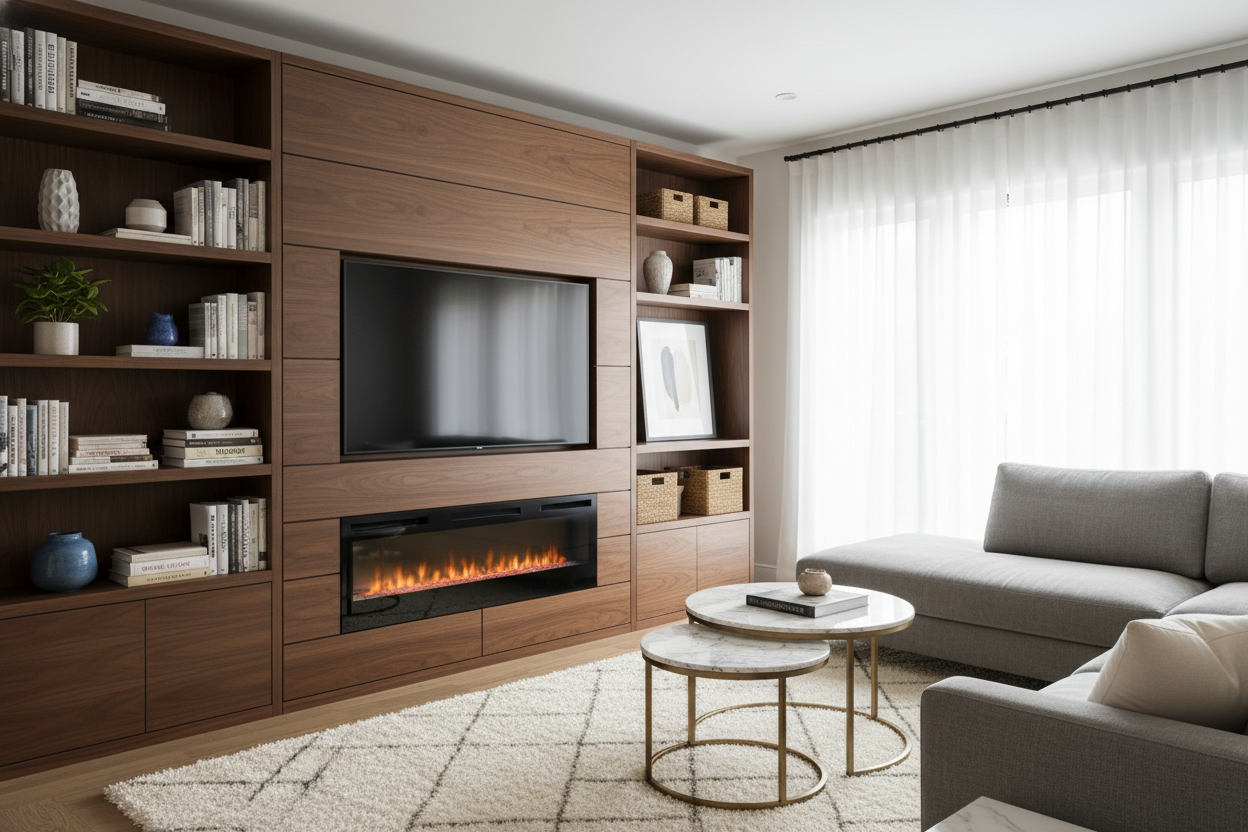
The real breakthrough happened when I ditched the standard wooden box for something with more 'soul.' I moved to a 30 inch electronic fireplace with white tv stand and the change was immediate. Suddenly, there was a reason to look at the console even when the TV was off. The white finish brightened the 'dead' corner of the room, and the fireplace provided a warm, flickering light that countered the coldness of the screen.
It turns a 'media center' into a 'hearth.' Even in a rental where you can't have a real chimney, the visual warmth makes the space feel permanent and cozy. It’s the difference between sitting in a waiting room and sitting in a home.
Using Ambient Light to Your Advantage
Lighting is the secret sauce. I added a simple LED strip to the back of the monitor to create a halo effect. When you combine that with the adjustable glow from a fireplace unit, the harsh edges of the TV disappear into the wall. It makes the screen feel like it's floating rather than just stuck there. Plus, it's way easier on your eyes during a late-night binge session.
The 'Rule of Thirds' for Decorating the Top Surface
Stop centering things. If you put one vase on the left and one on the right, it looks like a shrine to the Netflix gods. Use the rule of thirds. I like to put a stack of oversized coffee table books on one side and a trailing Pothos plant on the other. This works across a wide variety of TV stands because it breaks up the symmetry.
The plant is key—something about the organic shape of leaves softens the hard, 90-degree angles of the electronics. Just make sure your 'decor' doesn't block the IR sensor on the bottom of the TV, or you'll be doing gymnastics just to change the volume.
When All Else Fails, Minimize the Footprint
If you live in a tiny studio, sometimes less is more. If you can't fit a bulky console, you have to go the opposite direction. I once tested the thinnest TV stand I could find just to see if it would hold up. It’s a great move if you want that 'art gallery' look where the TV is the only thing on the wall. It’s risky if you have a lot of cables to hide, but for a minimalist, it’s a solid alternative to a heavy cabinet.
FAQ
How much wider should a stand be than a 55-inch TV?
Your stand should be at least 5-10 inches wider than the screen. A 55-inch TV is actually about 48 inches wide, so a 55-60 inch stand is the sweet spot for a balanced look.
Can a fireplace TV stand heat a whole room?
Most of these units are designed to heat about 400 square feet. It won't replace your furnace, but it'll definitely take the chill off a standard living room without you having to crank the thermostat.
How do I hide the messy cables?
Look for stands with 'cable management' holes in the back. If it doesn't have them, use adhesive clips to run the wires down the legs of the furniture. Never just let them dangle; it ruins the whole look.


Leave a comment
This site is protected by hCaptcha and the hCaptcha Privacy Policy and Terms of Service apply.