










I spent three weeks staring at a seven-inch gap between my refrigerator and the pantry wall. Standard big-box cabinets come in three-inch increments, which meant I was looking at a massive, useless filler strip that would serve no purpose other than collecting dust and reminding me of my failure to plan. That is when I realized I needed custom kitchen wall cabinets, but the thought of clicking 'buy' on a multi-thousand-dollar order based on my own shaky math felt like a total death wish.
Quick Takeaways
- Standard boxes waste up to 15% of your wall space in filler panels.
- Measure your height in three different spots; ceilings are almost never level.
- Ordering 1/8th of an inch smaller than your opening is the 'pro' move for a perfect fit.
- Custom online orders often use 3/4-inch plywood, which beats the flimsy particle board found in stock options.
Why I Finally Gave Up on 'Close Enough' Standard Sizes
Standard cabinets are great if your kitchen was built by a high-precision robot on a perfectly level plane. Mine was not. My 1940s walls have a 'personality' that manifests as a subtle two-degree tilt. Trying to force stock boxes into an asymmetrical space is a recipe for a headache. You end up with these giant, awkward filler pieces that scream 'I didn't want to spend the money to do this right.'
I finally realized that built to order cabinets aren't just for people with architectural degrees and massive budgets. They are for anyone who doesn't want to waste six inches of prime real estate on a piece of painted plywood that does nothing. I wanted every fraction of an inch to actually hold a coffee mug or a stack of dinner plates. Once I saw the price difference wasn't as astronomical as I feared, the choice was easy.
How to Order Custom Cabinets (When You Aren't a Math Genius)
The secret to how to order custom cabinets without losing your mind is the 'Rule of Three.' I measured the width of my opening at the top, the middle, and the bottom. In an old house, these three numbers will rarely match. You take the smallest of those three numbers and subtract 1/8th of an inch. That is your 'safe' number. It is much easier to cover a tiny 1/16th gap with a bead of caulk than it is to sand down a cabinet box because it's too wide for the hole.
For the vertical measurements, do the same thing. Ceilings sag. Floors slope. If you want your uppers to hit the ceiling for that high-end built-in look, you need to know exactly where the low point is. I used a $30 Bosch laser level, and it was the best money I spent on the entire project. It showed me that my 'level' ceiling actually dropped half an inch over a four-foot span.
The Scary Part: Finding Custom Size Cabinets Online
Navigating for custom size cabinets online feels like 1998 internet shopping at first. The interfaces can be clunky, and there are a lot of dropdown menus that look like they're written in a different language. Here is the trick: always look for the 'spec sheet' PDF on the product page. If a site does not let you specify the width down to the 1/16th of an inch, they are not actually custom; they are just 'semi-custom' and you are probably overpaying for a standard size.
The biggest fear is ordering a door that opens the wrong way. Most sites ask for 'Left Hand' or 'Right Hand' swing. This is always determined by the side the hinges are on when you are standing in front of the cabinet. I literally taped a piece of paper to my wall that said 'HINGE HERE' just to make sure I didn't click the wrong box in the configurator at 11 PM.
Matching Uppers to Your Existing Layout
If you aren't doing a full gut-reno, you have to play nice with what is already there. You want your new uppers to feel intentional, not like an afterthought. If you have existing tall storage, like freestanding pantry cabinets, make sure the top line of your new uppers hits that same horizontal plane. Even if the door styles aren't a 100% match, a consistent height across the room tricks the eye into thinking the kitchen was professionally designed.
I also matched my hardware finish to the existing lowers. It sounds simple, but using the same heavy brass pulls on custom uppers as you have on your old drawers ties the whole room together. It makes the 'new' parts feel like they've always been there.
Faking the Rest of the House
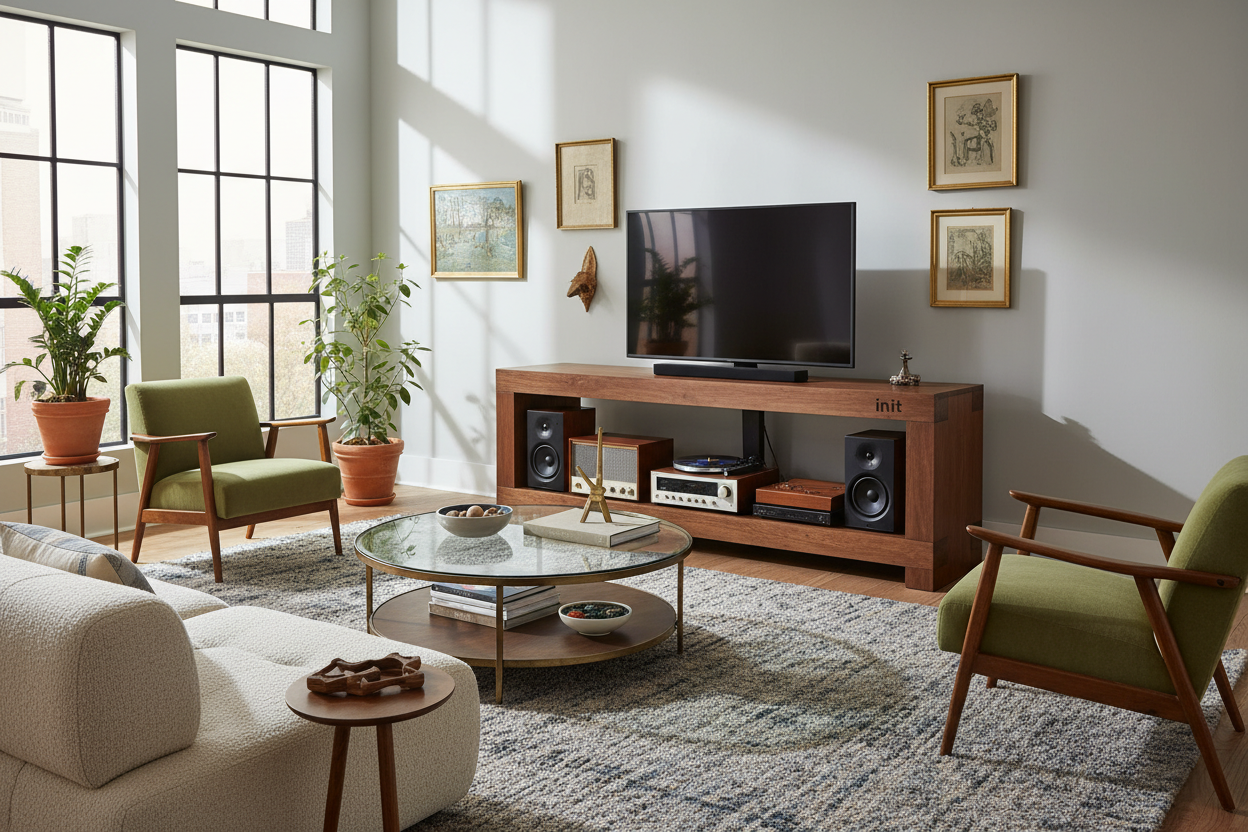
I am a big advocate for spending money where it matters and being a cheapskate everywhere else. In the kitchen, precision is everything because you are working around fixed appliances and plumbing. There is no room for error. However, in my den, I was totally fine hacking standard cabinets for the living room.
You can hide a two-inch gap behind a bookshelf with a piece of trim and some wood filler, and no one will ever notice. But in a kitchen, where you're opening and closing doors fifty times a day, those gaps and misalignments become glaringly obvious. Spend the money on the custom boxes where the light hits them every morning.
Was the Custom Premium Actually Worth It?
I ended up paying about 25% more than I would have for 'off-the-shelf' boxes at a big-box retailer. For that premium, I got 3/4-inch maple plywood boxes instead of that flimsy 1/2-inch particle board that swells the second it gets damp. I also gained about 10% more actual storage volume because I didn't have to use filler strips.
The anxiety of ordering was real, but the result is a kitchen that looks like it was designed by a pro. No gaps, no wasted space, and no 'close enough' regrets. If you can use a tape measure and a level, you can handle this.
FAQ
How do I know if the cabinets will fit?
Measure your space in three spots (top, middle, bottom) and use the smallest measurement. Subtract 1/8th of an inch for 'wiggle room.' You can always hide a tiny gap with trim, but you can't shrink a cabinet that's too big.
What is the difference between custom and semi-custom?
Semi-custom usually means the manufacturer has set sizes (like 12, 15, 18 inches) and can only make minor tweaks. True custom cabinets allow you to specify the exact width, height, and depth to the fraction of an inch.
Does shipping take forever for custom orders?
Expect a lead time of 4 to 8 weeks. These aren't sitting in a warehouse; they are built after you click order. It requires patience, but the fit is worth the wait.

Leave a comment
This site is protected by hCaptcha and the hCaptcha Privacy Policy and Terms of Service apply.