











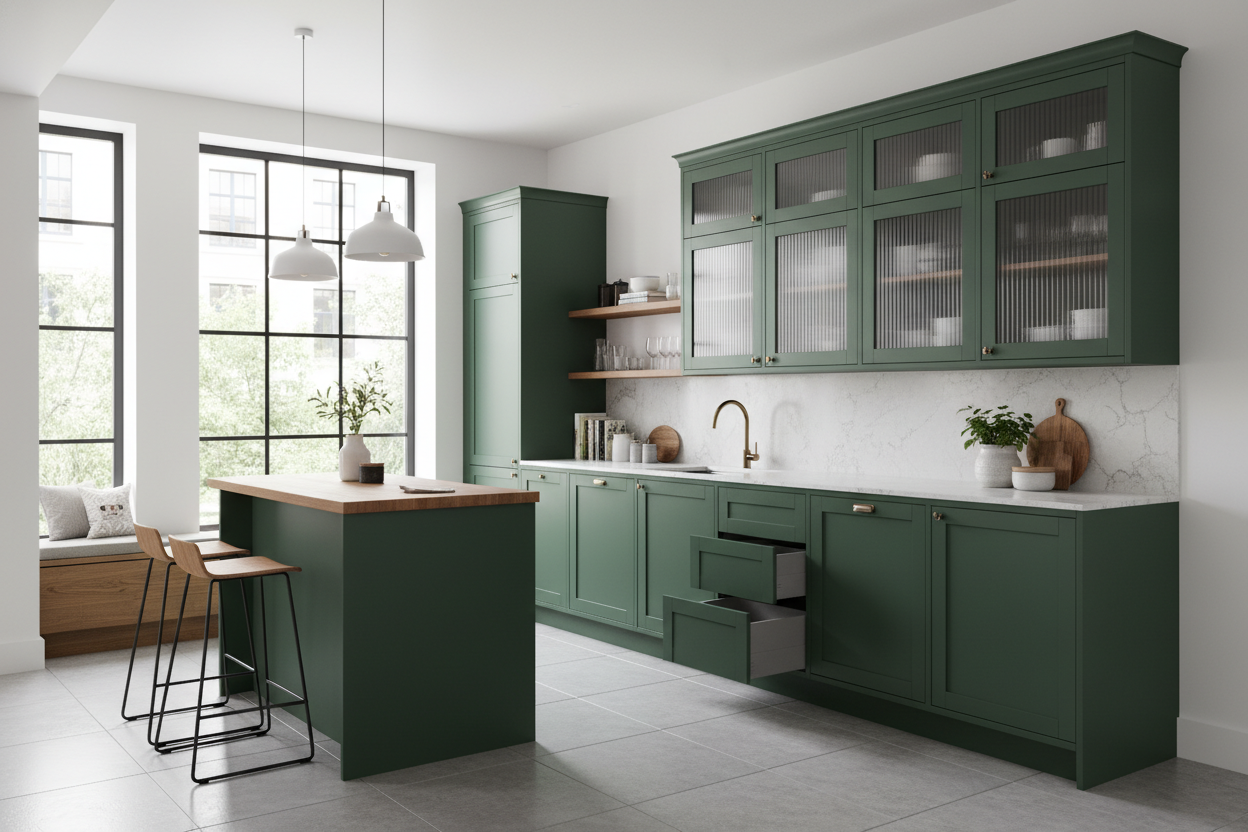
I once spent three hours staring at a 55-inch gap in a client's kitchen renovation, sweating over a tape measure. Two standard 24-inch units left a weird, useless seven-inch void, but a 30-inch and a 24-inch combo would have blocked the dishwasher door from opening. It was a mathematical nightmare until I remembered the 27 cabinet exists.
We usually think in increments of 6 or 12 inches when we buy furniture, but that middle-of-the-road 27-inch footprint is actually the secret to a high-end, custom-feeling layout. It is the size that solves problems you didn't even know you had until you were halfway through a floor plan.
Quick Takeaways
- The 27 inch wide cabinet is the perfect compromise between a cramped 24-inch unit and a bulky 30-inch one.
- It is the ideal width for standard drop-in sinks, saving valuable floor space.
- A 27 drawer cabinet offers the best weight-to-width ratio for heavy cast iron cookware.
- It acts as a 'filler killer,' eliminating those awkward 3-inch gap strips that collect dust.
The 'Goldilocks' Size Nobody Tells You About
In the kitchen world, a 24-inch base is the standard workhorse, but let’s be honest: it’s tight. Try fitting a set of oversized dinner plates and a stack of mixing bowls in one, and you’re playing Tetris every Tuesday night. On the flip side, jumping up to a 30-inch unit can feel like you’re losing half your walkway in a galley kitchen.
The 27 inch base cabinet is that 'Goldilocks' zone. It gives you those extra three inches of breathing room inside the box—enough to actually fit a 12-inch skillet flat—without the footprint of a larger unit suffocating the room. Most people ignore the 27 inch cabinet because big-box stores don't always stock them in every finish, but hunting one down is the difference between a kitchen that works and a kitchen that feels cramped.
3 Places This Weird Dimension Actually Shines
You don't need a whole row of these, but strategically placing a 27 in base cabinet in high-traffic zones can fix a layout that feels 'almost right' but slightly off.
The Perfectly Proportioned Sink Base
Most homeowners default to a massive 36-inch sink base because they think they need it. Unless you’re washing a small dog in your kitchen, a 27 inch kitchen sink base cabinet is often plenty. It comfortably houses a standard 25-inch drop-in sink while leaving just enough room for the plumbing and a garbage disposal.
By opting for a 27 sink base cabinet instead of a 30 or 36, you reclaim 9 inches of under-counter real estate. That’s enough space to add a pull-out spice rack or a slim tray divider next to the sink—areas that are usually wasted on a massive, empty plumbing void.
The Deep Drawer Solution for Heavy Pans
I’m a huge advocate for drawers over doors every single time. However, if you go too wide, the drawers become heavy and the glides eventually fail under the weight of your Le Creuset collection. A 27 inch cabinet with drawers is the mechanical sweet spot.
It’s wide enough to hold two stacks of pans side-by-side, but narrow enough that the drawer bottom won’t sag over time. When you compare it to a 2 drawer base cabinet, the 27-inch width ensures that even when fully loaded with cast iron, the pull remains smooth and doesn't require a gym membership to open. A 27 inch base cabinet with drawers is frankly the most durable way to store your heaviest gear.
Taming the Dining Room Overflow
Sometimes the kitchen isn't the problem—it’s the dining room. If you have a small dining area where a traditional 72-inch sideboard would block the chairs, look at a 27 tall cabinet or a 27 wide storage cabinet. These mid-sized units work wonders as standalone pieces.
I’ve used a 27 inch wide storage cabinet to house 'holiday-only' platters and fancy glassware in tight corners. It provides enough kitchen dining storage to be useful without looking like a massive wardrobe that’s eating the room. A 27 inch high storage cabinet can even double as a bar station or a coffee nook in a small apartment.
Will It Look Weird Next to Standard Boxes?
The biggest fear people have is that a 27 inch wide cabinet with doors will look like a mistake next to 18-inch or 36-inch units. It won't, provided you keep your lines clean. The trick is symmetry. If you have a 27-inch unit on one side of your stove, try to mirror it on the other side, or at least align the drawer heights.
In my experience, a cabinet 27 inches wide blends in perfectly as long as the door style matches. Because the eye tends to group objects, a 27-inch box flanked by two 15-inch boxes looks intentional and balanced. It actually looks more 'custom' than a row of identical 24-inch boxes that feel like they came off an assembly line.
When You Should Actually Just Go Bigger
As much as I love the 27 inch storage cabinet, it isn't a magic wand. If you are working with a massive, open-concept kitchen with a 15-foot wall, using small 27-inch boxes will make the room look busy and cluttered. There are too many vertical lines and seams.
In those cases, skip the small stuff and go for a 60 inch wide storage cabinet with doors. When you have the luxury of space, larger units provide a cleaner, more architectural look. The 27-inch size is a problem-solver for tight spaces and tricky floor plans, not a replacement for grand-scale furniture in a mansion.
My Honest Take: The 27-Inch Mistake I Made
I'll be the first to admit I once ordered a 27 inch kitchen cabinet and forgot to account for the door swing against a deep refrigerator. Even though the 27-inch width fit the wall perfectly, the door hit the fridge handle. I had to rip it out and install a 24-inch unit with a 3-inch filler strip just to get the door to open past 90 degrees.
The lesson? Always check your clearances. A 27-inch wide cabinet is great, but because it’s wider than the 'standard' 24, those extra three inches can bite you if you’re tight against an appliance or a wall corner. Measure twice, then measure the door swing, then order.
The Final Verdict: Is It Worth Tracking Down?
If you are struggling to make your kitchen layout work, or if you’re tired of your 24-inch drawers feeling just a little too narrow for your baking sheets, the 27-inch wide cabinet is absolutely worth the search. It offers a custom feel without the custom price tag, and it maximizes every square inch of your floor plan.
FAQ
Can I use a 27 inch cabinet for a farmhouse sink?
Usually, no. Most standard farmhouse sinks require a 30-inch or 36-inch base. However, some boutique brands make 24-inch fireclay sinks that would fit a 27 inch sink base cabinet with some minor modifications to the cabinet face.
Is a 27 inch tall cabinet high enough for a pantry?
A 27 inch height cabinet is typically a base unit or a short wall unit. If you want a full-height pantry, you are looking for a 27 tall cabinet that is usually 84 to 90 inches high. A 27 inch high cabinet is more for under-desk storage or a low sideboard.
Are 27 inch cabinets harder to find?
They aren't as common as 24s or 30s at big-box hardware stores, but most semi-custom cabinet lines and online retailers offer them. You might have to wait an extra week for shipping, but the fit is worth the wait.


Leave a comment
This site is protected by hCaptcha and the hCaptcha Privacy Policy and Terms of Service apply.