










We have all experienced the dreaded drop in productivity that comes from sitting in a poorly planned workspace. Whether you are staring at a blank wall in a spare bedroom or trying to make sense of a chaotic commercial layout, a thoughtful office remodel is often the only way to reclaim your focus.
After 15 years of designing workspaces across North America, I can tell you that a successful office renovation is about much more than picking out a handsome desk. It requires a delicate balance of ergonomics, lighting, and spatial flow. In this guide, you will learn exactly how to approach your layout, where to spend your budget, and what pitfalls to avoid when executing a renovation office plan.
Key Takeaways for Your Workspace Redesign
- Prioritize natural light and layered ambient lighting to reduce eye strain and visual fatigue.
- Map out your electrical and data needs before touching the drywall or ordering furniture.
- Allow at least 42 inches of clearance behind the desk for comfortable chair movement.
- Invest heavily in an ergonomic chair and a solid work surface; save on decorative shelving.
- Integrate acoustic solutions early to prevent a hollow, echoing environment.
Mastering the Office Space Remodel
Clearances and Flow
When tackling an office space remodel, the biggest mistake I see is cramming too much furniture into a tight footprint. The visual weight of a massive executive desk will instantly shrink a standard 10x10 room. Instead, map out your floor plan with blue painter's tape before committing. You need a minimum of 42 inches behind your desk to push your chair back comfortably, and at least 36 inches for primary walkways. Proper space planning is the foundation of any successful renovation of office environments.
Power and Connectivity
A true office space renovation goes behind the walls. Before you paint or install new flooring, assess your power needs. Floor outlets are essential if you want to float your desk in the center of the room without tripping over extension cords. Upgrading your electrical panel or running hardwired internet lines during the renovation of office space will save you massive headaches later.
Designing for Focus and Function
Balancing Textures and Colors
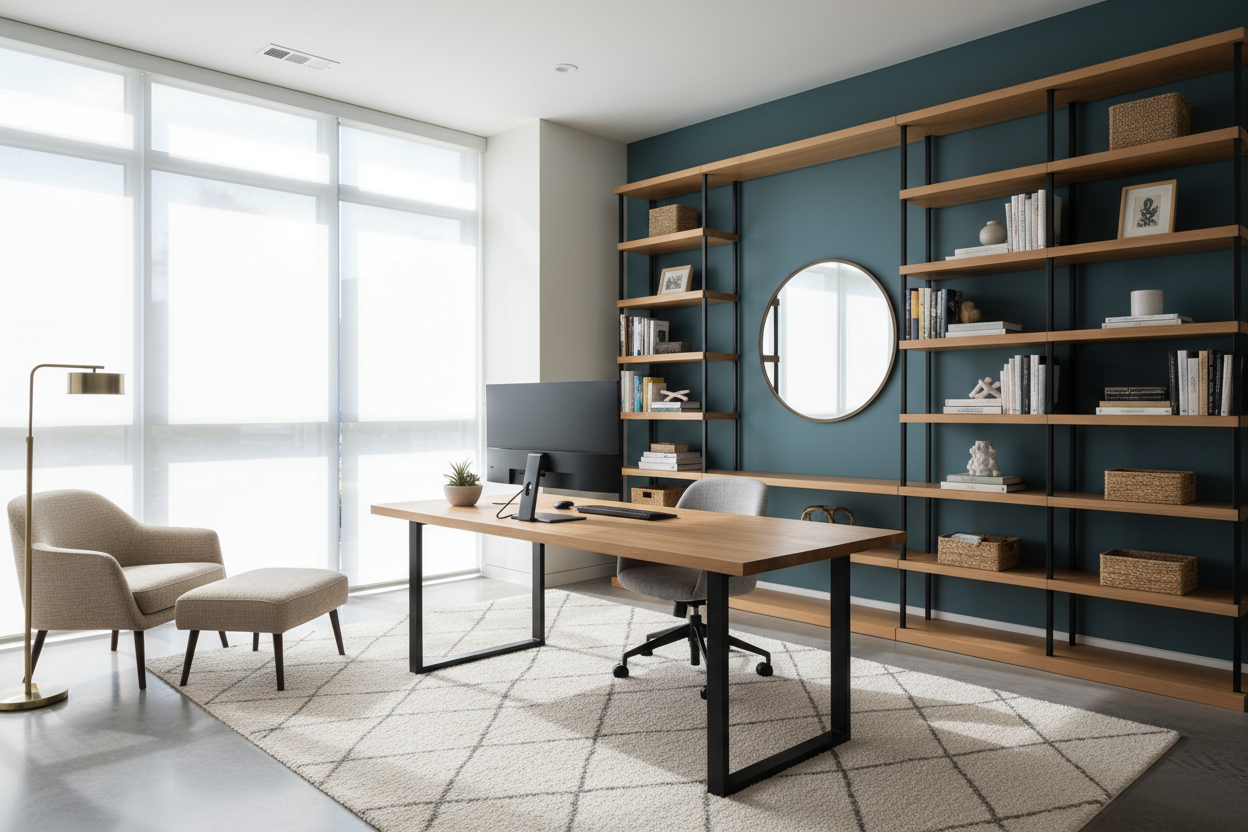
A sterile environment kills creativity, but visual clutter destroys focus. When renovating an office, aim for a transitional or soft-modern aesthetic. Layering natural textures like a white oak desk, matte black hardware, and a wool area rug grounds the room. Keep your primary wall colors neutral or muted—think sage greens, warm taupes, or deep navy—to minimize visual distraction.
Where to Spend and Where to Save
An office building renovation or a large-scale home workspace overhaul can drain your budget quickly if you aren't strategic. Put your money where your body interacts with the space. A high-quality, commercial-grade ergonomic chair and a solid wood or high-pressure laminate desk are non-negotiables. You can easily save money by using stock cabinetry for storage or opting for mid-tier luxury vinyl plank flooring, which stands up beautifully to rolling chairs. When planning the renovation of office building interiors, allocate funds toward acoustics and lighting first.
Designer's Honest Take: Lessons from the Field
A few years ago, I completed a high-end office remodel for a client who insisted on a gorgeous, custom-built glass desk. It looked incredible in the portfolio photos. But within three weeks, the reality of everyday use set in. Every single fingerprint, coffee smudge, and speck of dust was magnified. Worse, the optical mouse wouldn't track on the glass, and the cold surface was uncomfortable to lean on during long winter working sessions.
I learned the hard way that high-maintenance materials have no place in a high-productivity zone. Now, I always steer clients toward matte, thermally fused laminates or sealed solid woods for primary work surfaces. They might not have the dramatic flair of glass, but they actually let you get your work done comfortably.
Frequently Asked Questions
How much does an office remodel typically cost?
Costs vary wildly depending on the scope. A basic home office cosmetic update might cost a few thousand dollars, while a full commercial renovation of office building spaces can run anywhere from $50 to $200 per square foot. Always pad your budget by 15 percent for hidden electrical or structural surprises.
How long does an office renovation take?
For a standard residential room, expect 3 to 4 weeks if you are doing drywall, electrical, and custom built-ins. Larger projects or structural changes can take several months, heavily dependent on permitting and material lead times.
What flooring is best when renovating an office?
Hard surfaces are generally best for rolling chairs. Commercial-grade luxury vinyl plank (LVP) or engineered hardwood are excellent choices. If you prefer carpet for acoustics, opt for low-pile commercial carpet tiles, which allow for easy replacement if a section gets stained.


Leave a comment
This site is protected by hCaptcha and the hCaptcha Privacy Policy and Terms of Service apply.