










There is a specific kind of visual noise that kills productivity faster than anything else: the clutter of unfiled papers, tangled cables, and miscellaneous tech scattered across a desk. As designers, we often see clients treat storage as an afterthought, grabbing the first plastic bin or metal file box they see. However, the right office storage cabinets do more than just hide a mess; they anchor the room, define the aesthetic, and create a workflow that actually makes sense.
Key Features to Look For
Before you commit to a purchase, review this checklist to ensure the piece meets both functional and aesthetic standards:
- Internal Depth: Ensure shelves are at least 12-15 inches deep to accommodate standard binders and office organization cabinets without overhang.
- Material Integrity: Look for commercial-grade laminates, solid wood veneers, or powder-coated steel for longevity.
- Hardware Quality: Test for full-extension drawer slides and soft-close hinges to prevent wear over time.
- Adaptability: Prioritize units with adjustable shelving to fit varying items, from tall reference books to small tech boxes.
- Footprint: Measure the door swing radius to ensure it doesn't conflict with your chair or other office storage furniture.
Balancing Form and Function
When curating a workspace, the goal is to reduce visual weight. Bulky, dark office storage units can make a small room feel claustrophobic. For tighter footprints, I often recommend narrow office storage solutions that utilize vertical space rather than floor area. A tall, slender cabinet draws the eye upward, making the ceiling appear higher while providing ample room for essentials.
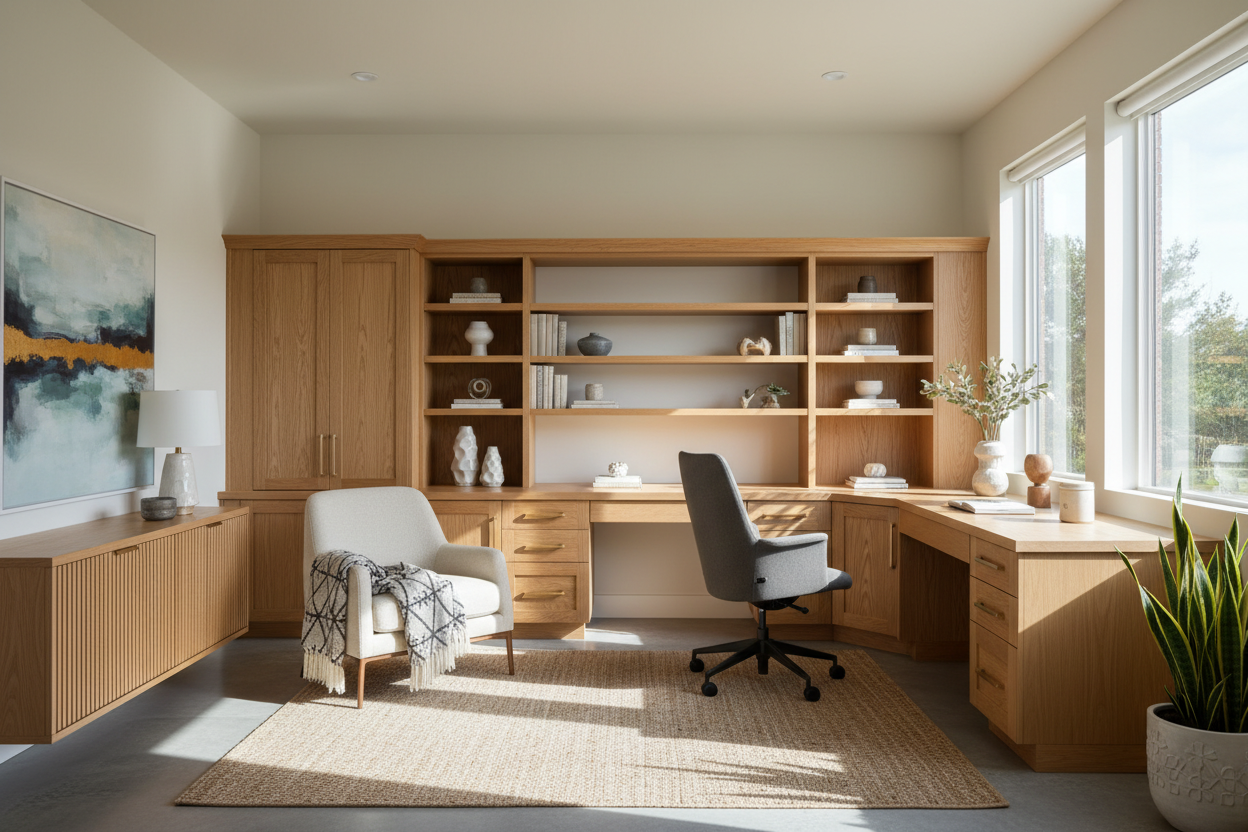
If you are styling a home office storage cabinet, steer clear of the sterile "cubicle" look. Opt for pieces that mimic residential furniture—think warm walnut finishes, fluted glass doors, or matte black hardware. This approach integrates the workspace seamlessly into the rest of the home.
Material Selection and Durability
Solid Wood vs. Veneer vs. Metal
For executive suites or a high-end home office storage unit, solid wood or high-quality wood veneer offers a timeless silhouette and unmatched durability. However, wood requires humidity control. For high-traffic zones or affordable office storage, high-pressure laminate (HPL) is surprisingly resilient against scratches and coffee rings. Metal cabinet office storage brings an industrial edge and is virtually indestructible, but it can create a noisy environment if not paired with sound-dampening textiles like rugs or curtains.
Strategic Layouts for Workflow
Placement is just as critical as the piece itself. An office storage table or credenza placed behind your desk creates a secondary work surface, allowing you to swivel around and access documents without standing up. For those needing a mix of display and concealment, office cabinet and shelves combinations are ideal. You can hide unsightly paperwork in the lower cabinets while styling the upper office shelves cabinets with books, plants, or awards to soften the room's atmosphere.
If your work involves many small components—like fabric swatches or tech accessories—office shelving with drawers provides the best of both worlds: open access for frequently used items and dust-free storage for the rest.
Lessons from My Own Projects
I learned a hard lesson early in my career regarding storage office solutions. I once specified a beautiful, sleek, low-profile cabinet for a client’s home office. It looked stunning in the photos. However, I hadn't accounted for the internal clearance of the drawers regarding the hardware.
The client called me a week later. The drawers were about a quarter-inch too shallow to hold their standard hanging file tabs upright; the tabs kept getting crushed every time they closed the drawer. It was a functional disaster hidden behind a beautiful facade. Since then, I carry a standard file folder and a three-ring binder to showrooms. I physically test if the office organization furniture can actually hold the tools of the trade. It’s a small detail, but nothing ruins the luxury of a space faster than a drawer that won't close properly.
Conclusion
Investing in the right storage is an investment in your mental clarity. Whether you choose a robust home office storage furniture suite or a simple, elegant console, ensure it serves your workflow. A well-organized space isn't just about being tidy; it's about creating an environment where work feels less like a chore and more like a craft.
Frequently Asked Questions
What is the ideal depth for office storage cabinets?
For general storage, a depth of 15 to 18 inches is standard. However, if you are storing large format printers or servers inside a home office storage unit, you may need a depth of 20 to 24 inches. Always measure your largest piece of equipment before buying.
How do I mix open and closed storage effectively?
The 80/20 rule works well here. Keep 80% of your items (paperwork, supplies, cables) behind closed doors in office storage units to reduce visual clutter. Use the remaining 20% of open shelving for aesthetic items or books you reference daily.
Is metal or wood better for a home office?
It depends on usage. Metal is superior for durability and heavy loads, making it great for archival storage. Wood provides warmth and better acoustics, making it the preferred choice for the main office storage furniture in a residential setting.


Leave a comment
This site is protected by hCaptcha and the hCaptcha Privacy Policy and Terms of Service apply.