










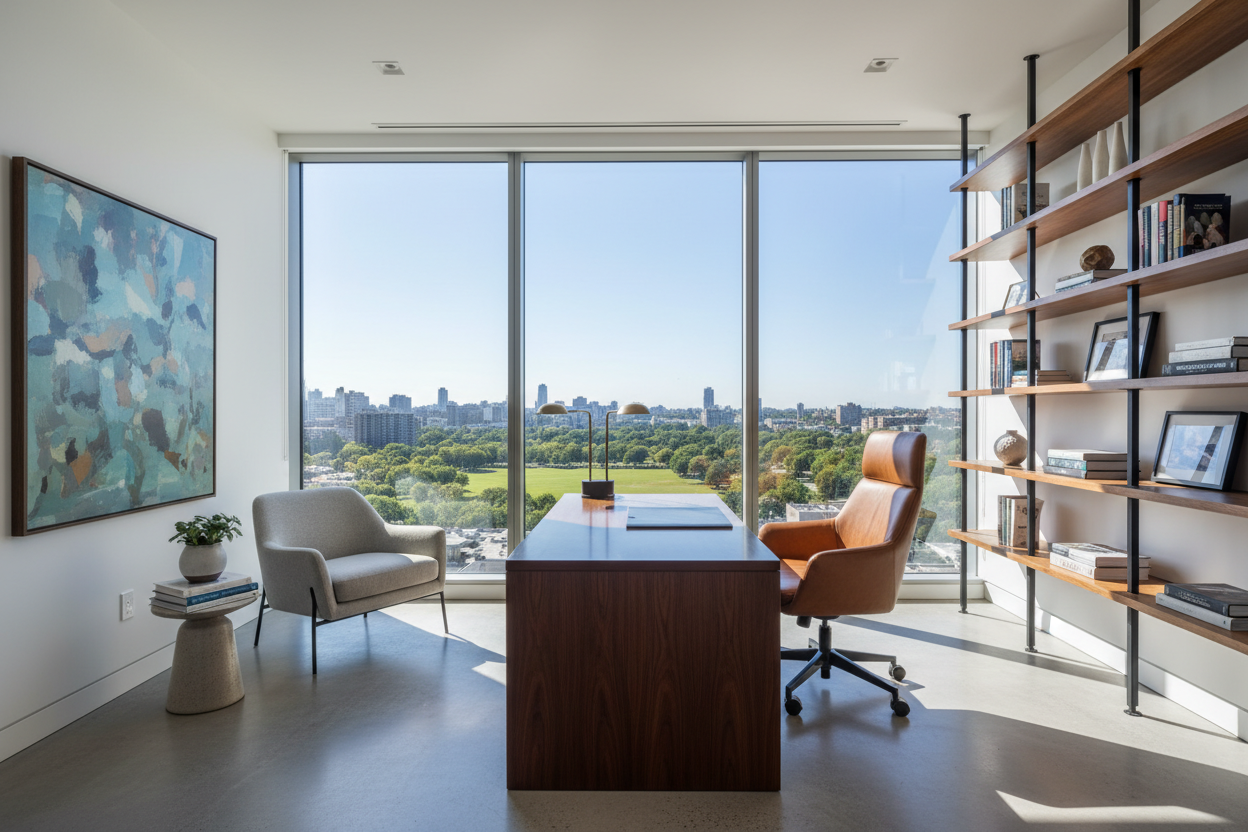
We all crave natural light. When clients show me their new floor plans, the first thing they point out is usually the dedicated workspace. But setting up an office with window access is rarely as simple as sliding a desk against the glass and calling it a day. In fact, that exact setup usually leads to severe eye strain, terrible video call lighting, and a workspace you actively avoid by 2 PM.
Whether you are dealing with a standard suburban bedroom conversion or floor-to-ceiling glass in a downtown condo, managing natural light is a structural design challenge. In this guide, I will walk you through exactly how to orient your furniture, layer your window treatments, and build a workspace that actually functions throughout the day.
Quick Layout & Lighting Guide
- Position perpendicular to the glass: Place your desk at a 90-degree angle to the window to avoid direct glare on your screen and harsh backlighting on camera.
- Layer your treatments: Combine a 3% to 5% openness solar shade with heavier drapery to control glare without losing your view.
- Mind the visual weight: If you have large office windows, float the desk in the center of the room rather than anchoring it to a wall to maintain the room's airy feel.
- Borrow light: If your workspace is entirely internal, an interior office window or glass partition can pull natural light from adjacent rooms while maintaining acoustic privacy.
Mastering the Desk-to-Window Relationship
The Perpendicular Rule
The biggest mistake I see in North American home offices is the command position gone wrong—where a desk faces the door but puts the user's back directly to a glaring south-facing window. This turns you into a shadowy silhouette on every Zoom call and washes out your monitor. Conversely, pushing your desk right up against the glass means staring directly into the sun. The sweet spot for a window in office layouts is perpendicular placement. A 90-degree angle provides soft, indirect side lighting that flatters the face and keeps your screen readable.
Handling Large Office Windows
If you are lucky enough to have large office windows, you have to respect the architecture. Do not block the lower panes with bulky filing cabinets or heavy bookshelves. Instead, use low-profile credenzas and keep the visual weight of your furniture light. Open-frame metal desks or mid-century silhouettes with tapered legs allow light to pass through the room, making the footprint feel much larger than it actually is.
Modern Office Window Design and Treatments
Layering for Function and Style
Good office window design is about controlling light, not just blocking it. I almost always recommend a dual-treatment approach. Start with a high-quality solar roller shade mounted inside the window frame. A 3% openness factor will cut the harsh glare on your laptop while still letting you see the trees outside. Then, mount stationary drapery panels high and wide outside the frame. This adds necessary acoustic dampening to the room—crucial if you have hardwood floors and minimal upholstery—and softens the hard edges of the glass.
The Rise of the Interior Office Window
Not every home has the luxury of perimeter windows. In deep, open-concept floor plans, a dedicated workspace might end up in a windowless den. This is where an interior office window becomes a highly effective architectural solution. By installing a black steel-framed glass partition or a simple transom window between the office and a well-lit living room, you borrow natural light without sacrificing sound isolation. It creates a distinct psychological boundary for work mode while preventing the room from feeling like a closet.
Designer's Honest Take: My Battle with Glare
Early in my career, I designed a stunning home office for a client in Seattle. They had this incredible, unobstructed view of the water, and I insisted on floating a massive walnut desk right in front of the glass so they could look out while they worked. It photographed beautifully.
Two days after they moved in, I got the phone call. The afternoon glare off the water was so intense it was giving the client migraines, and the matte walnut finish showed every single speck of dust highlighted by the direct sun. We ended up having to hire movers to pivot the heavy desk 90 degrees and rush-order motorized blackout shades. I learned the hard way that when it comes to an office window, function absolutely must dictate the layout. A view is useless if you have to close your eyes to tolerate the room.
Frequently Asked Questions
Where should a desk be placed in an office with a window?
The optimal placement is perpendicular to the window. This allows natural light to hit your workspace from the side, reducing monitor glare and providing even, flattering illumination for video calls without blinding you.
How do you cover a window in an office?
Layering is the most effective strategy. Use a solar shade (1% to 5% openness) to block UV rays and screen glare during peak sunlight hours, paired with side drapery panels to absorb sound and add texture to the room.
Are interior office windows worth the cost?
If your workspace lacks exterior walls, absolutely. Framed glass partitions or interior windows typically cost between $1,500 and $4,000 to install, but they dramatically improve the habitability of a dark room by pulling in ambient light from adjacent spaces.


Leave a comment
This site is protected by hCaptcha and the hCaptcha Privacy Policy and Terms of Service apply.