










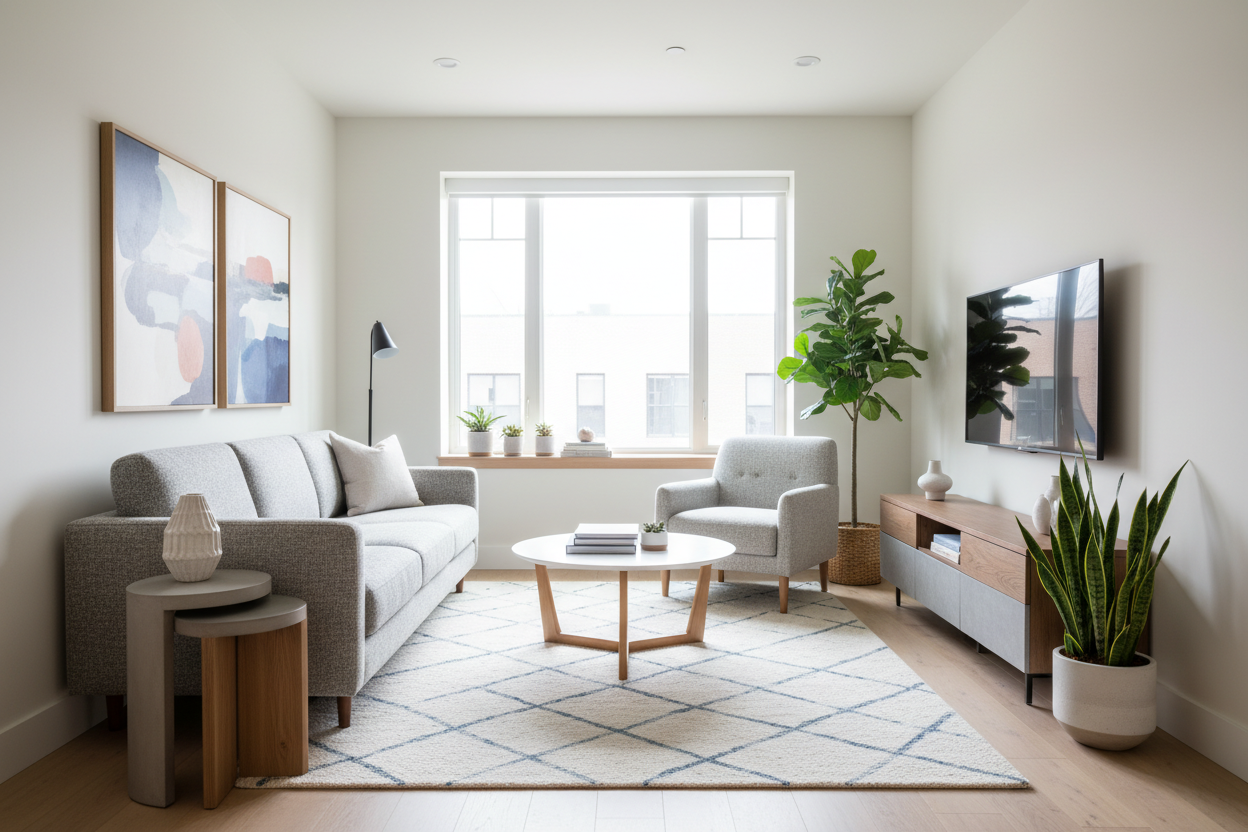
There is a specific frustration that comes with furnishing a compact home: the showroom effect. A sofa that looks petite in a warehouse-sized furniture gallery can suddenly dominate your entire apartment once delivered. When sourcing a living room set small enough to fit physically but substantial enough to provide comfort, the margin for error is razor-thin.
As an interior designer, I see clients often sacrifice ergonomics for size, ending up with uncomfortable, dollhouse-like furniture. This guide is designed to stop you from making that trade-off. We will explore how to select pieces that respect your square footage while elevating the sophisticated aesthetic of your home.
Key Features to Look For
If you are scanning the market for the perfect pieces, prioritize these four elements to ensure the furniture works with your room, not against it:
- Visual Permeability: Choose pieces with exposed legs rather than skirted bases to allow light to flow underneath, increasing the sense of space.
- Track Arms vs. Rolled Arms: Select slim, squared-off arms. Rolled arms can waste up to 12 inches of horizontal space that could be used for actual seating.
- Low Profiles: Furniture with lower back heights keeps sightlines open, making ceilings appear higher.
- Modular Capability: Sectionals that can be separated allow you to adapt the layout if you move or repurpose the room.
Mastering Scale and Proportion
The most common pitfall when buying a sofa set for a small living room is ignoring depth. Standard sofas often run 40 to 42 inches deep. In a tight room, this eats into your circulation paths. I recommend looking for "apartment scale" pieces, which typically offer a depth of 34 to 36 inches. This saves precious floor space without compromising the seat depth significantly, provided the back cushioning is well-structured.
However, do not mistake "small" for "dainty." A room filled with many tiny, spindle-legged items can look cluttered. It is often better to have one substantial anchor piece, like a loveseat with a strong silhouette, paired with a lighter accent chair.
Materiality and Visual Weight
When evaluating small living room furniture sets, the material dictates the visual weight. Heavy velvets or dark, absorbant leathers can make a piece feel massive. For compact areas, I often specify tightly woven linens or performance bouclés in neutral tones. These fabrics reflect light and blur the edges of the furniture into the walls.
If you have your heart set on a couch set for small living room layouts that includes a coffee table, opt for glass or acrylic surfaces. A glass coffee table provides function without visual interruption, tricking the eye into seeing more floor space.
Strategic Layouts for Flow
Do not push all your furniture against the walls. It seems counterintuitive, but floating your furniture even three inches off the wall creates a shadow line that suggests depth. When browsing small living room sets for sale, consider a layout that creates a distinct "conversation circle."
If the set includes a chaise, ensure the open end faces the entrance of the room. This welcomes you in, whereas a chaise back facing the door acts as a psychological barrier, closing off the space.
My Personal Take on living room set small Layouts
I learned a hard lesson early in my career regarding "measurements vs. reality." I once specified a beautiful, mid-century modern set for a client in a historic row house. On paper, the dimensions were perfect. We had 4 inches of clearance on either side.
However, when we installed it, the room felt suffocating. Why? I hadn't accounted for the visual "bloom" of the cushions. The down-filled back cushions leaned back slightly, and the side pillows fluffed outward. It visually ate up the negative space I had calculated.
Since then, my rule is strict: I always tape out the furniture on the floor, but I also place cardboard boxes to mimic the volume and height. When dealing with compact sets, that vertical volume matters just as much as the footprint. Also, a practical note on delivery: always measure your elevator and door clearance diagonally. I have seen too many perfect sofas returned because they couldn't make the turn in a narrow hallway.
Conclusion
Curating a living room set for a small space is an exercise in restraint and precision. It requires looking past the initial appeal of a showroom display and understanding the architectural implications of the furniture's silhouette. By focusing on clean lines, appropriate scale, and visual lightness, you can build a room that feels grand, regardless of its actual square footage.
Frequently Asked Questions
Should I get a sectional or a sofa and chairs for a small room?
While a sofa and chairs offer flexibility, a small-scale sectional can actually make a room feel larger. It unifies the seating into one continuous line, reducing the visual clutter of multiple gaps between furniture pieces.
What is the best color palette for small living room sets?
Monochromatic schemes work best. Matching the furniture tone closely to your wall color creates a seamless look where the furniture recedes, expanding the perceived space. You can introduce texture through throw pillows rather than bold color blocks.
How do I know if a coffee table is too big for the set?
Maintain 14 to 18 inches of clearance between the edge of the sofa and the coffee table. If you have less than that, the room will feel cramped and traffic flow will be impeded. Consider nesting tables as a flexible alternative.

Leave a comment
This site is protected by hCaptcha and the hCaptcha Privacy Policy and Terms of Service apply.