










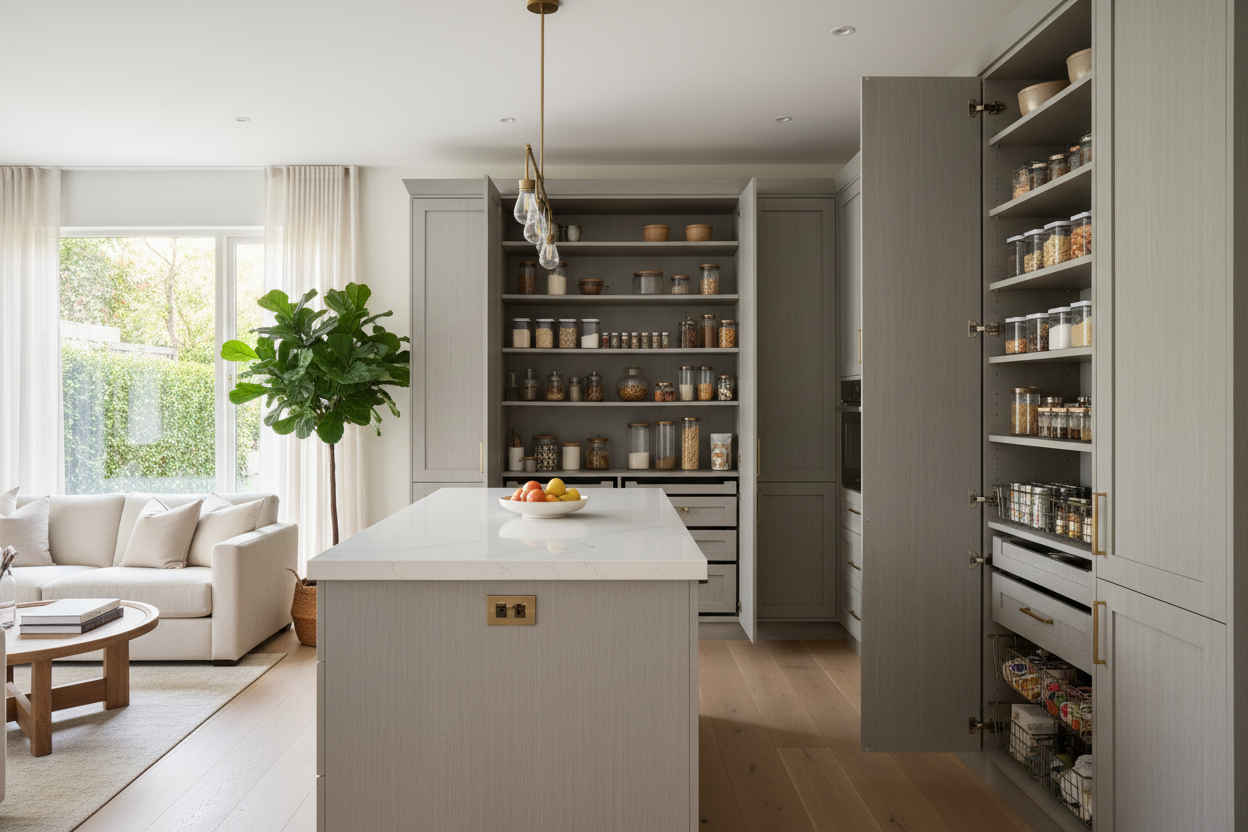
My kitchen counters used to be a graveyard for half-used bags of flour, oversized Costco boxes, and three different types of olive oil I couldn't find a home for. I had exactly four upper cabinets, and two of those were occupied by a collection of mismatched mugs I haven't touched since 2019. The 'doom pile' isn't just a mess; it's a symptom of a kitchen that simply wasn't built for the way we actually shop and eat now. Buying pantry storage cabinets for kitchen use was the only thing that stopped the bleeding.
- Closed doors are better than open shelves: Hide the neon-colored packaging and mismatched jars instantly.
- Depth matters: Look for at least 15-18 inches of depth to accommodate small appliances.
- Adjustable shelving is non-negotiable: Cereal boxes are tall; tuna cans are short. You need flexibility.
- Anchor it: These units are top-heavy when loaded with glass jars. Always use the anti-tip kit.
The Countertop Doom Pile (And How I Got Here)
It starts with one bag of chips that won't fit in the cupboard. Then it's the air fryer. Before you know it, your prep space has shrunk to a 12-inch square of granite, and you're chopping onions on a literal sliver of wood. Most standard kitchens rely on a kitchen cupboard pantry that is maybe 24 inches wide—barely enough for a week's worth of basics, let alone the bulk-buy lifestyle.
We keep trying to solve the problem with 'hacks' like tiered spice risers or over-the-door racks. But those are just Band-Aids. If you are constantly moving three things to get to the one thing you actually need, your storage has failed you. You don't need better organization; you need more square footage for your food.
Why I Finally Gave Up on Open Shelving
Open shelving is a lie told by people who only eat white pasta stored in perfectly labeled glass jars. For the rest of us, it’s a dust-magnet for neon orange Cheez-It boxes and crumpled bags of pretzels. It creates a massive amount of visual noise that makes the whole room feel frantic. When I decided to browse dedicated kitchen pantry storage, I specifically looked for solid doors.
There is a profound psychological relief that comes with closing a cabinet door and seeing a clean, flat surface. You can have a chaotic interior—I certainly do—but if the exterior is a sleek, matte white or a warm wood grain, your kitchen feels twice as large. Dedicated storage cabinets for pantry goods allow you to be a mess in private while appearing like a minimalist in public.
What Actually Fits Inside Large Kitchen Pantry Cabinets?
A large kitchen pantry cabinets unit is a beast of burden. People think they're just for dry goods, but that's a waste of potential. In my 72-inch tall unit, the bottom shelf holds my heavy-duty stand mixer and a 6-quart Dutch oven. These are things that used to live on my counter because they were too heavy to lug out of a low base cabinet.
If you opt for a large food pantry kitchen cupboard, you can even find units with integrated racks. I use the specialized compartments for my seltzer addiction and the occasional bottle of wine, which keeps them from rolling around on the regular shelves. A well-designed unit should have a weight capacity of at least 30-50 lbs per shelf. If it's made of flimsy 1/2-inch particle board, those shelves will sag faster than your energy on a Monday morning.
Where Are You Supposed to Put It?
The biggest hurdle is floor space. Most people think if it doesn't fit 'in' the kitchen, they can't have one. Look for 'dead' walls—that 3-foot stretch of drywall between the kitchen and the back door, or the awkward space next to the refrigerator. These units are typically only 12 to 24 inches deep, so they don't impede traffic as much as you'd think.
Don't be afraid to push the unit into the dining area. You can blend kitchen storage with dining display by choosing a piece that looks more like a hutch than a utility closet. If the finish matches your dining table or your flooring, it feels like an intentional design choice rather than an emergency storage addition.
The 'Hidden Buffet' Trick for Extra Counter Space
My favorite type of pantry is the 'split' design—solid doors on the bottom, a small open counter in the middle, and more storage on top. This middle zone is a lifesaver. It’s where my coffee maker lives now. By moving the coffee station into the pantry unit, I reclaimed a massive chunk of my actual kitchen counter.
You can find plenty of storage ideas for your kitchen buffet that treat that middle ledge as a 'landing zone' for groceries or a place to charge phones. It keeps the 'active' part of your kitchen dedicated to cooking, while the pantry handles the 'administrative' side of feeding a family. It’s the closest thing to a butler’s pantry without actually tearing down walls.
Personal Experience: The Sagging Shelf Lesson
A few years ago, I bought a $120 pantry cabinet from a big-box store. It looked great in the photos, but it was made of thin MDF and had those plastic peg shelf supports. Within three months, the shelf holding my canned tomatoes was bowing like a smile. It was dangerous and ugly. Now, I only buy units with at least 5/8-inch thick shelving and metal hardware. If you're going to store 40 lbs of flour and beans, don't cheap out on the bones of the cabinet. Spend the extra $100 for something that won't collapse under a jar of pickles.
FAQ
How deep should a pantry cabinet be?
For most kitchens, 15 to 18 inches is the sweet spot. Anything deeper than 24 inches and you'll lose jars in the 'black hole' at the back. If you go deep, make sure you have pull-out drawers.
Do I really need to anchor a freestanding pantry?
Yes. 100%. When you open two heavy doors loaded with condiments, the center of gravity shifts forward. It takes five minutes to screw it into a stud, and it prevents a literal disaster.
Can I use a wardrobe as a kitchen pantry?
You can, but be careful with shelf weight limits. Wardrobes are designed for light clothes, not 10-pound bags of rice. Check the 'pounds per shelf' rating before you commit.


Leave a comment
This site is protected by hCaptcha and the hCaptcha Privacy Policy and Terms of Service apply.