










Walking through your front door should feel like a breath of fresh air, not an obstacle course. Yet, for many of us, the entryway becomes a dumping ground for mail, muddy boots, and pet leashes. The solution lies in selecting the right pieces that bridge the gap between aesthetic appeal and heavy-duty utility. Creating a functional landing strip isn't just about buying a random console; it is about analyzing your specific habits and choosing hallway furniture near the door that intercepts the mess before it migrates into the living room.
Your entryway sets the tone for the entire home. It is the first thing guests see and the last thing you see before rushing out for the day. While decorative vases and art prints are nice, the backbone of this space must be practical. You need a system that handles the volume of items your household naturally drops the moment they step inside. From slim shoe cabinets to robust hall trees, the right furniture transforms a chaotic corridor into an organized passage.
Assessing Your Traffic Flow and Space
Before you purchase a single item, look at the physical limitations of your foyer or hallway. A common mistake is buying pieces that are too deep, choking the walkway and making the house feel cramped. If you have a narrow corridor, you need low-profile hallway furniture that hugs the wall. Floating shelves or wall-mounted shoe cabinets are excellent choices here because they keep the floor visible, which tricks the eye into thinking the space is larger than it is.
For wider foyers, you have the luxury of depth. This allows for substantial pieces that can anchor the room. However, regardless of size, consider the flow of traffic. Does the front door swing inward? If so, ensure your furniture placement doesn't obstruct the door's arc. You want a clear path that invites people in, rather than forcing them to squeeze past a bulky dresser.
The Power of Multipurpose Pieces
I learned the hard way that open shelving in an entryway is a recipe for visual noise. In my previous apartment, I had a simple open rack. Within a week, it was overflowing with mismatched sneakers and tottering piles of junk mail. It looked terrible. When I finally switched to a closed cabinet system, the difference was immediate. The mess still existed, but it was behind doors. That experience taught me that unless you are incredibly disciplined, closed storage is almost always superior to open storage in high-traffic zones.
This is where versatile entryway furniture with storage shines. Look for benches that have flip-top lids or cubbies underneath. These allow you to sit down to put on shoes while hiding winter accessories or dog toys inside. If you lack a coat closet, a standalone wardrobe or a tall cabinet can act as a substitute, keeping heavy coats out of sight and dust-free.
Vertical Solutions for Tight Spaces
When you cannot build out, build up. Vertical space is often underutilized in hallways. An entryway table with hooks is a classic solution that combines a surface for keys with hanging storage for jackets and bags. These units, often called hall trees, provide a dedicated spot for everything you carry in your pockets and on your back. By utilizing the height of the wall, you clear the floor area, making vacuuming easier and the space less cluttered.
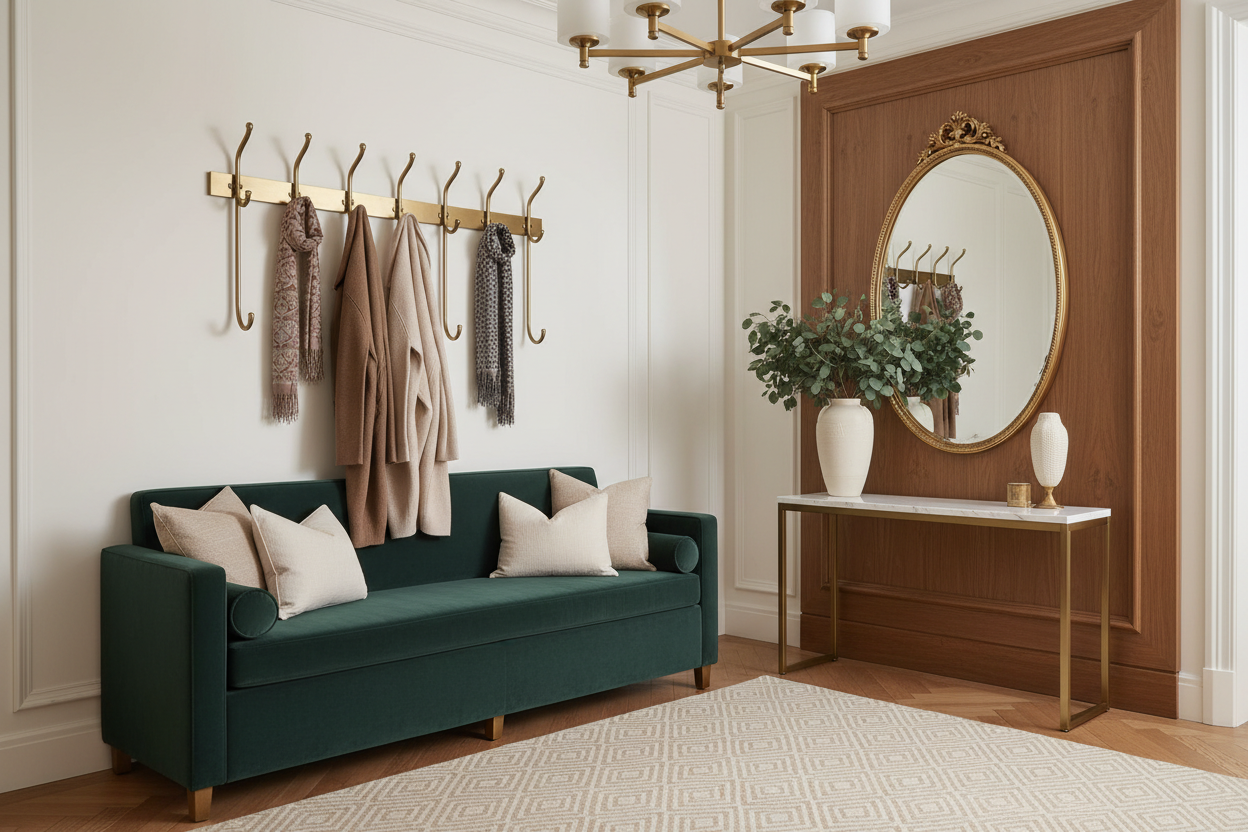
For a more modern or DIY approach, you can install a row of heavy-duty hooks above a slim console table. This achieves the same function as the all-in-one unit but allows for more customization regarding height and style. Ensure the hooks are sturdy enough to hold heavy winter coats or loaded backpacks, as flimsy hardware will eventually fail under the weight of daily life.
Creating a Cohesive Arrangement
If you have a bit more square footage, you can move beyond a single unit and create a furniture grouping. A popular and functional setup involves pairing seating with surface area. An entryway bench with side table arrangement offers distinct zones: one for sitting and removing footwear, and another for placing items that shouldn't touch the floor, like groceries or mail.
This pairing works well because it separates the "clean" items from the "dirty" items. The bench handles the shoes and lower-level traffic, while the side table keeps keys, phones, and wallets at waist height, safe from being knocked over. You can unify these two pieces with a large area rug or a runner that defines the zone. To keep it from looking cluttered, choose a table with legs rather than a solid block to maintain a sense of airiness.
Hidden Storage Strategies
The ultimate goal of entryway storage furniture is to make the organization effortless. If putting something away requires opening three drawers and moving a box, no one will do it. Accessibility is key. Tilt-out shoe cabinets are fantastic for this; they are incredibly slim—often less than 10 inches deep—but can swallow a dozen pairs of shoes. The mechanism is simple enough that even children can use it easily.
For smaller items like sunglasses, lip balm, and loose change, look for consoles with shallow drawers. If your table lacks drawers, use decorative baskets or trays. A tray acts as a boundary for clutter; a pile of keys on a table looks messy, but that same pile inside a leather tray looks intentional. Baskets placed under a console table can serve as catch-alls for items you need to grab quickly, like umbrellas or reusable shopping bags.
Finishing Touches and Lighting
Once the heavy furniture is in place, functionality needs to meet style. Lighting plays a massive role in how your hallway furniture is perceived. A dark hallway feels smaller and less welcoming. If you don't have space for a table lamp, install a wall sconce or use a battery-operated motion sensor light inside deep cabinets. A mirror is another non-negotiable element. Placed above your storage unit, it allows for a final outfit check before leaving and bounces light around the room, making the entryway feel more expansive.
Designing an organized entryway is about realistic expectations. You need to acknowledge what you actually carry into the house versus what you wish you carried. By selecting robust furniture that offers a specific place for every item, you stop the clutter at the threshold and reclaim your home's entrance.
Frequently Asked Questions
What is the best furniture for a very narrow hallway?
For extremely tight spaces, wall-mounted floating consoles and tilt-out shoe cabinets are ideal. They provide storage and surface area without extending far into the walking path, keeping the floor clear to maintain a sense of openness.
Do I really need a bench in my entryway?
While not strictly necessary, a bench significantly improves functionality if you have a "shoes-off" household. It provides a safe, comfortable place for guests and family members to sit while removing footwear, preventing hopping around and wall-leaning.
How do I protect my entryway furniture from wet coats and muddy shoes?
Choose materials that are durable and easy to wipe down, such as treated wood, metal, or composite materials. Use trays or rubber mats inside cubbies to catch mud, and ensure you have adequate hooks so wet coats can air dry without resting directly against painted walls or wood surfaces.


Leave a comment
This site is protected by hCaptcha and the hCaptcha Privacy Policy and Terms of Service apply.