










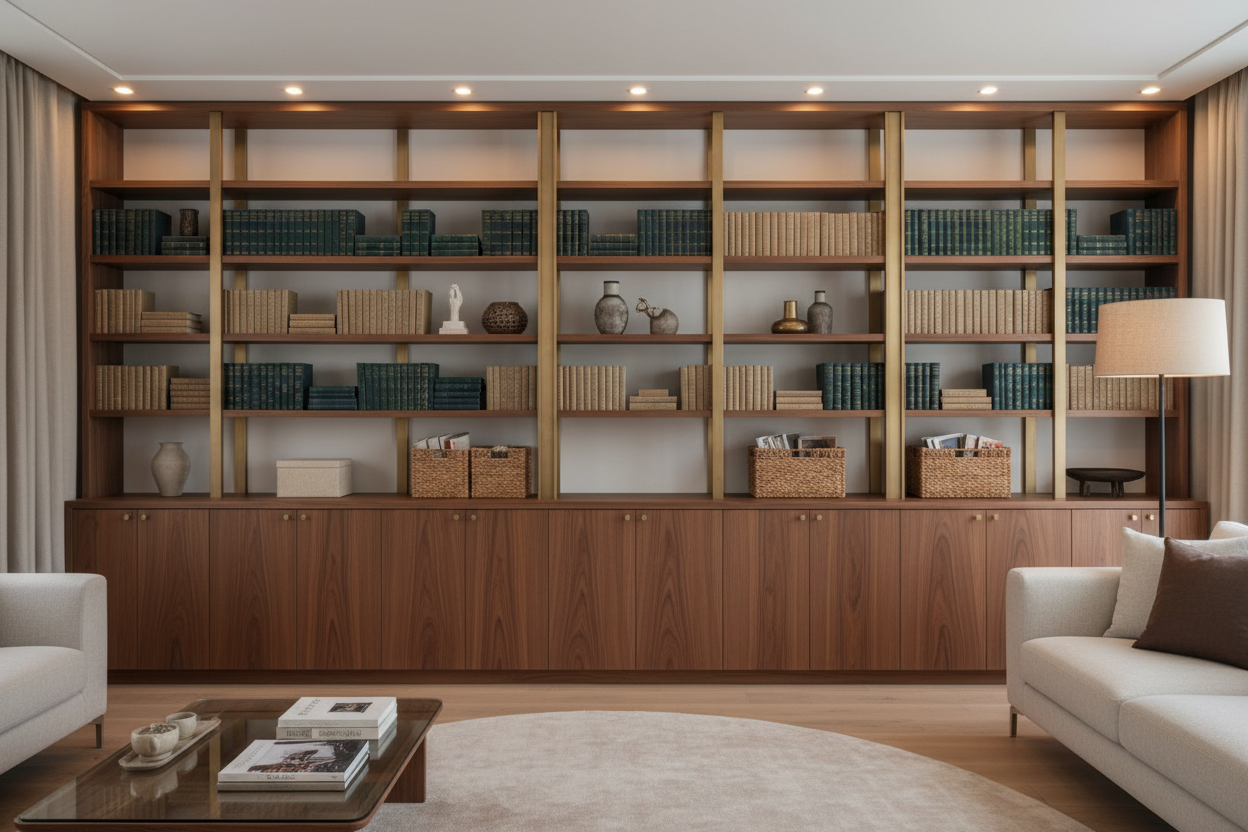
Open shelving has dominated interior design trends for years, often showcased in perfectly curated photos featuring color-coded books and minimal decor. However, anyone who has lived with extensive open shelving knows the reality involves constant dusting and the pressure to keep every inch tidy. A large bookcase with doors solves these problems instantly. It offers the expansive storage capacity of a library wall while providing the visual calm of a closed cabinet. By incorporating doors, you transform a simple storage unit into a piece of furniture that protects your belongings and anchors the room.
The Hidden Benefits of Enclosed Storage
The primary advantage of choosing a large bookcase with doors over an open unit is protection. Books, binders, and collectibles are magnets for dust. In an open setup, cleaning requires removing every object, wiping the shelf, and dusting the items individually. With doors, specifically those with glass panes, you reduce dust accumulation significantly while still being able to see your collection. Solid doors offer an even greater benefit: they hide the clutter. Not every book is a beautiful hardcover, and office supplies rarely look aesthetic. Enclosed storage allows you to keep necessary but unsightly items accessible yet out of view.
Beyond cleanliness, doors provide a layer of security for delicate items. If you live in a household with pets or young children, a barrier between a flying toy (or a curious cat) and your fragile pottery is essential. Furthermore, solid doors can offer UV protection, preventing the spines of vintage books or the colors of photographs from fading due to sunlight exposure.
Understanding Dimensions: Long vs. Wide
When shopping for these substantial pieces, terminology regarding size can get confusing. Generally, a long bookcase with doors refers to units that prioritize horizontal space. These can sometimes be lower, resembling a credenza or sideboard, but with internal shelving specifically designed for books rather than dinnerware. A long unit works exceptionally well under windows or in hallways where vertical height might make the space feel cramped. They provide a surface area on top for lamps and artwork, adding another layer of utility.
In contrast, wide bookcases with doors usually refer to massive, vertical wall units that span a significant portion of a room. These are the statement pieces that define a home library or a serious home office. They maximize vertical storage, often reaching near the ceiling. When selecting wide bookcases with doors, measure your wall carefully. You need to account for the swing radius of the doors. If the unit is too close to a sofa or desk, you might find yourself unable to fully open the cabinets, rendering the storage useless.
My Transition from Open to Closed Storage
I learned the value of doors the hard way. For years, I relied on a series of inexpensive, open-shelf units in my home office. Initially, I tried to style them, but as work piled up, those shelves became a dumping ground for printer paper, tangled cables, and reference manuals. The visual noise was distracting; I felt cluttered just sitting at my desk. I eventually upgraded to a large bookcase with doors on the bottom half and glass cabinets on top. The difference was immediate. I could shove the messy paperwork behind the solid wooden doors below and curate the top glass section with my favorite novels and a few framed photos. The room felt bigger simply because the visual chaos was hidden. It taught me that storage isn't just about holding things; it's about managing the energy of a room.
Door Styles and Functionality
The mechanism of the doors changes how you interact with the furniture. Hinged doors are traditional and allow full access to the width of the shelf when opened. However, they require clearance space. If you are furnishing a tight room, you might want to look for large bookcases with doors that slide. Sliding doors are excellent for narrow spaces, though they have a minor drawback: you can never see the entire contents of the bookcase at once, as one side is always covered.
Material choice for the doors also dictates the vibe of the room. Glass doors (often called barrister style or display cabinets) lean towards a traditional or museum aesthetic. They require you to keep the interior relatively tidy. Solid wood or paneled doors offer a more monolithic, architectural look. They are forgiving of mess. Many modern large bookcases with doors feature a hybrid design, often called a "hutch" style, with solid doors at the base and open or glass shelving above. This hybrid approach is often the most practical solution for mixed-use spaces like living rooms.
Material Quality and Weight Considerations
Because these units are substantial, build quality is non-negotiable. Large bookcases with doors are heavy, even before you load them with books. Cheap particle board often bows under the weight of paper over time. If you are investing in a piece this size, look for solid wood or high-grade plywood with thick veneers. The hardware is equally important. The hinges need to be robust enough to support heavy doors without sagging, and the handles should feel substantial.
Pay close attention to the shelving inside. Adjustable shelves are a must for versatility, but check the pins or supports holding them up. In cheaper units, these can shear off under heavy loads. If you are buying a particularly wide unit, ensure there are vertical dividers or central supports. A shelf spanning more than 30 inches without central support will almost certainly sag if filled with hardcover books.
Installation and Safety
Bringing a large piece of furniture into your home requires planning. Measure your doorways and stairwells before purchasing. Many wide bookcases with doors come in sections or require assembly because a fully built unit simply won't fit through a standard door frame. Once the unit is in place, anchoring it to the wall is mandatory. The addition of doors adds weight to the front of the unit. When you open both doors simultaneously, the center of gravity shifts forward. Without proper wall anchors, the entire bookcase can tip over. This is a critical safety step that should never be skipped, regardless of how stable the unit feels when empty.
FAQ
How deep should a bookcase with doors be?
Standard book depth is about 10 to 12 inches, but bookcases with doors usually need to be deeper, typically 14 to 16 inches. This extra depth accounts for the door mechanism and hinges, ensuring the doors can close fully without crushing the bindings of your larger books.
Can I use a large bookcase with doors for a media center?
Yes, many people repurpose these units for media. However, you will likely need to modify the back panel to allow for cable management and airflow to prevent electronics from overheating. Ensure the internal depth is sufficient for your receiver or gaming consoles.
Is it better to have sliding doors or hinged doors?
It depends on your floor plan. Hinged doors offer better visibility and access but require swing space. Sliding doors are ideal for tight walkways or small rooms but will always block part of the shelf from view at any given time.

Leave a comment
This site is protected by hCaptcha and the hCaptcha Privacy Policy and Terms of Service apply.