










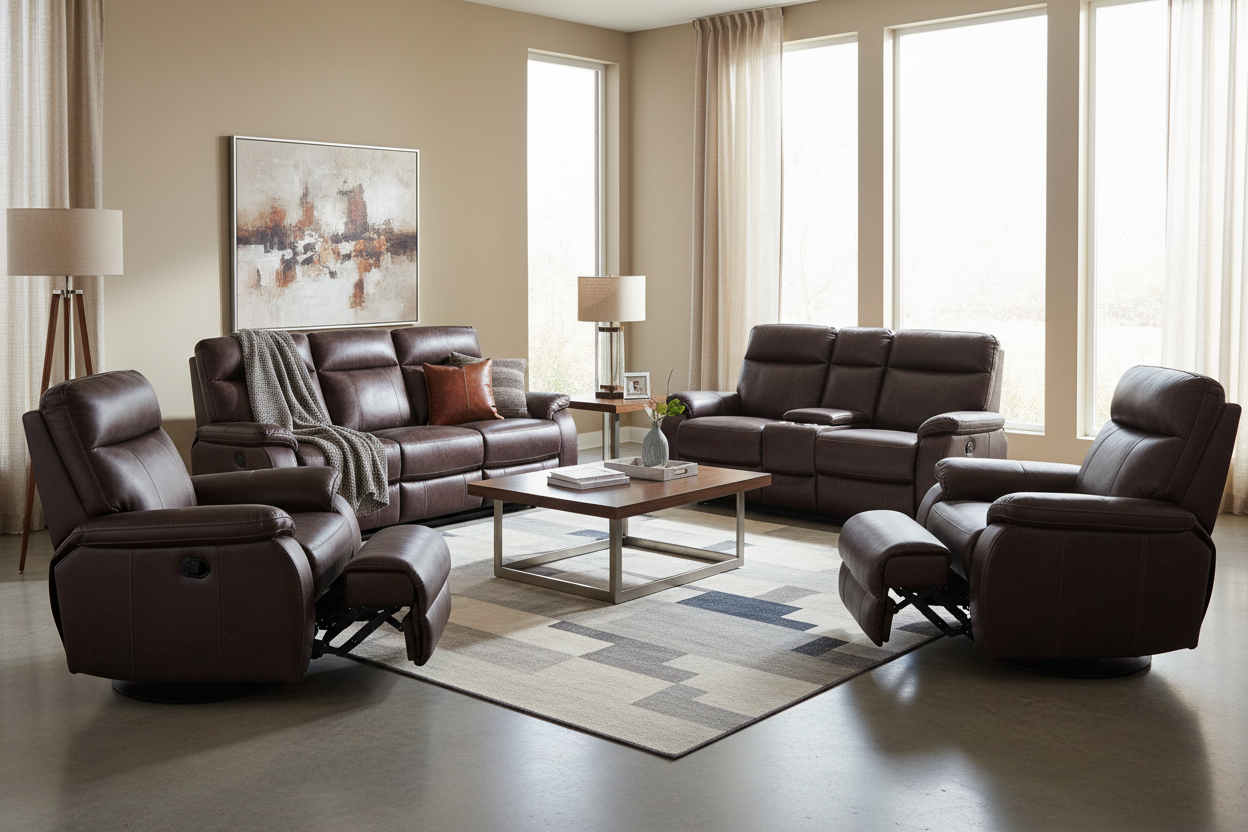
There is a pervasive myth in interior design that you must choose between the sleek aesthetic of a modern living room and the undeniable comfort of a recliner. Many of my clients hesitate to commit to a leather couch and loveseat reclining setup because they fear their home will start looking like a bulky showroom or a basement man-cave. I am here to tell you that with the right silhouette and leather grade, you can achieve a sophisticated, high-end look without sacrificing that feet-up relaxation.
Quick Decision Guide: What Matters Most?
If you are rushing through a purchase, pause and check these four critical specifications. These are the non-negotiables I look for when sourcing for private clients:
- Leather Grade: Always opt for Top Grain or Full Grain. Avoid "Bonded" or "Faux" leather for high-traffic reclining seats, as the friction will cause peeling within years.
- Mechanism Type: Choose "Wall-Huggers" for tighter spaces; they require only 2-4 inches of clearance behind the frame.
- Suspension System: Look for sinuous springs or 8-way hand-tied coils. Webbing alone rarely holds up to the shifting weight of a reclining mechanism.
- Seat Density: Aim for high-resiliency foam (2.0 density or higher) wrapped in down or Dacron to prevent the seat from looking "puddled" after use.
Decoding Leather Quality for Motion Furniture
When selecting a leather sofa and loveseat with recliners, the material is not just a cosmetic choice; it is a structural one. Motion furniture involves constant friction—leather rubbing against leather as the footrest extends or the back reclines.
Grain vs. Split
I always steer clients toward aniline or semi-aniline dyed leathers. These offer a buttery hand-feel and develop a rich patina over time. Conversely, heavily pigmented or "corrected" leathers might look uniform, but they can feel stiff and plastic-like, which ruins the ergonomic experience of a recliner.
Mastering the Layout and Flow
The biggest challenge with a leather sofa loveseat and recliner combination is the sheer volume of the pieces. Reclining furniture is inherently heavy and deep. To keep your room feeling airy, you must manage the "visual weight."
The "Floating" Dilemma
If you plan to float your furniture in the center of the room (off the walls), you must consider the back of the sofa. Many reclining mechanisms leave a gap or exposed metal flap at the base of the back when upright. Ensure the model you choose has a fully finished back flap that secures with Velcro or magnets to maintain a clean silhouette.
Clearance and Coffee Tables
Standard coffee table spacing rules do not apply here. While I usually recommend 18 inches between sofa and table, a leather couch and loveseat recliner set requires significantly more clearance to allow the footrest to fully extend without collision. Consider nesting tables or a narrower, oval coffee table to facilitate movement.
My Personal Take on leather couch and loveseat reclining
I want to share a specific lesson I learned during a project in a high-rise apartment, which changed how I specify these pieces. We bought a stunning, Italian-made power reclining set. It was beautiful, but we made a critical oversight: cable management.
Because we floated the sofa in the middle of the open-concept living room, the black power cords snaking across the light oak floor were an absolute eyesore. We ended up having to cut into the expensive rug and run an extension cord underneath it to a floor outlet.
Furthermore, I’ve noticed something about the "sound" of these pieces. In a quiet room, lower-quality leather rubs against itself with a distinct squeak every time you shift. It drives some homeowners crazy. Now, I always test a set in the showroom by turning off the ambient music (if possible) and shifting around in the seat to check for that friction noise. It’s a small detail, but it defines the difference between luxury and utility.
Conclusion
Integrating motion furniture into a stylish home is entirely possible if you respect the scale of the room and invest in authentic materials. A well-chosen leather reclining set will not only anchor your living space but provide a level of durability that fabric simply cannot match. Focus on the silhouette, check the mechanism, and measure your clearance twice.
Frequently Asked Questions
How much space do I need behind a reclining sofa?
It depends on the mechanism. Standard recliners need 8 to 12 inches of wall clearance. However, "zero-wall" or "wall-hugger" designs slide the seat forward as they recline, requiring as little as 2 to 4 inches, making them ideal for smaller rooms.
How do I maintain leather on a reclining sofa?
Dust weekly with a microfiber cloth to prevent dirt from settling into the grain, which acts like sandpaper. Condition the leather every 6-12 months, paying special attention to the friction points where the footrest meets the seat, as this area wears out the fastest.
Can I mix a reclining sofa with a stationary chair?
Absolutely. In fact, I recommend it to break up the visual heaviness. Pair a leather sofa and loveseat with recliners with a stationary accent chair in a contrasting fabric, like velvet or boucle, to add texture and lighten the room's aesthetic.


Leave a comment
This site is protected by hCaptcha and the hCaptcha Privacy Policy and Terms of Service apply.